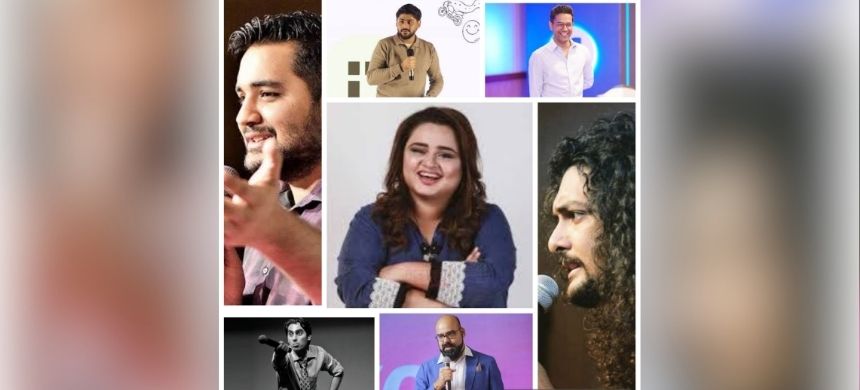
In Pakistan, we didn’t get stand-up when we got mics. Interestingly, stand-up comedy arrived in Pakistan the same year the PEMRA fines did. Coincidence is not a punchline. Stand-up comedy didn’t just get popular in Pakistan; it became the courtroom where we try everything we can’t say otherwise: in parliament, on TV, or at dining table. Pakistani stand-up is energetic speech disguised as entertainment. That’s why it’s both necessary and dangerous. Stand-up comedians must be appreciated, because they’re trying; trying to make people laugh is no less than a laborious task.
Stand-up is where inflation stops being a statistic and starts being a punchline. No op-ed can do that. The audience laughs because it’s true and because someone finally said it. For ten minutes, the stage becomes the only institution we trust. When a comic tells hundreds of people about body shaming or a perverted ‘Tharki’, nobody gets offended. When a humourist says, ‘My body is like Pakistani economy – nobody knows what’s wrong and the IMF isn’t helping,’ the audience exhale. When an entertainer playfully banters Asian parents, people enjoy feeling refreshed. Some nights the truth is about price hikes, some nights it’s about bedroom. In any other situation, such pronouncements would start a trouble. On a stage with a mic, it starts a set. They tell us traffic in Lahore or Karachi is bumper-to-bumper. We already know; we had been in it to get there. But when they say it on stage, people agree it out loud. That’s the trick. The obvious is illegal until it’s choral. Body shaming is obvious, saying it without whispering is sedition. They’re not telling us what we don’t know; they’re telling us what we’re not allowed to know together.
The audience is DHA, Gulberg, people. The jokes are meant to be selected. There’s the line. It isn’t crossed when a joke gets obnoxious. It’s drawn, every time, between who gets to be in the room and who gets to be the joke. The mic is cordless but the leash isn’t. Most stand-up comedians know exactly where the red line is. They dance on it, monetize it, but never erase it. The bravest punchline remains a whisper; a group therapy for people who already have therapists. They start by telling you the most embarrassing thing that ever happened to them. Vulnerability is the entry fee – we don’t trust a comic until they’ve shown us their scars. Then we let them cut someone else. We laugh, because shame in the first person feels like courage; the laugh is relief actually. Confession is the cover charge. It’s scripted; yet the dodgiest parts are the spontaneous ones. The self-deprecation is the down payment; the power is what they buy with it. Comics rehearse their sets the way lawyers rehearse cross-exams. Because one unscripted joke, and no next gig. The spontaneity is where the red line lives; the script gets you paid, the deviance may get you extinct.
Moin Akhtar and Umer Sharif weren’t just stand-up comedians; they were the reason Pakistan thinks it invented stand-up. Moin Akhtar would do a 20-min bit as a minister on Loose Talk and the country laughed. No investigation ever got launched. Because he never named anyone, people did. Umer Sharif could do two hours on men and women without saying one word you’d blush at. That’s the line today’s comics cross. They go explicit because the audience forgot how to listen for implication. Moin Akhtar made you laugh at the system. Umer Sharif made the system laugh at itself. Today’s comics are still deciding which one they are.
Stand-up in Pakistan has two routes. One sells chai jokes to brands and corporate shows, safe and sanitized. The other whispers on WhatsApp invites; private, restricted. And only one gets to call itself revolutionary. It’s empowering when a woman names her divorce and hundreds of people applaud instead of whispering; it’s obstructing when the punchline is an accent or a dialect and hundreds of people approve instead of questioning. The gathering tends to laugh collectively. As it’s a roll over reaction, it’s infectious laughter. A mass hysteria. We’ll keep calling it comedy as long as the punchline isn’t us. The mic is loaded; some nights with bullets, the other with risqué humour. Either way, the room flinches.
The writer is a published author and freelance contributor; she can be reached at [email protected].