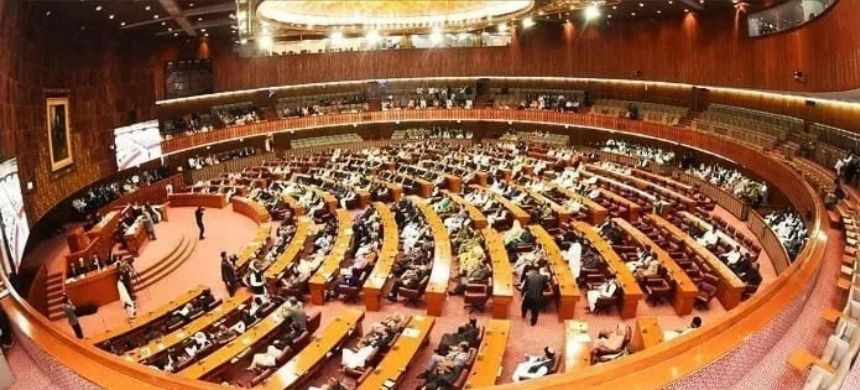
The National Assembly has approved 125 demands for grants for the fiscal year 2026-27, clearing the way for the passage of the federal budget worth Rs. 18.77 trillion. Among the approved allocations was a defence budget of Rs. 3 trillion for Pakistan’s armed forces, which was passed without any opposition or cut motions from lawmakers.
The lower house is expected to formally approve the federal budget on June 23, while supplementary grants will be considered a day later. The approved grants cover expenditures for a wide range of ministries, divisions, and government departments operating under the federal government.
Several major sectors received significant funding under the approved budget framework. The energy sector was allocated Rs. 661.27 billion, including Rs. 578.84 billion for the Power Division and Rs. 1.11 billion for the Petroleum Division. In addition, lawmakers approved Rs. 76.61 billion in foreign development loans and advances for power-related projects.
Other notable allocations include Rs. 1,162 billion for pensions, Rs. 2,504 billion for grants and subsidies, Rs. 85.6 billion for the Federal Board of Revenue (FBR), and Rs. 231.08 billion for development expenditures in various sectors.
Funding was also approved for several government institutions and departments, including the Cabinet Division, Prime Minister’s Office, National Disaster Management Authority (NDMA), Special Technology Zone Authority, Board of Investment, Higher Education Commission, National Assembly, Senate, and ministries responsible for health, information technology, communications, railways, commerce, climate change, science and technology, and water resources.
During the debate, Power Minister Sardar Awais Ahmad Khan Leghari highlighted improvements in the energy sector. He stated that the fiscal burden had fallen from Rs. 1,287 billion in FY25 to Rs. 893 billion and is expected to decline further. He also said circular debt had been reduced significantly, while financial losses of power distribution companies had dropped substantially.
The minister added that revised agreements with Independent Power Producers (IPPs) would save approximately Rs. 3.5 trillion in future liabilities. He further noted that 76 percent of the country’s electricity generation now comes from local energy sources. A Rs. 50 billion initiative has also been launched to eliminate economic load shedding by next year.
Finance Minister Muhammad Aurangzeb, while concluding the debate, expressed confidence in achieving revenue targets during the upcoming fiscal year. He said the government had not imposed any new taxes and had recovered Rs. 450 billion through legal and administrative measures. He also pointed to improvements in key economic indicators, including GDP growth, primary surplus levels, and current account performance.
Opposition members, however, criticized the budget, arguing that it provided limited relief to the public. They raised concerns about rising poverty levels, questioned the effectiveness of tax reforms, and claimed the government was relying too heavily on existing taxpayers instead of expanding the overall tax base.
Also Read: Pakistan to Raise Defence Budget amid India Border Tensions