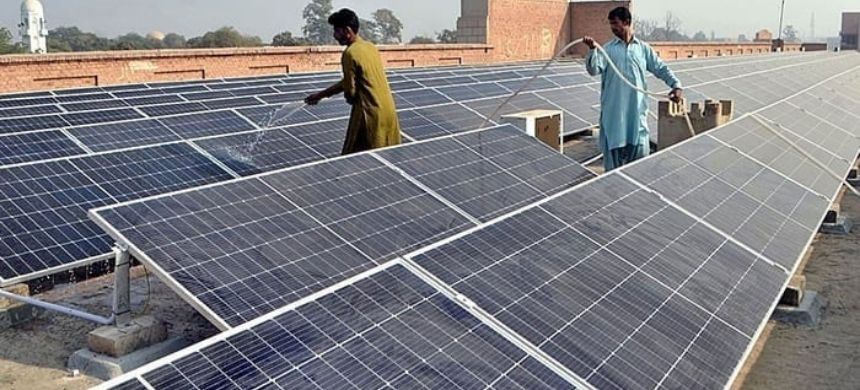
Pakistan’s solar sector has witnessed remarkable growth over the past six years, with rooftop solar capacity increasing nearly 37 times to reach approximately 6,978 megawatts (MW) by June 2026. The rapid expansion has prompted the government to replace the existing net metering policy with a new net billing system to address financial and operational challenges facing the country’s power sector.
Speaking during a SAARC webinar, Energy Adviser to the Power Division Syed Faizan Ali said rooftop solar generation has grown significantly, rising from only 190MW in FY2020 to almost 7,000MW by FY2026. He credited the surge to several economic factors, including higher electricity tariffs, the depreciation of the Pakistani rupee, and a sharp decline in global solar panel prices.
According to the presentation, the Pakistani rupee lost nearly 75 percent of its value between FY2021 and FY2025, while electricity tariffs increased by almost 140 percent during the same period. Meanwhile, international prices of imported solar panels dropped by approximately 60 percent, making rooftop installations more affordable and financially attractive for households and businesses across Pakistan.
Despite this rapid growth, officials said the previous one-to-one credit mechanism under the net metering policy created significant financial pressure on the electricity sector. Authorities estimated that the system resulted in a revenue impact of around Rs101 billion during FY2024.
To address these concerns, the government introduced the Prosumer Regulations 2026, which came into effect on February 8, 2026. Under the revised net billing system, new rooftop solar consumers receive a lower reference price for electricity supplied to the national grid, while electricity consumed from the grid continues to be charged at the applicable retail tariff. Existing consumers who signed net metering agreements under the 2015 regulations will continue receiving their contractual benefits until those agreements expire.
Officials said the government’s objective is to encourage continued solar adoption while maintaining the financial sustainability of the power sector and ensuring that electricity costs remain fair for consumers who do not own rooftop solar systems.
Also Read: Solar Panel Prices Rise Across Pakistan Nationwide