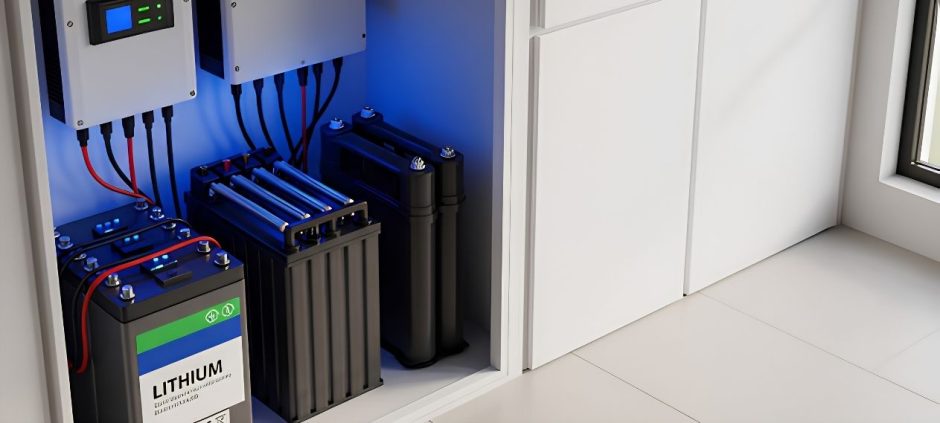
Pakistanis are increasingly investing in battery storage systems instead of exporting excess solar electricity to the national grid following recent changes to the country’s net billing policy.
According to the Pakistan Battery Import Market Report, the shift has triggered a significant rise in battery imports and consumer spending, with more households choosing to store surplus solar energy for later use.
Battery Imports Cross 6 GW
The report revealed that Pakistan imported batteries with a combined storage capacity of 6.004 gigawatts between January 2024 and August 2026.
Imports reached their highest level in April 2026, when batteries with a total storage capacity of 652.2 megawatts entered the country.
Consumers Invest Rs. 126 Billion
During April 2026 alone, consumers invested approximately Rs. 126 billion in battery storage systems.
The growing demand reflects a shift toward maximizing self-consumption of solar electricity rather than selling excess power back to the national grid under the revised net billing framework.
Government Preparing Battery Policy
The rapid increase in battery adoption has prompted the government to begin work on a National Battery Framework to support the country’s expanding energy storage sector.
The report noted that Pakistan is experiencing faster growth in solar and battery adoption than many neighboring countries.
Falling Battery Prices Fuel Growth
Declining lithium iron phosphate (LFP) battery prices have also made energy storage systems more affordable.
Average battery pack prices have dropped from around $151 per kilowatt-hour in 2022 to approximately $70 per kilowatt-hour in 2025, making battery storage increasingly accessible for residential consumers.
Energy Storage Demand Continues to Rise
Pakistan currently has an electricity generation capacity of around 39,000 megawatts, excluding solar generation, while transmission and distribution losses remain as high as 18 percent.
Globally, energy storage capacity is projected to reach 1.5 million megawatts by 2030, with battery storage investments expected to total $1.2 trillion between 2024 and 2035.
Also read: Students Develop Solar-Powered Ambulance