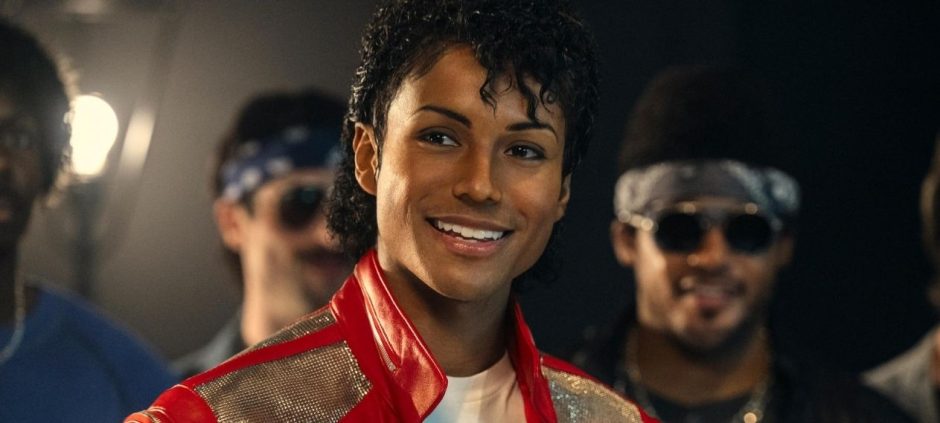
Michael hits different. The voice, the Thriller jacket, the pain – it was like reliving Michael Jackson. Jaafar didn’t play Michael, he channelled him; the way he moved in Human Nature, the artistry in Bad, that look in Don’t Stop ‘Til You Get Enough in the studio with Quincy Jones.
Michael still matters in 2026. Carrying the financial burden of supporting his family while trying to balance the demands of his solo career, Michael shows it all. A child misses a note and his father’s belt comes down. “I’ll beat you first, hug you later.” That’s an actual Joe Jackson quote. That duality is devastating; a father, his first boss and first taskmaster tuning his son like an instrument. He claims it to be discipline, the film calls it the rehearsal for everything that came after: managers, press and fans; all telling Michael who to be. The belt taught him pain is the price for being loved. He spent his life trying to buy it back with Neverland, with Beat It, with a moonwalk so perfect we’d forget the bruises.
MTV in 1983 was the Algorithm in 2026; same gatekeeping, different building. Same excuse: “You don’t fit our format.” In 1983, MTV played Duran Duran and claimed MJ was R&B, placing him on a different shelf. Their defense – “We love Black artists! We just don’t play them” – rings familiar in 2026, when Spotify says your song is too long for playlist optimization, when TikTok celebrates creators of colour but shadow bans certain trends while other creators monetize them. Representation without distribution is PR; Michael ensured that distribution.
In 1983, MJ needed Walter Yetnikoff of CBS to threaten MTV: no MJ, no Springsteen, Billy Joel for you. In 2026, you need a label push, a trend piece, a celebrity duet to make the algorithm notice you. The gate didn’t disappear. MJ broke MTV, became the biggest star ever; after Billie Jean and Wanna Be Startin’ Somethin, the channel’s ratings exploded – only to be burned in a Pepsi advertisement ten months later. The system rewards you, then consumes you. In 2026, one goes viral, signs a brand deal, burn out in six months, and the algorithm forgets you next week.
On 27th January 1984, at Los Angeles’ Shrine Auditorium, the fateful Pepsi commercial with 3,000 audience changed everything. The shoot went smooth until the sixth take as he descended a staircase and his hair ignited, making him suffer severe second and third-degree burns to his scalp. Michael kept performing for several seconds till the flames spread. The disturbing moment has been very well-depicted in the movie. He almost died; this being the start of his neurological issues and chronic pain. We still treat humans like props. The only difference is the artist holds the camera while they bleed. Joe hit Michael to get the note right, and he got burnt to get the shot right.
Michael makes one think about race, fame, trauma and media – before you judge the man, measure the miles he walked in those shoes. A father’s belt, bans, burns – he moonwalked through all of it to give you Thriller. The film doesn’t ask us to absolve him; it asks us what do we do to our geniuses before we mourn them.
Ending the biopic before the allegations, isn’t erasure; it’s chronology. The man was a genius before he was turned into an accusation. The film shows you his intellect. We want biopics to be trials, this one chose to be a eulogy. That’s not cowardice. That’s a different kind of courage. In 2026 we demand artists to be moral leaders, CEOs, therapists; Michael was none of these. The film ends when the labour does. Maybe that’s honest. We may not have forgotten the controversies, but for the first time in years, someone lets you remember the gift first.