China has test-fired a long-range ballistic missile from a nuclear-powered submarine into the Pacific Ocean, prompting concern from regional allies and the United States. While Beijing described the launch as a routine military exercise, several countries warned it could undermine stability across the Indo-Pacific.
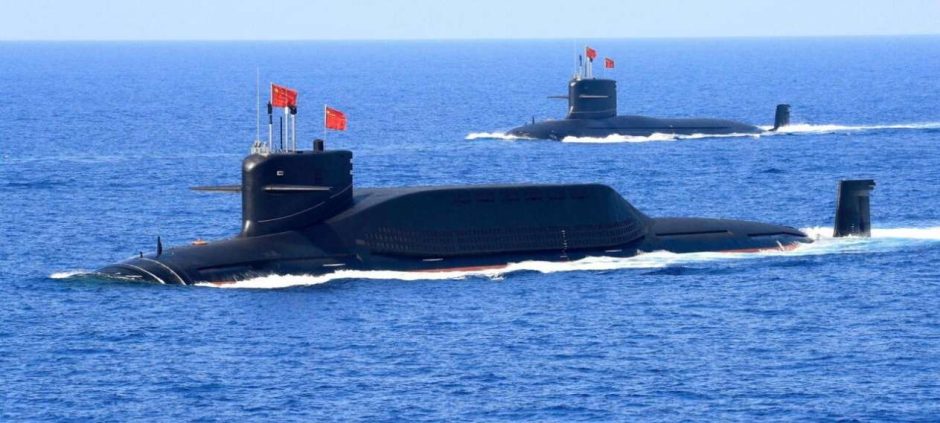
According to Chinese state media, the missile was launched at 12:01 p.m. local time (0401 GMT) on Monday from a nuclear-powered submarine operated by the People’s Liberation Army (PLA) Navy. The missile carried a dummy warhead and landed in a designated area of international waters in the Pacific Ocean.
State news agency Xinhua and broadcaster CCTV described the launch as part of China’s annual military exercises, stressing that it was not directed at any specific country or target.
Chinese Foreign Ministry spokesperson Mao Ning said the test was conducted safely, professionally, and in accordance with international law. She added that relevant countries had been notified in advance and urged them not to overinterpret the exercise.
Although Beijing did not officially identify the missile, state-run media cited military experts who believe it was the JL-3, China’s most advanced submarine-launched ballistic missile. According to the U.S. Department of Defense, the JL-3 is capable of striking the continental United States from Chinese coastal waters, significantly extending China’s strategic nuclear reach.
The United States confirmed it monitored the unarmed intercontinental-range missile launch. U.S. State Department spokesperson Tommy Pigott called on China to improve transparency by establishing regular notification mechanisms for intercontinental ballistic missile and space launches. He also expressed concern over Beijing’s rapid expansion of its nuclear arsenal.
Security analyst Meia Nouwens said the United States and its allies would closely analyze the launch to better understand China’s evolving military capabilities.
Australia, despite receiving prior notification, described the missile test as destabilizing. Foreign Minister Penny Wong said the launch reflected China’s growing military buildup, which lacks sufficient transparency.
Australian Prime Minister Anthony Albanese warned that testing a nuclear-capable intercontinental ballistic missile from a nuclear-powered submarine raised serious concerns about nuclear proliferation and global security. Defence Minister Richard Marles added that while the missile was not launched near Australia, it demonstrated China’s increasing ability to project nuclear capabilities over much greater distances.
The launch came as Australia and Fiji signed the Ocean of Peace mutual defence alliance. During a visit to the Solomon Islands, Albanese reiterated concerns over actions that could destabilize the Pacific region.
Solomon Islands Prime Minister Matthew Wale said he had lodged a formal protest with China’s ambassador, stating that Pacific nations do not want any country, including China or the United States, using the region as a testing ground for intercontinental ballistic missiles.
Japan and New Zealand also voiced concern despite receiving advance notice. New Zealand Foreign Minister Winston Peters described the missile launch as an unwelcome development, while Japan urged China to reconsider such tests amid increasing military activity.
Meanwhile, Taiwan condemned the launch as an act of intimidation. National Security Council Secretary-General Joseph Wu said the missile’s reported flight path passed over parts of the western Pacific before landing south of Nauru, calling the launch a provocation that destabilizes the Indo-Pacific.
The missile test comes amid intensifying strategic competition between China and Western allies across the Pacific. Beijing and countries led by the United States and Australia have been competing for influence among Pacific island nations for years, making the latest launch particularly significant for regional security.
Also read: Pakistan Astronauts Selected for China Human Space Program