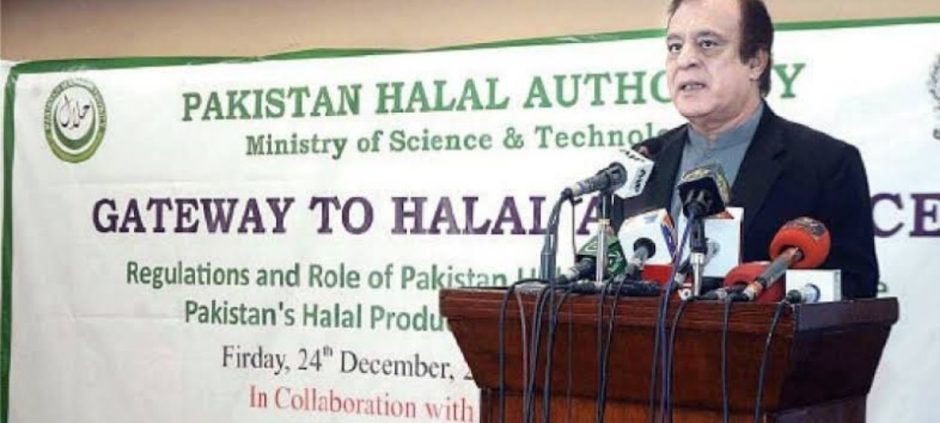
Pakistan is looking to expand the international presence of its halal businesses as the government focuses on identifying specific products, industries and overseas markets where local companies can compete effectively.
The issue was discussed during a meeting between Finance Minister Muhammad Aurangzeb and Islamic Chamber of Commerce and Development Secretary-General Shaikh Yousef Hassan Khalawi. The meeting focused on opportunities for Pakistani businesses within the rapidly expanding global halal economy.
Aurangzeb stressed that Pakistan should adopt a more targeted approach rather than treating the halal sector as a single broad market. He called for identifying specific products and industries in which Pakistani companies have competitive potential, along with countries and markets where those businesses can expand.
The government believes that a more focused strategy could help Pakistani companies improve their international reach, increase exports and build stronger commercial connections with global markets.
Pakistan Eyes Wider Halal Economy
The global halal economy extends well beyond food products. During the meeting, participants discussed opportunities in halal food, fashion, tourism, services and other consumer markets.
For Pakistan, these sectors could provide additional avenues for exports and international business partnerships. The country already has businesses operating in several halal-related industries, but officials believe greater focus is needed to identify commercially viable opportunities.
The finance minister emphasized the importance of matching Pakistani products with actual international demand. Rather than pursuing a general expansion of the halal sector, the government wants businesses to determine where their products can compete on quality, pricing and market suitability.
Islamic Chamber Highlights International Links
Shaikh Yousef Hassan Khalawi briefed the finance minister on the Islamic Chamber’s engagement with business communities in both OIC and non-OIC countries.
The organization has been working to connect Muslim businesses with private-sector companies and institutional partners, creating potential opportunities for trade, investment and commercial cooperation.
The participants discussed how these international networks could be used to help Pakistani businesses establish stronger links with buyers, investors and business communities abroad.
International experience in halal business development was also shared during the meeting, including examples related to sustainable tourism and Islamic economic cooperation.
Opportunities in Halal Tourism and Services
Halal tourism was among the areas discussed as part of the broader effort to expand Pakistan’s participation in the global halal economy.
Officials noted the importance of connecting sector-specific opportunities with international demand. This approach could allow Pakistani companies to focus their resources on markets where there is a clear demand for their products and services.
The discussion also covered opportunities in services and consumer markets, suggesting that Pakistan’s halal economy could extend into a wider range of industries rather than remaining concentrated in traditional food-related businesses.
Islamic Finance Also Discussed
The meeting also addressed Pakistan’s Islamic finance sector and potential cooperation with international platforms involved in Islamic economics and finance.
Participants emphasized the need to develop commercially practical opportunities and improve market access for Pakistani businesses.
Stronger international cooperation could help Pakistani companies connect with new partners while also providing opportunities to learn from successful halal business models in other markets.
Business Forums Could Support Expansion
International conferences, business forums and similar platforms were also discussed as potential avenues for promoting Pakistani businesses.
Such events can provide opportunities for companies to meet international buyers, investors and institutional representatives. The Islamic Chamber’s network could potentially help Pakistani businesses establish relationships with companies operating in different regions.
Aurangzeb stressed that continued engagement with the private sector would remain important for identifying practical areas of cooperation.
He also encouraged stronger connections between Pakistani businesses and international networks facilitated by the Islamic Chamber.
The government’s approach indicates a push toward a more targeted export strategy for the halal sector, with emphasis on specific products, industries and markets rather than a broad, one-size-fits-all approach.
If successfully implemented, the strategy could help Pakistani halal businesses identify new customers abroad, strengthen international partnerships and increase their contribution to the country’s export economy.
Pakistan is looking to expand the international presence of its halal businesses as the government focuses on identifying specific products, industries and overseas markets where local companies can compete effectively.
The issue was discussed during a meeting between Finance Minister Muhammad Aurangzeb and Islamic Chamber of Commerce and Development Secretary-General Shaikh Yousef Hassan Khalawi. The meeting focused on opportunities for Pakistani businesses within the rapidly expanding global halal economy.
Aurangzeb stressed that Pakistan should adopt a more targeted approach rather than treating the halal sector as a single broad market. He called for identifying specific products and industries in which Pakistani companies have competitive potential, along with countries and markets where those businesses can expand.
The government believes that a more focused strategy could help Pakistani companies improve their international reach, increase exports and build stronger commercial connections with global markets.
Pakistan Eyes Wider Halal Economy
The global halal economy extends well beyond food products. During the meeting, participants discussed opportunities in halal food, fashion, tourism, services and other consumer markets.
For Pakistan, these sectors could provide additional avenues for exports and international business partnerships. The country already has businesses operating in several halal-related industries, but officials believe greater focus is needed to identify commercially viable opportunities.
The finance minister emphasized the importance of matching Pakistani products with actual international demand. Rather than pursuing a general expansion of the halal sector, the government wants businesses to determine where their products can compete on quality, pricing and market suitability.
Islamic Chamber Highlights International Links
Shaikh Yousef Hassan Khalawi briefed the finance minister on the Islamic Chamber’s engagement with business communities in both OIC and non-OIC countries.
The organization has been working to connect Muslim businesses with private-sector companies and institutional partners, creating potential opportunities for trade, investment and commercial cooperation.
The participants discussed how these international networks could be used to help Pakistani businesses establish stronger links with buyers, investors and business communities abroad.
International experience in halal business development was also shared during the meeting, including examples related to sustainable tourism and Islamic economic cooperation.
Opportunities in Halal Tourism and Services
Halal tourism was among the areas discussed as part of the broader effort to expand Pakistan’s participation in the global halal economy.
Officials noted the importance of connecting sector-specific opportunities with international demand. This approach could allow Pakistani companies to focus their resources on markets where there is a clear demand for their products and services.
The discussion also covered opportunities in services and consumer markets, suggesting that Pakistan’s halal economy could extend into a wider range of industries rather than remaining concentrated in traditional food-related businesses.
Islamic Finance Also Discussed
The meeting also addressed Pakistan’s Islamic finance sector and potential cooperation with international platforms involved in Islamic economics and finance.
Participants emphasized the need to develop commercially practical opportunities and improve market access for Pakistani businesses.
Stronger international cooperation could help Pakistani companies connect with new partners while also providing opportunities to learn from successful halal business models in other markets.
Business Forums Could Support Expansion
International conferences, business forums and similar platforms were also discussed as potential avenues for promoting Pakistani businesses.
Such events can provide opportunities for companies to meet international buyers, investors and institutional representatives. The Islamic Chamber’s network could potentially help Pakistani businesses establish relationships with companies operating in different regions.
Aurangzeb stressed that continued engagement with the private sector would remain important for identifying practical areas of cooperation.
He also encouraged stronger connections between Pakistani businesses and international networks facilitated by the Islamic Chamber.
The government’s approach indicates a push toward a more targeted export strategy for the halal sector, with emphasis on specific products, industries and markets rather than a broad, one-size-fits-all approach.
If successfully implemented, the strategy could help Pakistani halal businesses identify new customers abroad, strengthen international partnerships and increase their contribution to the country’s export economy.
Also read: Pakistan Begins Halal Meat Exports to Central Asian Nation