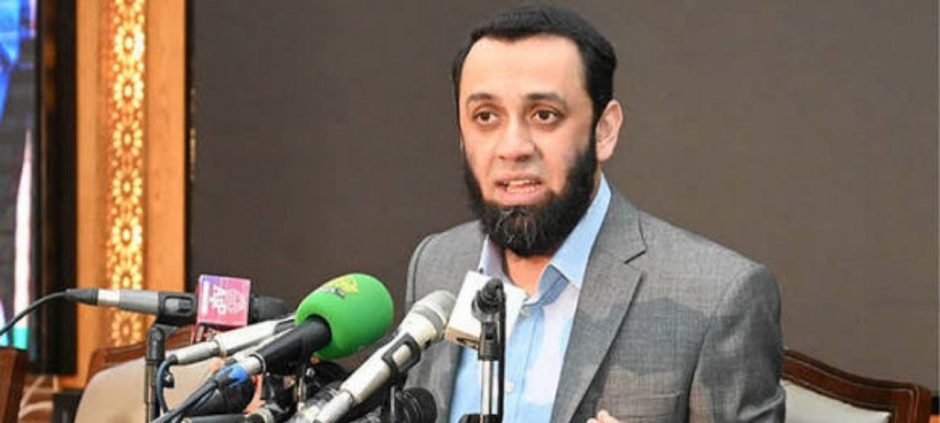
Federal Minister for Information Atta Tarar has questioned allegations that Pakistan supports terrorism, pointing to the country’s significant sacrifices in the fight against militancy.
Addressing a capacity-building workshop organised by SSDO in Islamabad, Tarar said Pakistan had lost around 90,000 lives during its long campaign against terrorism, including civilians, armed forces personnel, police officers and other law enforcement officials.
“How can a nation that has sacrificed 90,000 lives in the war against terrorism support terrorism?” he asked.
Tarar highlights National Action Plan
Tarar said terrorism had been brought under control by 2017 through the implementation of the National Action Plan (NAP).
According to the minister, the plan represented a unanimous state decision involving the federal and provincial governments, armed forces and other institutions.
He said counterterrorism operations produced significant results across the country, including areas such as Swat, South Punjab and Balochistan.
Tarar claimed that peace was restored from Karachi to Khyber within approximately two-and-a-half to three years, helping improve Pakistan’s overall security and investment environment.
Minister criticises policy reversal
The minister said subsequent policies involving the resettlement of militants and negotiations with terrorists and their facilitators weakened the progress achieved through earlier counterterrorism efforts.
He described the return of militants as a reversal of years of counterterrorism work.
Tarar stressed that Pakistan needed a consistent national policy to prevent the gains made against terrorism from being undermined.
Calls for political consensus
Tarar also called for political parties to be taken into confidence over Pakistan’s counterterrorism strategy.
He said lasting success against militancy would be difficult without political consensus and coordination between all stakeholders.
The minister said militants were increasingly targeting soft targets instead of conventional security installations.
He cited attacks on Imambargahs, children’s buses and trains as examples of the changing nature of militant violence.
Referring to the Jaffar Express attack, Tarar described the incident as unusual in an international context and praised security agencies for completing the operation.
Tarar cites Kulbhushan Jadhav case
The information minister also referred to the arrest of Indian national Kulbhushan Jadhav in Balochistan as what he described as evidence of Indian interference in Pakistan.
He further discussed allegations surrounding the Pahalgam incident, saying Pakistan had responded with facts and offered a transparent international investigation.
Tarar said Pakistan had what he described as “solid facts and figures” to present its position on terrorism and counter allegations against the country.
Focus on digital threats
Tarar also warned about the growing role of digital platforms in terrorism and national security.
He alleged that external elements were using social media to spread anti-state and negative narratives, adding that online content could potentially have serious real-world consequences.
The minister called for stronger legal mechanisms to address cybercrime, online harassment and the exploitation of children.
He said the former Cyber Crime Wing had been converted into the National Cyber Crime Investigation Agency (NCCIA) to strengthen the government’s response to digital crimes.
Government expands digital communication efforts
Tarar said the government was working toward a broader, whole-of-government approach to counter terrorism-related narratives and what he described as anti-state mindsets.
He said a new digital communication department had also been established, where electronic media content is being analysed with modern technologies, including artificial intelligence.
According to Tarar, AI tools are being used to automatically convert electronic media conversations into written text for further analysis.
He added that technology and expertise were also being provided to provincial governments to strengthen their digital communication capabilities.
Tarar said promoting Pakistan’s soft image and positive identity internationally would remain a government priority, particularly through digital platforms.
Also read: Atta Tarar Denies Deal Claims Over Imran Khan Health