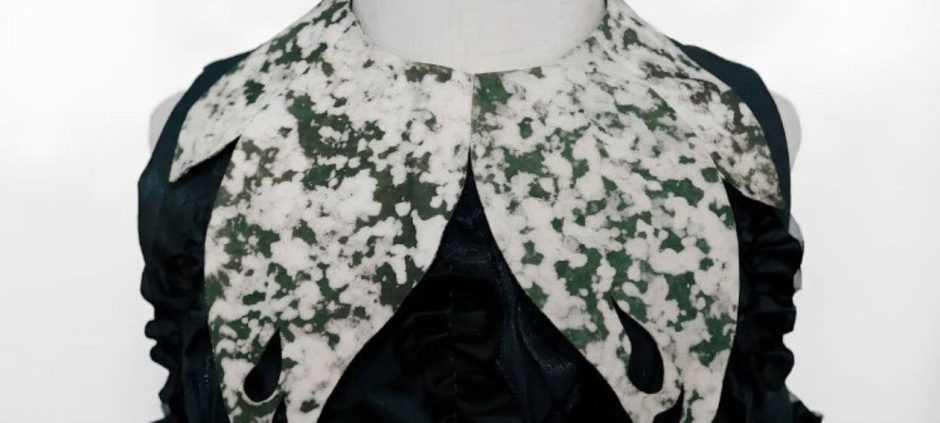
Researchers in China have developed a living textile made from fungal mycelium that can clean itself, regenerate its surface, and partially repair damage when supplied with nutrients and fresh fungal cells.
The innovative material was created by researchers at the Shenzhen Institutes of Advanced Technology and is classified as an Engineered Living Material (ELM). Unlike conventional fungal-based materials, which lose their biological properties during processing, the new textile retains dormant Cordyceps militaris mycelium within its structure. The findings were published in the peer-reviewed journal Science Advances.
According to the researchers, the fungal mycelium enters a dormant, low-metabolism state after being dried at 45 degrees Celsius rather than becoming completely inactive. When treated with a nutrient solution made from potato water, the dormant fungus becomes active again and grows new filaments, allowing the fabric to renew its surface.
The material can also repair larger holes. Researchers demonstrated that placing fresh fungal mycelium into damaged areas and supplying nutrients allows new fungal growth to bridge the gap naturally, eliminating the need for adhesives or stitching.
In addition to its self-repair capabilities, the textile has self-cleaning properties. The aerial fungal structure forms a highly water-repellent surface, causing water droplets to roll off while carrying away dust and dirt, helping keep the material clean.
The researchers also designed the textile as a programmable biological platform. By introducing engineered yeast, they produced fabrics in multiple colors, including light blue, red, orange, and dark purple. Adding Aspergillus niger created a melanin-rich layer that improved UV protection and antioxidant properties.
To showcase the technology, the research team produced a prototype dress using different sections of the living textile, combining self-cleaning and biologically colored fabrics in a single garment.
Although the technology shows promise for sustainable fashion and biodegradable materials, the researchers said it remains at an experimental stage. Further work is needed to improve durability, moisture resistance, manufacturing consistency, and long-term safety before the material can be used in commercial clothing or construction applications.
Also read: China Restricts Users from Forming Romantic Bonds with AI