The United States has launched a major wave of military strikes against Iran, targeting more than 80 sites in and around the Strait of Hormuz after Washington accused Tehran of attacking commercial vessels in one of the world’s most critical shipping routes.
The escalation has heightened fears of renewed conflict between the two countries, just weeks after both sides reached a memorandum of understanding aimed at restoring safe navigation through the Strait of Hormuz and paving the way for renewed nuclear negotiations.
Iranian media reported that President Masoud Pezeshkian cut short an official visit to Iraq and returned to Tehran following the attacks.
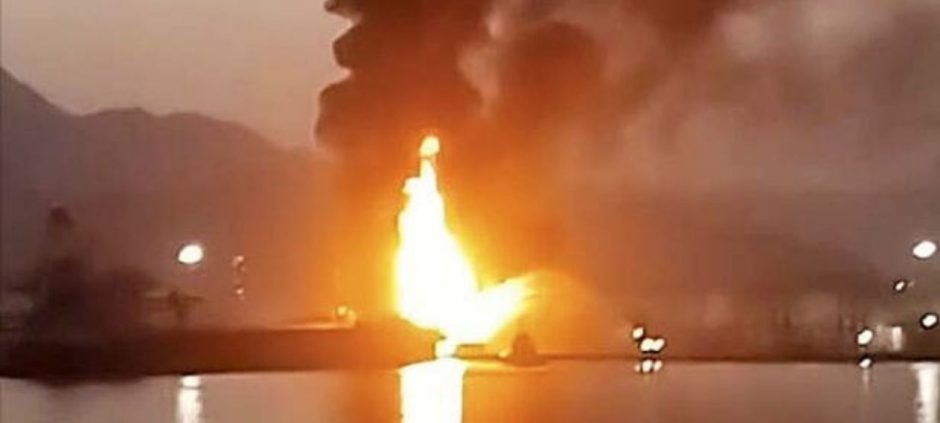
According to Iranian reports, several people were injured by shell fragments at the commercial port of Sirik, while a fire broke out at a fishing pier in Bandar Abbas after what officials described as enemy projectiles struck the area. Explosions were also reported in Sirik, Bandar Abbas, Qeshm Island, and Kharg Island, a key energy hub that handles the majority of Iran’s crude oil exports. Iranian authorities said no civilian deaths had been confirmed.
The United States Central Command (CENTCOM) said American forces struck more than 80 military targets, including air defense systems, command-and-control facilities, coastal radar installations, anti-ship missile sites, drone launch positions, and more than 60 Islamic Revolutionary Guard Corps (IRGC) small boats operating near the Strait of Hormuz.
According to CENTCOM, the operation was carried out in response to what it described as recent Iranian attacks on commercial shipping transiting the strategic waterway. The command said the objective was to reduce Iran’s ability to threaten international maritime trade and warned that US forces remain prepared to respond to further violations.
The latest escalation followed reports from the British maritime security agency UKMTO that three commercial tankers had been struck by unidentified projectiles near the Strait of Hormuz. Reuters reported that a Qatari LNG tanker was at risk of exploding, while a Saudi-flagged crude oil tanker sustained damage. Although no group claimed responsibility, US officials alleged that Iran was behind multiple attacks on commercial vessels.
In a parallel move, Washington revoked a sanctions waiver that had allowed limited Iranian oil sales. Iran’s Foreign Ministry condemned the decision, accusing the United States of violating the recently signed memorandum of understanding.
US officials told Reuters and Axios that the strikes targeted air defense systems, coastal surveillance assets, anti-ship cruise missiles, surface-to-air missile batteries, drone facilities, and port infrastructure. Officials described the operation as four to five times larger than previous US strikes in the Hormuz region earlier this month.
According to US officials, President Donald Trump approved the military operation while attending the NATO summit in Turkey after consulting senior national security officials, including Defense Secretary Pete Hegseth and Secretary of State Marco Rubio.
Iran’s senior military leadership condemned the attacks as a blatant act of aggression and vowed a “crushing response.” Iranian officials insisted Tehran would not accept foreign interference in the management of the Strait of Hormuz and warned that further retaliation remained possible.
Iranian negotiator Mohammad Bagher Ghalibaf accused Washington of violating the memorandum of understanding, stating that Iran would not bow to pressure or intimidation.
Amid the growing tensions, US officials said Iranian drones were launched toward Bahrain, while Kuwait reported power outages after disruptions to parts of its electricity transmission network.
The renewed hostilities come as the region continues to grapple with the consequences of months of conflict, with rising oil prices, heightened security concerns, and increasing uncertainty over the future of diplomatic efforts.
Also read: Heavy Missile Attack Strikes Tel Aviv Following US Strikes on Iran