The Indus Waters Treaty of 1960 is not merely a legal document for water distribution; it is a vital guarantee for regional peace and for the water and food security of both nations. For the past six decades, this treaty has not only ensured the equitable flow of river water but has also served as a robust barrier, preventing conflicts from escalating into war. However, the recent attempts by the neighboring country to unilaterally hold the treaty in abeyance and the creation of obstacles in the exchange of technical information are deeply alarming.
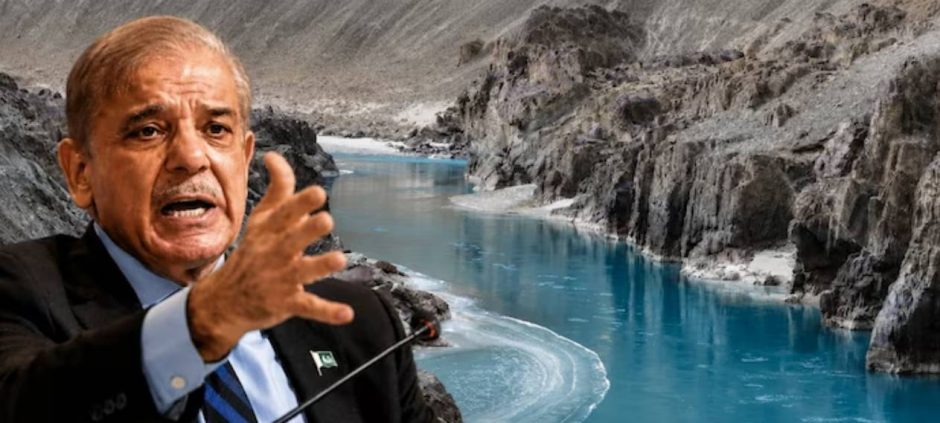
Prime Minister Muhammad Shehbaz Sharif, while addressing the 80th session of the United Nations General Assembly and recently at the passing out parade at the Pakistan Military Academy, Kakul, stated in unequivocal terms that the availability of water will be safeguarded at all costs. The Prime Minister declared: “Any attempt to stop, reduce, or divert the flow of water belonging to Pakistan under the Indus Waters Treaty would be responded to with full force and might.”
Endorsing this national stance, Federal Minister Musadik Malik remarked: “The core issue is not the shortage or excess of water, but rather its control and use as a weapon. This is not an environmental issue but a matter of justice, as using water as a weapon is more dangerous than war itself.” Former Foreign Minister Hina Rabbani Khar stated: “A country that aspires to be called a guardian of international law has today become a violator of international law. If India is allowed to violate the Indus Waters Treaty today, it will set a dangerous precedent for the entire international system.”
Bilawal Bhutto Zardari emphasized: “Water is not just a matter of geography; it is a question of food, the future, and life itself. Using maritime passages or water resources as a weapon is dangerous for global peace.” Former Federal Minister Khurram Dastagir, shedding light on the statistics, noted: “Since 2025, India has been continuously violating the Indus Waters Treaty, affecting 7.3 million Pakistanis. Blocking water to cause a food crisis is a global crime.”
The international seminar held in Islamabad became a significant platform to effectively present Pakistan’s case before the global community. The Government of Pakistan remains committed to protecting its water resources and the future of its people, and it calls upon the international community to take immediate notice of these dangerous and illegal attempts to use water as a weapon.