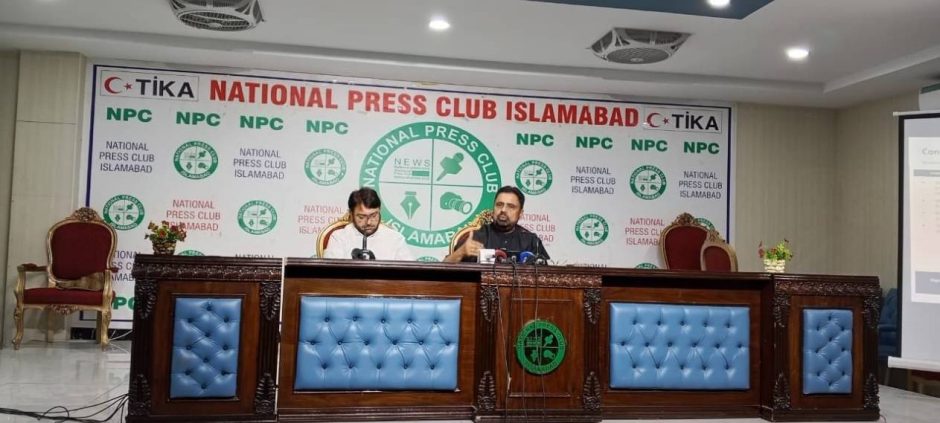
The Endit Foundation today launched Vaping Voices: Exploring Tobacco Harm Reduction in Lahore. This is the most comprehensive survey of vaping behavior yet conducted in Pakistan.
Released at the Islamabad National Press Club, the study documents how
thousands of smokers across Lahore’s retail markets are quietly using electronic cigarettes to reduce or escape the irdependence on combustible tobacco without formal support structures of any kind,
and in a regulatory environment that offers them neither guidance nor protection.
The findings arrive at a critical juncture. Pakistan loses more than 163,500 people to tobacco -related
illness every year. Economic losses attributable to tobacco were estimated at PKR 615 billion in 2019
and are projected to approach PKR 926 billion by the end of 2025 without effective intervention.
Against that backdrop, the research findings carry both promise and caution: people are showing the
will to reduce harm, but the chance to guide them safely is being lost and at the same time, a youth
access crisis is quietly growing “Pakistan loses 163,500 lives to tobacco every year, yet a harm -reduction tool is already in widespread use delivering real results without any policy support. What is missing is not the evidence, but the institutional will to act, said Dr. Ziauddin Islam, CEO of Endit Foundation .”
In September 2025, the Endit Foundation conducted Vaping Voices , a survey of 1,710 current or recent vape users recruited directly from 100 vape shops across ten major commercial markets in
Lahore. Participants shared their smoking histories, quit attempts, health experiences, risk perceptions, and the social and retail forces shaping their choices,” said Mr. Muhammad Faisal,
Director of Research at Endit Foundation, at the launch of the report.
Among the 1,058 respondents who reported a history of cigarette smoking:
- 60% reported that vaping had helped reduce their cigarette consumption 53% significantly , and a further 7% to a moderate degree. • 13% (n = 140) had stopped smoking entirely within the twelve months preceding the survey a cessation rate broadly comparable to outcomes achieved by formal nicotine replacement therapy under clinical conditions, but achieved here without any clinical support at a ll.
- Of the 140 who made the full transition off cigarettes, 94% had done so within the first six months of taking up vaping.
- 65% had either attempted to quit using vapes or were actively planning to do so a majority of the smoking population already engaging vaping as a self directed cessation tool. “Six in ten smokers reported reducing their cigarette use. One in
eight quit entirely. They did this without a doctor, without a cessation programme, and without a single piece of government guidance. That i s not a reason for satisfaction it is a reason for urgency.”
The Endit Foundation sees this not as public skepticism , but as the result of almost no credible, government -led health communication on vaping in Pakistan. When the question was reframed asking if switching to vaping lowers smoking risks rather t han if vaping is absolutely safe agreement jumped from 26% to 39%. The reasoning is there; what’s missing is reliable information reaching the public,” said Dr. Ziauddin Islam, CEO of Endit Foundation
The Endit Foundation notes that this is not evidence of a failed policy it is evidence of the absence of one. Age restrictions that generate zero reported enforcement encounters are, in practice, not restrictions at all , said Mr. Muhammad Faisal, Director of Research Endit Foundation . Based on these findings, the Endit Foundation is calling on the Government of Pakistan, the Ministry of National Health Services, and relevant regulatory authorities to take five specific actions:
The E ndit Foundation is an Islamabad based public health organization committed to evidence
based tobacco harm reduction in Pakistan. Through research, advocacy, and stakeholder engagement, the Foundation works to translate emerging evidence on reduced -risk nicotine products into
informed public policy, equitable health outcomes, and meaningful protection for vulnerable.