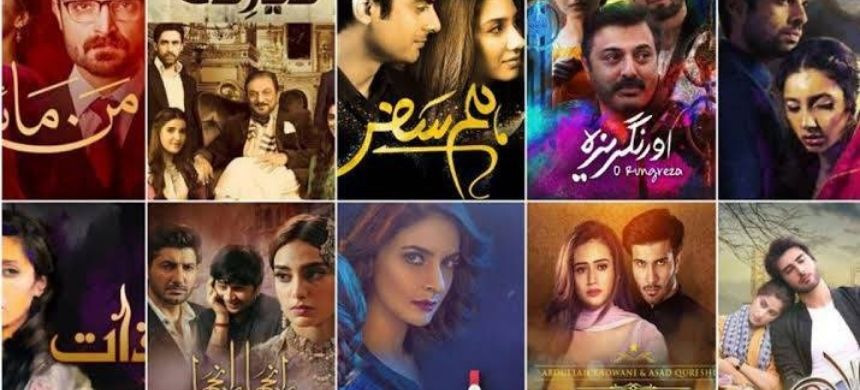
Plays like Sara Aapi only underline how the age old formulae never fail to hit the bull’s eye. Noor Jahan has been repackaged and rehashed and is presented as Sara Aapi. Only the actors change, while all else remains the same. The regurgitated storyline of the domineering mother/sister who has invested all her youth and energy in raising her children or siblings, and now expects complete subservience and full compliance from them has been done to death. It is depressing to see seasoned actresses like Saba Hamid and Savera Nadeem being wasted in roles, which require no acting expertise or prowess on their part.
All they need to do is fit into predetermined moulds, and mouth the same dialogues which they can probably deliver even blindfolded. However, to look on the brighter side, plays like Aik Aur Pakeeza and Sharpasand are shattering all stereotypes and redefining the face of Pakistani television. Noaman Ejaz has been referred to as the Amitabh Bachchan of the Pakistani television industry by the writer, as he keeps reinventing himself with every role and never manages to disappoint.
Like a chameleon, he dons the persona of each character he plays and like a fish to water, makes it his own, by giving it his own unique flavor, for want of a better word. Writers like Bee Gul are rewriting the rules and directors like Kashif Nisar are breathing life into the stories they pen and the characters they develop. The landscape is indeed undergoing a massive shift as viewers demand more thought provoking, gripping and engaging content and fortunately, the team of talented writers and directors never fail to deliver. All you need is to look at the various genres being experimented with on television to realise how much the industry has evolved and matured and will continue to do so, judging by the looks of it.
So what is new? At the risk of sounding overly optimistic and disregarding the usual fare being churned out with amazing regularity on television to play to the masses, the industry has grown by leaps and bounds. As budgets rise and there is a willingness to entertain off the cuff scripts like Dar Si Jati Hai Sila and Raqeeb Se, the future for the television industry looks promising. There is no dearth of talent in this country; all we need are platforms to showcase it. Most of the youngsters on television like Shuja Asad, Hamza Sohail, Bilal Abbas and Nameer Khan, to name a few, have oodles of talent and are fortunate to have access to superb scripts and topnotch directors like Kashif Nisar or Meesam Naqvi, to help them achieve their full potential. Similarly, actresses like Kubra Khan, Sabeena Farooq, Saboor Aly and Sajal Aly have also proved their mettle time and again and are unafraid to experiment or step out of their comfort zone, again proving their versatility and flexibility.
The current crop of plays including Dr. Bahu, Leader and Mirza Ki Heer all look extremely promising. All three are setting the TRPs on fire and raking in the moolah, highlighting the diversity and breadth of our television productions. Aside from the usual fare, writers like Bee Gul, Saji Gul, Shahzeb Khanzada, Umera Ahmad and Amna Mufti are upping the ante with productions like Raqeeb Se, Dar Si Jati Hai Sila, Case No. 9, Kafeel and Mrs. And Mr. Shameem, which have all proved to be blockbusters.
This will pave the way for other paralleltelevision productions, as audiences’ tastes mature, ripen and evolve. In fact, Case No. 9 proved that we are not only capable of producing stellar material, but are also capable of crafting strong female characters, willing to stand up for what they believe in, even if it means sacrificing their marriages or going against their better halves. This certainly made a change from the usual namby-pamby and long suffering female characters generally seen on television, especially before the prime time slot.
Muamma was another hatke production, in which Saba Qamar played the role of a seductress, who derives some sort of sadistic pleasure out of breaking up her tenants’ marriages, all newly married couples. An unusual narrative, Saba essayed the role to perfection, again illustrating the depth, range and versatility of her acting prowess. Penned by Imran Nazir, this has proved to be a massive blockbuster, largely due to the intense, gripping storyline and the watertight screenplay. In fact, Saba appeared in three very different television productions last year and proved her mettle with every single one, whether it be as a rape victim, a temptress or a woman grappling with the ups and downs of marital life.
The future for television looks promising and there appears to be a silver lining, judging by the top notch and hatke content, which is being produced. A flourishing industry, it provides livelihood for all the stakeholders associated with it, be it actors, script writers, producers or directors. While run of the mill television productions will always find takers, those that shatter and debunk stereotypes, will continue to rule the roost, upping the ante and serving to redefine and reshape the landscape of Pakistani television.