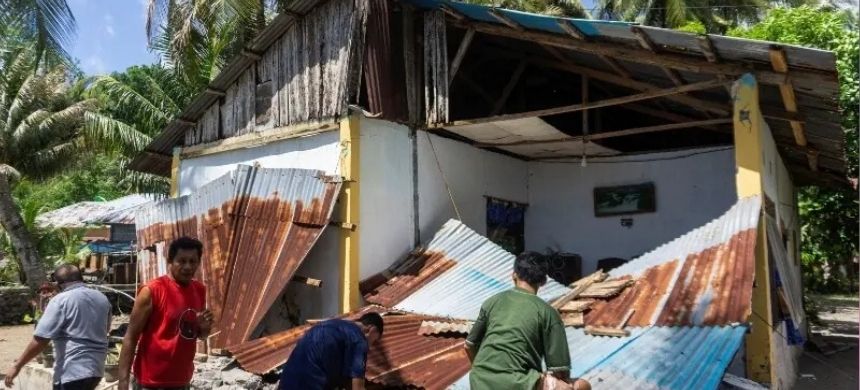
A powerful 7.8-magnitude earthquake struck the southern Philippines on Monday, leaving at least 31 people dead, more than 130 injured, and several others missing. The strong tremor caused widespread destruction, triggered landslides, and prompted tsunami warnings across parts of the Pacific region.
According to disaster management authorities, at least 12 people remain unaccounted for as rescue teams continue search operations in affected areas. The earthquake occurred offshore near General Santos City, a major urban center in southern Philippines, where several casualties were reported.
One of the worst-hit areas was Sarangani province. Local officials said at least 14 people lost their lives in Glan municipality after a landslide buried homes located near a mountain slope. Rescue workers have been searching through debris to locate survivors and recover bodies.
Authorities also reported significant damage to buildings, schools, businesses, and public infrastructure. In General Santos City, emergency responders worked through the rubble of a collapsed grocery store where employees were trapped. Videos circulating on social media showed damaged shopping centers and school buildings brought down by the earthquake.
The disaster was followed by several strong aftershocks, including one measuring 6.5 magnitude. These continued tremors increased fears among residents and complicated rescue efforts.
Following the earthquake, tsunami warnings were issued for parts of the Philippines, Indonesia, Palau, Taiwan, Papua New Guinea, and Japan. Residents living in coastal areas were instructed to move to higher ground as a precaution. More than 2,000 people were evacuated from vulnerable communities.
Later in the day, authorities lifted the tsunami alerts after assessments showed no major threat. Waves reaching Japan’s Pacific coast were reported to be relatively small.
Philippine President Ferdinand Marcos ordered the suspension of classes across Mindanao and urged residents to follow evacuation orders and safety instructions. Meanwhile, General Santos Airport was temporarily closed after parts of its infrastructure were damaged.
The Philippines is frequently affected by earthquakes because it lies along the Pacific Ring of Fire, one of the world’s most active seismic zones. The latest disaster is among the deadliest to strike the country in recent years and has renewed concerns about disaster preparedness and emergency response capabilities.
Also Read: Earthquake Tremors Felt in Islamabad And Rawalpindi