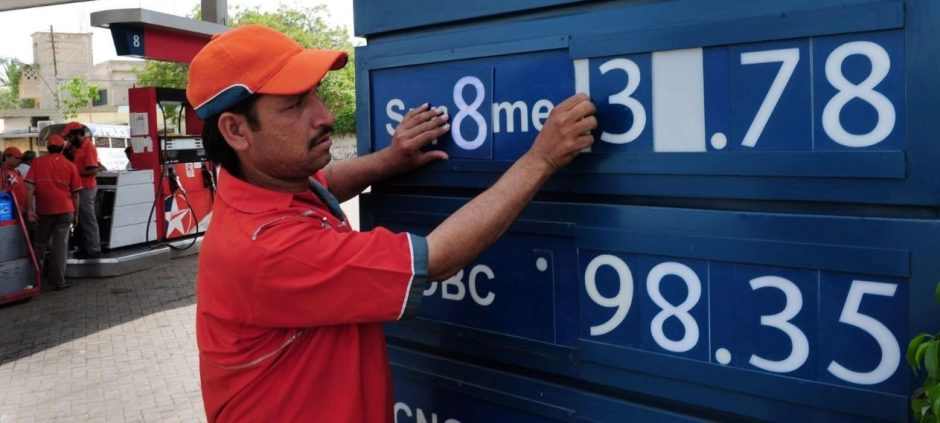
The government of Pakistan has increased fuel prices after raising the Petrol Levy on petroleum products. The decision was confirmed by officials from the Petroleum Division. The move has directly impacted petrol prices across the country.
According to official sources, the Petrol Levy on petrol has been increased by Rs 26.77 per litre. This brings the total levy to Rs 107.38 per litre. Previously, the levy stood at Rs 80.61 per litre. However, authorities clarified that the levy on high-speed diesel remains unchanged at zero.
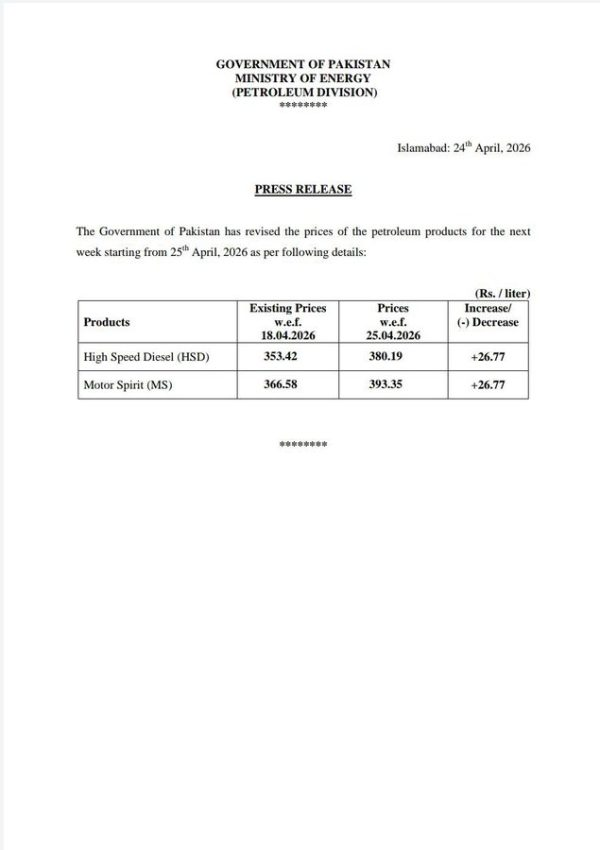
The Finance Division has issued a revised notification regarding petroleum prices. As per the new rates, both petrol and diesel have become more expensive. Petrol prices have increased by Rs 26.77 per litre. Diesel prices have also risen by the same amount.
Under the latest notification, effective from April 25, the new petrol price has been set at Rs 393.35 per litre. Meanwhile, high-speed diesel will now be available at Rs 380.19 per litre. The increase reflects adjustments in taxation and pricing policy, including changes in the Petrol Levy.
In contrast, the government has provided relief on kerosene oil. The price of kerosene has been reduced by Rs 63.60 per litre. After the reduction, kerosene will now cost Rs 365.21 per litre. This step may offer some support to consumers who rely on kerosene for daily use.
The latest revision comes after major fluctuations in fuel prices earlier this month. At the start of April, federal ministers had announced a sharp increase. Petrol prices were raised by Rs 137.23 per litre, while diesel saw an increase of Rs 184.49 per litre.
Earlier, Prime Minister Shehbaz Sharif had announced a reduction in the Petrol Levy by Rs 80. This move had temporarily lowered petrol prices to around Rs 378 per litre. However, the recent increase highlights ongoing volatility in fuel pricing and taxation policies.
Experts say that frequent changes in fuel prices can affect inflation and daily expenses. Transport and goods costs often rise when petrol prices increase. Consumers across Pakistan are likely to feel the impact of the latest revision in the coming days.
In other news read more about: Punjab Launches System to Track E-Challan Defaulters
The government has not yet indicated whether further changes in petroleum prices are expected soon. However, market trends and fiscal needs will continue to influence future decisions.