Authorities in Pakistan have tightened security and finalized arrangements in the federal capital Islamabad ahead of a possible second round of US–Iran negotiations.
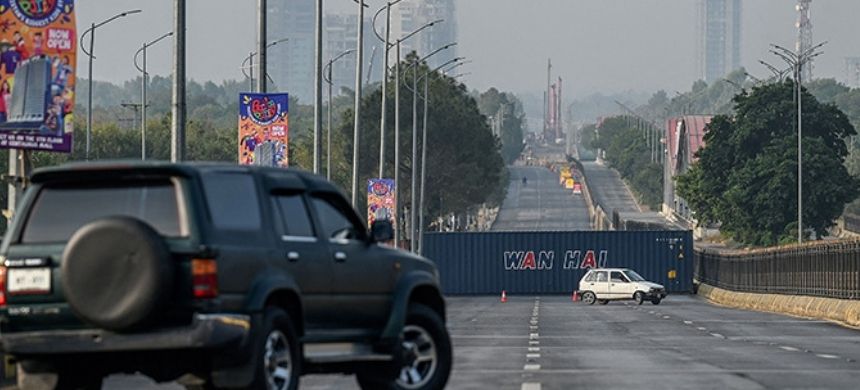
As part of these measures, multiple motorways linking Lahore, Peshawar, and Faisalabad to Islamabad have been partially restricted. Officials confirmed that the Lahore–Islamabad M2 motorway has been closed for public transport, although private vehicles are still allowed to use the route. Similar limitations have been enforced on the M1 and M3 motorways, where only personal vehicles are permitted to operate.
These steps have been taken under federal directives and implemented by the capital’s transport authorities to ensure strict security control. As a result, Islamabad has effectively been turned into a high-security zone, with an extensive traffic management plan in place.
Key routes across the city have faced closures and diversions. The Islamabad Expressway from Koral to Zero Point has been completely sealed, while Srinagar Highway is experiencing intermittent shutdowns depending on security needs. Sensitive locations, including the Red Zone, have been fully cordoned off, leading to significant disruption for residents and commuters.
Traffic flow within the city has also been heavily altered. Areas such as G-5, G-6, G-7, F-6, and F-7, particularly routes leading towards Rawalpindi, are witnessing diversions. Vehicles traveling between Faisal Avenue and Zero Point are being redirected to 9th Avenue, while traffic from Koral Chowk, Club Road, and Bhara Kahu is being rerouted through alternative paths like Taramri Chowk, Korang Road, Bani Gala, and Lehtrar Road.
Additionally, heavy intercity traffic between Lahore and Peshawar via GT Road has been diverted to alternative motorway-linked routes, including Chakri Interchange, Chak Beli Road, and Rawat, significantly reshaping travel patterns across Punjab and northern regions.
Also Read: Trump Delays Iran Ceasefire Decision as Pakistan Prepares Islamabad Talks 2.0