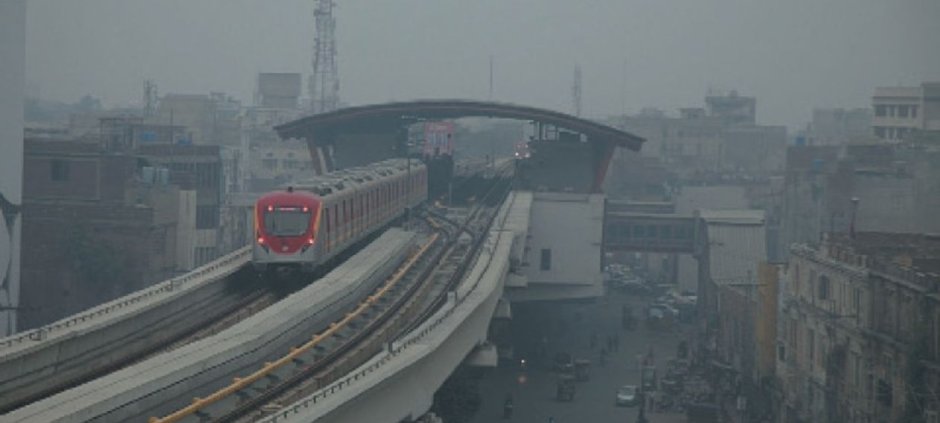
Lahore has once again emerged as the world’s most polluted city, with its overall Air Quality Index (AQI) reaching 297 as air pollution continues to affect residents across the provincial capital.
The deteriorating air quality has raised concerns about public health, particularly as several neighbourhoods have reported pollution levels significantly higher than the city’s overall reading.
According to the reported figures, Allama Iqbal Town recorded an alarming AQI of 429, while Barki Road registered 358 and Model Town reached 289.
The readings highlight the widespread impact of polluted air across different parts of Lahore, with some localities experiencing considerably worse conditions than others.
Lahore’s Air Quality Reaches Unhealthy Levels
An overall AQI of 297 indicates very unhealthy air quality, meaning exposure can pose health risks, particularly for sensitive groups.
At this level, children, older adults and people with existing respiratory or heart conditions may face greater risks from prolonged exposure to polluted air.
However, the situation in some neighbourhoods is even more concerning. Allama Iqbal Town’s reported AQI of 429 falls within the hazardous category, indicating extremely poor air quality.
Barki Road’s reading of 358 also falls in the hazardous range, while Model Town’s AQI of 289 remains in the very unhealthy category.
These differences show that pollution levels are not uniform across the city. Residents may experience different conditions depending on their location and the timing of air-quality measurements.
Area-Wise AQI Readings in Lahore
The reported readings from different parts of the city show the extent of the pollution problem.
| Area | Reported AQI | Air quality category |
|---|---|---|
| Allama Iqbal Town | 429 | Hazardous |
| Barki Road | 358 | Hazardous |
| Lahore overall | 297 | Very unhealthy |
| Model Town | 289 | Very unhealthy |
The figures underline the need for residents to remain cautious, especially in neighbourhoods where pollution levels have reached hazardous ranges.
AQI readings can change throughout the day depending on weather conditions, emissions and the concentration of airborne pollutants. Residents should therefore check updated local measurements before making decisions about outdoor activities.
Health Experts Advise Residents to Limit Outdoor Exposure
Medical experts have advised citizens to avoid unnecessary outdoor activities while air pollution remains severe.
People have also been urged to reduce the time they spend outside, particularly during periods when pollution levels are elevated.
Protective masks have been recommended for residents who need to leave their homes. A properly fitted N95 or equivalent respirator can provide better protection against fine particulate matter than ordinary cloth or surgical masks.
Children, senior citizens and people with asthma or other respiratory conditions should take additional precautions.
Residents experiencing breathing difficulties, persistent coughing, chest discomfort or irritation should seek medical advice rather than ignoring symptoms.
How Lahore’s Smog Can Affect Public Health
Air pollution is associated with several short-term and long-term health concerns.
Fine particulate matter, particularly PM2.5, can enter deep into the lungs and contribute to respiratory and cardiovascular problems.
Short-term exposure may cause:
- Coughing and throat irritation.
- Eye and nose irritation.
- Breathing difficulties.
- Worsening asthma symptoms.
- Increased discomfort during outdoor physical activity.
Prolonged exposure to polluted air can also increase the risk of serious health complications, particularly among vulnerable populations.
Children may be especially affected because their respiratory systems are still developing. Older adults and people with existing medical conditions may also experience more severe effects.
Precautions Residents Should Follow
With Lahore’s AQI reaching very unhealthy and hazardous levels in different areas, residents are advised to take practical steps to reduce exposure.
1. Avoid unnecessary outdoor activities: Limit outdoor exercise, walking and other strenuous activities when pollution levels are high.
2. Wear a suitable protective mask: Use a well-fitted N95 or equivalent respirator when going outside, particularly in heavily polluted areas.
3. Keep windows closed during severe pollution: Reduce the entry of polluted outdoor air into homes when conditions are particularly bad.
4. Protect children and older adults: Limit their outdoor exposure and follow health guidance during periods of severe smog.
5. Monitor local AQI updates: Check reliable air-quality monitoring sources because conditions can vary between neighbourhoods and throughout the day.
6. Seek medical attention when necessary: People experiencing serious breathing problems or chest discomfort should consult a healthcare professional.
Lahore’s Pollution Problem Raises Fresh Concerns
Lahore’s latest AQI readings have renewed concerns about the city’s recurring air-pollution problem.
The overall reading of 297, combined with hazardous measurements in Allama Iqbal Town and Barki Road, highlights the seriousness of the situation.
While individual AQI readings provide a snapshot of air quality at a particular time, continued monitoring is important to understand how conditions develop across the city.
For now, residents are being advised to minimise unnecessary exposure, take protective measures and pay close attention to local air-quality updates as pollution continues to affect Lahore.
Also read: Lahore Tops Global Pollution Rankings as Smog Worsens