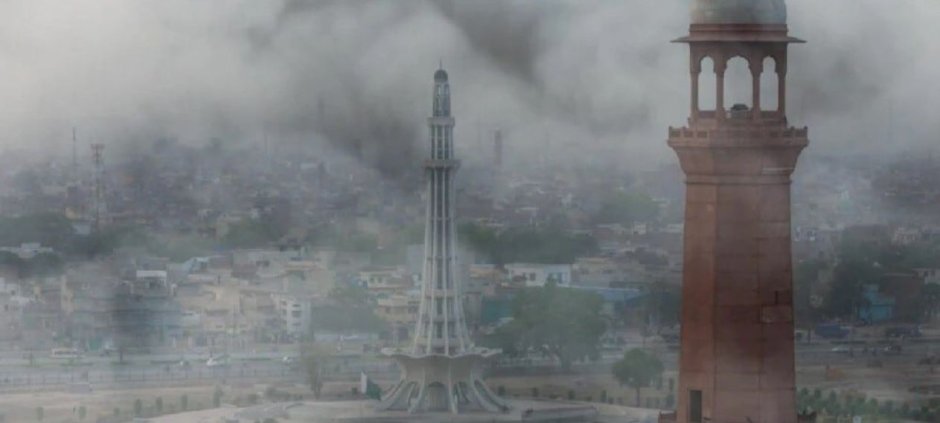
Lahore has once again topped the global ranking of the world’s most polluted cities, with its Air Quality Index (AQI) rising above 240 early Monday morning, according to the Meteorological Department.
The city continues to face severe air pollution as dry weather and the absence of expected rainfall offer little relief. The worsening air quality has raised concerns about the health of residents, particularly children, older adults and people with existing respiratory or heart conditions.
However, Lahore’s position in the global ranking improved by midday as pollution levels declined.
Lahore’s AQI Falls to 189 by Noon
Lahore recorded an AQI of more than 240 in the early hours of Monday, placing it at the top of the global pollution ranking.
By around noon, the city’s AQI had dropped to 189, moving Lahore to second place. India’s Mumbai took the top position with an AQI reading of 197.
The change highlights how pollution levels and city rankings can fluctuate throughout the day. Despite the improvement in Lahore’s reading, the air quality remained a concern for residents.
AQI readings are used to communicate the level of air pollution and its potential health effects. Higher readings generally indicate greater health risks, particularly for sensitive groups.
Dry Weather Offers Little Relief
The Meteorological Department has forecast dry weather in Lahore, with no rainfall expected during the day.
The city’s minimum temperature was recorded at 19°C. With rain unlikely to provide any immediate relief, residents may continue to experience poor air quality.
Weather conditions can influence how pollutants accumulate and disperse in the atmosphere. The lack of rainfall, however, does not by itself explain all the factors contributing to Lahore’s pollution levels.
Residents are advised to follow official weather and air-quality updates as conditions may change throughout the day.
Health Risks Increase as Pollution Persists
Prolonged exposure to polluted air can affect respiratory and cardiovascular health. People may experience coughing, throat irritation, breathing difficulties and worsening symptoms of existing conditions.
Children, older adults and people with asthma or other respiratory illnesses may be particularly vulnerable when pollution levels are high.
Health experts advise residents to take precautions when air quality deteriorates, especially during periods of heavy smog.
Precautions for Lahore Residents
Residents can take several steps to reduce exposure to polluted air:
Wear a well-fitting face mask when outdoors during periods of heavy pollution.
Limit strenuous outdoor activities when AQI levels are high.
Keep windows closed when outdoor air quality is poor, where practical.
Follow official air-quality advisories and health guidance.
Seek medical advice if breathing difficulties or other serious symptoms develop.
People with existing respiratory or cardiovascular conditions should take particular care and follow the advice of their healthcare providers.
Air Pollution Remains a Major Concern
Lahore’s latest ranking has renewed concerns about the city’s persistent air-quality problems. Although its AQI declined by midday, the early-morning reading above 240 highlights the severity of the pollution episode.
The city’s position in international rankings may change as readings fluctuate, but continued exposure to polluted air remains a public-health concern.
With dry weather forecast and no rain expected, residents are being urged to monitor air-quality updates and take precautions while authorities continue to face the challenge of improving Lahore’s air.
Also read: Pakistan Tops Global Air Pollution Ranking, Survey Reveals