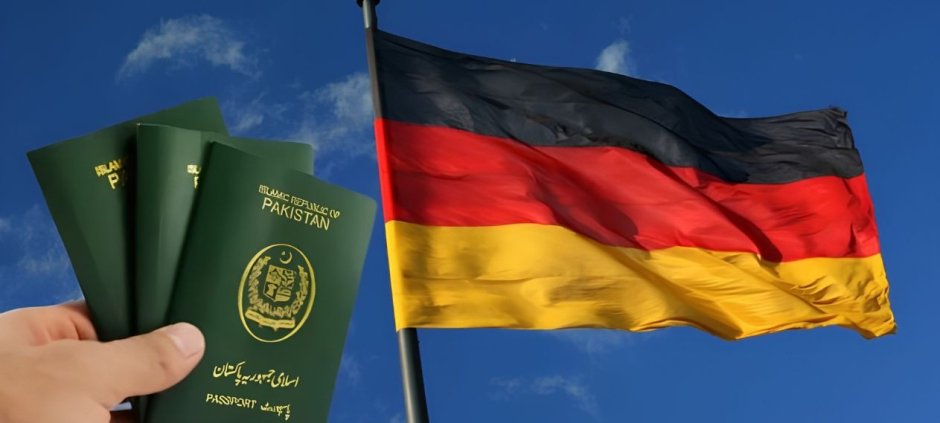
Pakistani skilled workers can travel to Germany to search for employment without securing a job offer beforehand through the country’s Opportunity Card, officially known as the Chancenkarte.
The residence route allows eligible applicants from non-European Union countries, including Pakistan, to enter Germany and look for suitable employment after arrival. It is designed to help qualified professionals connect with employers and explore opportunities in the German labour market.
The programme is not restricted to engineers or workers from specific professions. People with qualifying university degrees and vocational training in different fields can apply, provided they fulfil the relevant educational, language, financial and other eligibility requirements.
Germany initially issues the Opportunity Card for a maximum period of 12 months. During this time, applicants can search for qualified employment while also undertaking limited part-time work under the conditions of the programme.
The route provides an alternative for Pakistani professionals who have the required qualifications but have not yet secured an employment contract from a German company.
What Is Germany’s Opportunity Card?
Germany introduced the Opportunity Card, or Chancenkarte, to make it easier for qualified international professionals to enter the country and search for employment.
Under this arrangement, eligible foreign nationals can travel to Germany without having a confirmed job offer and look for suitable employment after arriving.
The programme is available to applicants from countries outside the EU and European Free Trade Association (EFTA), including Pakistan.
Unlike conventional work visa routes that generally require an employment offer or contract, the Opportunity Card allows qualified applicants to enter Germany specifically for job hunting.
The initial residence period can last up to one year, giving applicants time to contact employers, attend interviews and explore employment opportunities.
However, the card does not automatically provide unrestricted permission to work full-time. Successful applicants must follow the employment conditions attached to their residence status.
Opportunity Card Is Not Limited to Engineers
One important feature of Germany’s Opportunity Card is that it is not restricted to engineering graduates or professionals working in shortage occupations.
Applicants with qualifying academic degrees or vocational qualifications from a wide range of professional backgrounds can potentially apply.
These may include professionals working in information technology, healthcare, engineering, business, education, manufacturing and other skilled sectors.
The eligibility decision depends on the applicant’s educational qualifications, recognition status, language abilities and, where applicable, points under Germany’s immigration system.
Having a qualification in a shortage occupation can provide an additional advantage under the points-based route. However, working in a shortage occupation is not a universal requirement for obtaining the card.
Applicants seeking employment in regulated professions, particularly certain healthcare occupations, may still need official recognition, professional registration or a licence before they can practise in Germany.
Who Can Apply for Germany’s Opportunity Card?
Germany provides two main routes for obtaining the Opportunity Card.
The first route is available to applicants whose foreign academic degree or vocational qualification is fully recognised in Germany.
The second route is designed for qualified applicants who do not have full German recognition but can meet the requirements of the points-based system.
Route 1: Applicants With Qualifications Recognised in Germany
Applicants whose foreign university degrees or vocational qualifications are fully recognised in Germany can apply through the skilled-worker route.
These candidates do not have to qualify through the Opportunity Card points system.
A university degree may need to be verified through Germany’s Anabin database or supported by a Statement of Comparability issued by the Central Office for Foreign Education (ZAB).
Applicants with vocational qualifications must provide the relevant evidence of recognition under German requirements.
This route is particularly relevant for Pakistani professionals who have completed recognised university degrees or vocational training and can demonstrate that their qualifications meet German standards.
The official German government information also states that applicants qualifying through this route do not have to provide additional language proof specifically for the Opportunity Card. However, knowing German can improve employment prospects. <Cite refs={[“turn487472view0″,”turn487472view2”]}/>
Route 2: Applicants Through the Points-Based System
Applicants whose qualifications are not fully recognised in Germany may still qualify through the points-based route.
To use this option, candidates must first meet the basic educational and language requirements.
They must have completed a university degree or vocational training recognised in the country where they obtained it. Non-academic vocational training must generally have lasted at least two years.
They must also demonstrate German language proficiency of at least A1 or English proficiency of at least B2 under the Common European Framework of Reference for Languages.
In addition, applicants must collect at least six points under Germany’s Opportunity Card points system.
How Germany’s Opportunity Card Points System Works
The points system evaluates applicants based on qualifications, professional experience, language abilities, age and other relevant circumstances.
The main categories include:
| Eligibility Factor | Available Points |
|---|---|
| Partial recognition of foreign qualification | 4 |
| Qualification in a shortage occupation | 1 |
| At least two years of relevant work experience within the last five years | 2 |
| At least five years of relevant work experience within the last seven years | 3 |
| German language proficiency A2 | 1 |
| German language proficiency B1 | 2 |
| German language proficiency B2 or higher | 3 |
| English language proficiency C1 or higher | 1 additional point |
| Age 35 or younger | 2 |
| Age between 36 and 39 | 1 |
| Previous qualifying legal stay in Germany | 1 |
| Eligible spouse or partner also applying | 1 |
Applicants must collect at least six points to qualify through this route.
Points for professional experience must relate to the applicant’s formal qualification and should be supported by appropriate employment records.
Previous stays in Germany count only when the applicant can demonstrate at least six months of continuous legal residence within the previous five years. Ordinary tourist visits do not qualify.
All claimed points must be supported by the necessary documents and certificates during the visa application process. <Cite refs={[“turn445584view0″,”turn245820search1”]}/>
How Much Money Do Applicants Need?
Financial resources are an important requirement for Germany’s Opportunity Card.
Applicants must demonstrate that they can cover their living expenses throughout their job-search stay without depending on public assistance.
According to Germany’s official 2026 guidance, applicants must demonstrate access to at least €1,091 per month.
For a full 12-month stay, this amounts to approximately €13,092.
Applicants can generally demonstrate financial resources through a blocked bank account or an eligible Declaration of Commitment from someone in Germany.
An employment contract for permitted part-time work can also contribute towards meeting the financial requirement, depending on the salary.
The exact documentation and any additional requirements should be checked through the German diplomatic mission responsible for the application. <Cite refs={[“turn245820search0″,”turn445584view2”]}/>
Can Pakistani Workers Work While Searching for Jobs?
The Opportunity Card allows holders to undertake limited employment while searching for a suitable full-time position.
Applicants can work part-time for a maximum of 20 hours per week during their stay.
They can also undertake trial employment for up to two weeks with an individual employer, provided the trial is intended to lead to qualified employment, vocational training or a relevant qualification programme.
These provisions allow applicants to gain some practical workplace experience and interact with potential employers while continuing their job search.
However, the Opportunity Card does not permit unrestricted full-time employment.
Once an applicant secures a suitable qualified job, they generally need to apply for the appropriate residence permit, such as an EU Blue Card or a skilled-worker employment residence permit, before beginning regular full-time employment. <Cite refs={[“turn445584view1″,”turn445584view3”]}/>
How Long Is Germany’s Opportunity Card Valid?
Germany initially issues the job-search Opportunity Card for a maximum period of 12 months.
During this period, applicants are expected to find suitable employment or explore an appropriate qualification programme.
If they secure a qualified job, they can apply for the relevant residence status through the responsible foreigners authority in Germany.
In certain cases, where a qualified employment position has been found but the requirements for another residence permit are not met, the Opportunity Card may be extended for up to two additional years.
The extension is not automatic and depends on the applicable conditions. <Cite refs={[“turn445584view1″,”turn445584view3”]}/>
How Can Pakistanis Apply for Germany’s Opportunity Card?
Pakistani applicants should begin by checking whether their educational or vocational qualifications meet Germany’s requirements.
The application process generally involves the following steps:
- Check qualification recognition: University graduates can review their qualifications through the Anabin database or apply for a Statement of Comparability where necessary.
- Review language requirements: Applicants using the points-based route must demonstrate German A1 or English B2 proficiency.
- Calculate eligibility points: Candidates applying through the points route must obtain at least six points.
- Arrange financial proof: Applicants must demonstrate sufficient resources to support themselves during their stay.
- Prepare supporting documents: These may include educational certificates, employment records, language certificates, passport details, financial evidence and health insurance.
- Submit the application: Applicants should use the German Consular Services Portal and follow the instructions of the responsible German mission in Pakistan.
The German Embassy in Islamabad directs applicants to the Consular Services Portal for the relevant application process and document requirements. The German Consulate General in Karachi also publishes guidance specifically for applications handled by that office. <Cite refs={[“turn487472view1″,”turn245820search9”]}/>
Applicants should carefully review the latest checklist for their jurisdiction before submitting an application, as additional documentation may be requested.
What Happens After Finding a Job in Germany?
The Opportunity Card is intended to provide qualified professionals with time to find suitable employment rather than serve as a permanent work permit.
Once an applicant receives an appropriate job offer, they can explore the relevant residence options according to their qualifications, salary and professional circumstances.
Possible routes include the EU Blue Card, skilled-worker residence permit and other employment-related residence categories.
The applicant must complete the required change of residence status before taking up unrestricted regular employment.
This allows successful candidates to move from the job-search stage towards longer-term professional employment in Germany.
What the Opportunity Card Means for Pakistani Skilled Workers
Germany’s Opportunity Card offers Pakistani professionals another route to explore international employment opportunities without securing a job offer before travelling.
It is particularly relevant for graduates and vocationally qualified workers who have the necessary education, professional experience and financial resources but have struggled to obtain an employment contract from abroad.
However, applicants should understand that the card does not guarantee employment, permanent residency or automatic approval of a visa.
Meeting the eligibility requirements, preparing the correct documents and researching the German job market remain essential.
For Pakistani skilled workers considering Germany, the programme provides an opportunity to search for suitable employment directly in the country while benefiting from limited part-time work permissions during the initial stay.
Also read: Germany Visa Process 2026 for Pakistani Applicants