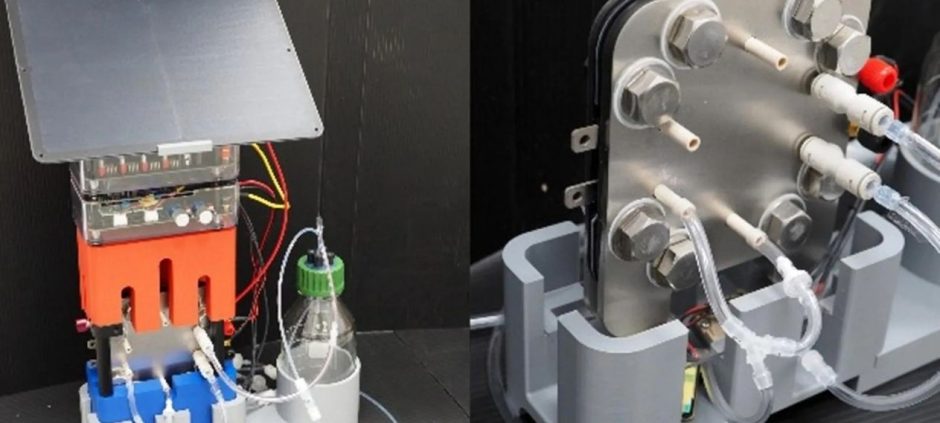
Researchers at Osaka Metropolitan University have developed a new artificial photosynthesis system capable of producing solar fuel more consistently without relying on battery-based control systems. The innovation could pave the way for a simpler and more affordable method of storing renewable energy.
The breakthrough was achieved by integrating a self-regulating chemical component directly into the electrolyzer, eliminating the need for one of the costly control systems commonly used in existing artificial photosynthesis technologies. By reducing dependence on additional electronics and batteries, the researchers believe the new design can lower both the complexity and cost of clean energy production.
Artificial photosynthesis mimics the natural process used by plants, converting sunlight, water, and carbon dioxide into usable fuels. One of the key products generated through this process is formic acid, a chemical that can efficiently store energy for later use. An electrolyzer plays a central role by transforming electricity produced by solar cells into chemical energy.
A major challenge for such systems has been maintaining efficiency as sunlight intensity changes throughout the day. Conventional designs typically use Maximum Power Point Tracking (MPPT), a technology that continuously adjusts voltage and current to keep solar panels operating at peak performance. However, MPPT systems usually require batteries and extra electronic hardware, increasing overall costs.
The research team, led by Associate Professor Yasuo Matsubara and Professor Yutaka Amao at the university’s Research Center for Artificial Photosynthesis, in collaboration with Iida Group Holdings Co., Ltd., redesigned the electrolyzer using a special solid electrolyte. The new design allows the electrolyzer to perform the MPPT function independently, removing the need for external control hardware.
According to Professor Amao, the system automatically adapts to changing sunlight conditions. As solar intensity increases, the electrolyzer naturally warms up, reducing its electrical resistance and allowing electricity to flow more efficiently. This self-regulating behavior helps stabilize fuel production throughout the day without requiring separate batteries or converters.
The team successfully tested a prototype of the technology under real outdoor conditions, where it consistently produced formic acid from water and carbon dioxide despite fluctuations in sunlight. The findings, published in the scientific journal EES Solar, highlight the potential for more efficient and lower-cost solar fuel systems that could support the future expansion of renewable energy technologies.
Also read: ‘Weird’ Marine Life Found Thriving Two Miles Under Arctic Ice