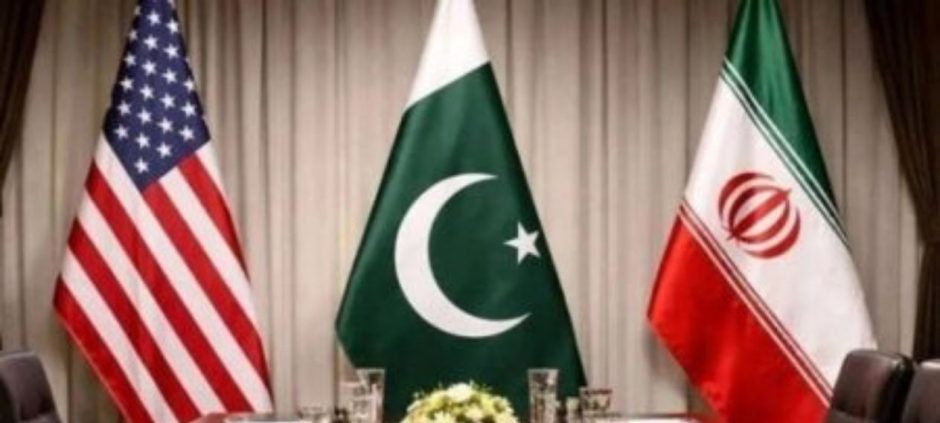
Global oil markets moved sharply lower on Monday after the government of Pakistan announced that it had helped broker a peace agreement between the United States and Iran. The announcement eased investor concerns over possible long-term disruptions to global energy supplies and raised hopes for stability in the region.
According to early market data, Brent crude futures fell by around 4 percent to nearly $83.81 per barrel, while US benchmark crude declined close to 5 percent, dropping to around $80 per barrel. Traders reacted positively to reports suggesting that diplomatic efforts had reduced the immediate risk of further military escalation in the Middle East.
Prime Minister Shehbaz Sharif said that a peace agreement between Washington and Tehran had been reached following intensive negotiations involving Pakistan and several regional partners. He stated that both sides had agreed to an immediate and permanent cessation of military operations across all fronts, including Lebanon, with an official signing ceremony expected to take place in Switzerland on June 19.
The Pakistani premier also thanked the governments of the United States and Iran for choosing diplomacy over conflict. He acknowledged the role played by regional partners, including Qatar, Saudi Arabia, and Türkiye, in helping facilitate the reported breakthrough. Meanwhile, Iranian Deputy Foreign Minister Kazem Gharibabadi also confirmed that an agreement with the United States had been finalized, while US President Donald Trump welcomed the development with a social media message saying, “Let the oil flow!”
The announcement has fueled expectations that the Strait of Hormuz, one of the world’s most critical energy corridors, could soon return to normal operations after months of disruption. Around one-fifth of global oil and liquefied natural gas shipments typically pass through the strategic waterway, making any interruption a major concern for international markets.
Despite the optimism, analysts caution that uncertainty remains until the full details of the agreement are released. Questions over implementation, security arrangements, and the safe reopening of shipping routes continue to linger. Reports also suggest that tanker traffic through the Strait of Hormuz may take time to normalize because of security checks, possible mine-clearing operations, and a backlog of vessels awaiting transit. In addition, US Senator Lindsey Graham said Congress would closely examine any final agreement involving Iran, although the reported deal does not appear to address Tehran’s nuclear program.
Also read: Pakistan Says US-Iran Peace Deal Near