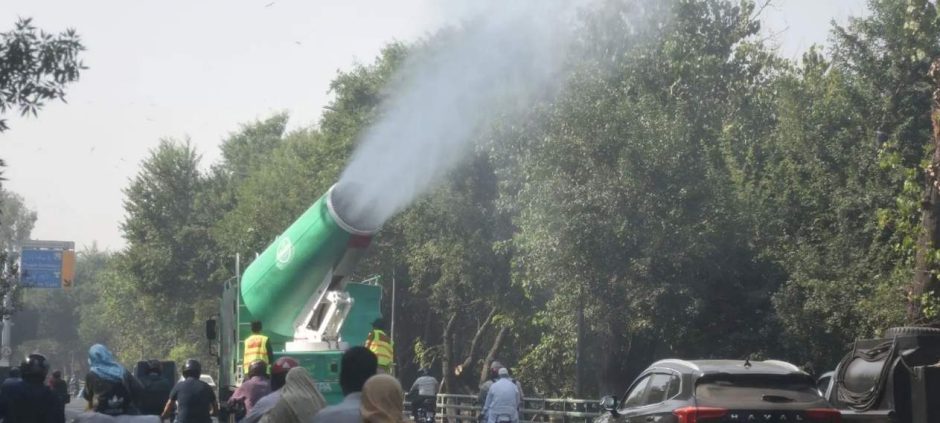
Pakistan was ranked the world’s most polluted country in 2025, with air pollution linked to nearly 22,000 deaths annually, according to the Pakistan Economic Survey 2025-26, which cited findings from the IQAir World Air Quality Report. The report highlights the growing environmental and public health challenges posed by deteriorating air quality across the country.
According to the survey, Pakistan’s population-weighted annual average PM2.5 concentration reached 67.3 micrograms per cubic meter in 2025. This level was around 13 times higher than the World Health Organization’s (WHO) recommended annual safety guideline, placing the country at the top of the global pollution rankings.
The report further noted that Pakistan was home to four of the world’s ten most polluted cities. Faisalabad recorded the highest PM2.5 concentration in the country at 98.8 micrograms per cubic meter. Other Pakistani cities included in the global top ten were Rahim Yar Khan, Lahore, and Sukkur. In total, 13 cities across the country reported PM2.5 levels exceeding 50 micrograms per cubic meter, underlining the widespread nature of the air quality crisis.
Officials identified industrial emissions, vehicle exhaust, brick kilns, and construction dust as the main contributors to worsening pollution levels. Seasonal factors have also intensified the problem. Dust storms during April and May caused major spikes in air pollution, while Karachi experienced a sharp increase in November, with PM2.5 concentrations rising by nearly 57 percent compared with the previous year.
The health consequences remain severe. The Pakistan Economic Survey stated that air pollution continues to be a major public health issue, contributing to almost 22,000 deaths every year while also placing additional strain on ecosystems and the environment. Experts warn that prolonged exposure to high levels of fine particulate matter significantly increases the risk of respiratory and cardiovascular diseases.
Authorities have introduced several measures to combat air pollution, particularly in Punjab. These include more than 150,000 environmental inspections, fines exceeding Rs687 million, the use of fog cannons in Lahore, and anti-smog campaigns targeting industrial emissions. Brick kiln reforms have reportedly achieved full compliance with zig-zag technology in motorway zones, while anti-stubble burning efforts have involved drones, 5,000 super seeders, and thermal night-vision surveillance equipment. Despite these initiatives, the survey noted that progress remains limited, with air pollution continuing to pose a persistent and serious challenge for Pakistan.
Also read: Faisalabad records worst pollution levels