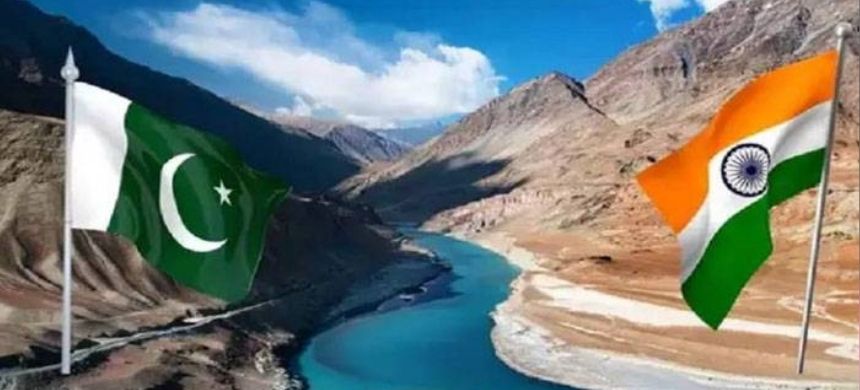
The Permanent Court of Arbitration (PCA) in The Hague has once again confirmed that the Indus Water Treaty remains fully active and legally binding on both Pakistan and India. In its latest ruling, the international tribunal stated that neither country can suspend, terminate, or place the agreement on hold through unilateral action.
The decision strengthens the legal standing of the Indus Water Treaty, which has governed water sharing between the two neighbouring countries for decades.
Tribunal Supports Earlier Interpretation of Indus Water Treaty
In its latest findings, the PCA upheld its earlier rulings regarding the interpretation and implementation of the Indus Water Treaty. The court emphasized that the treaty’s legal framework continues to apply to both Pakistan and India without interruption.
The dispute mainly revolves around India’s hydroelectric projects built on the western rivers allocated to Pakistan under the agreement. Pakistan has repeatedly argued that India’s run-of-river power projects could reduce downstream water flow and negatively affect Pakistan’s agricultural sector.
Islamabad maintains that such projects violate the spirit and technical conditions of the Indus Water Treaty.
Earlier Ruling Favoured Pakistan
In a previous award issued in August 2025, the arbitration court had already ruled in Pakistan’s favour on several important legal questions. The tribunal stated that waters from the western rivers must flow to Pakistan for “unrestricted use” under the treaty.
The court further clarified that any exceptions allowing hydroelectric power generation must strictly comply with the treaty’s technical requirements. It rejected India’s preference for using alternative engineering standards described as “ideal” or “best practice” designs.
The PCA also reaffirmed that decisions made by a Court of Arbitration or a Neutral Expert under the Indus Water Treaty are final and binding for both countries.
India Rejects PCA Proceedings
Despite the ruling, India has refused to recognize the arbitration process. Indian Ministry of External Affairs spokesperson Randhir Jaiswal described the PCA as an “illegally constituted so-called Court of Arbitration.”
He stated that India considers all proceedings, rulings, and decisions of the tribunal “null and void.” New Delhi also maintained its position that the Indus Water Treaty remains in abeyance from India’s perspective.
Pakistan Criticizes India’s Response
Political and diplomatic experts in Pakistan strongly criticized India’s rejection of the court ruling. Former ambassador Manzoorul Haq said India’s refusal to accept the tribunal’s authority reflects disregard for international legal institutions and global commitments.
He noted that the PCA’s decision is historic and legally binding for member states. According to Haq, India’s rejection of the process weakens not only the Indus Water Treaty framework but also the role of the World Bank, which serves as a guarantor of the agreement.
Concerns Over Regional Stability
Experts warned that continued violations of the Indus Water Treaty could increase tensions in South Asia. Analysts believe that disputes over water resources between two nuclear-armed nations may create serious regional security concerns.
Also Read: India’s Indus Waters Treaty Suspension Endangers Pakistan’s Water Security