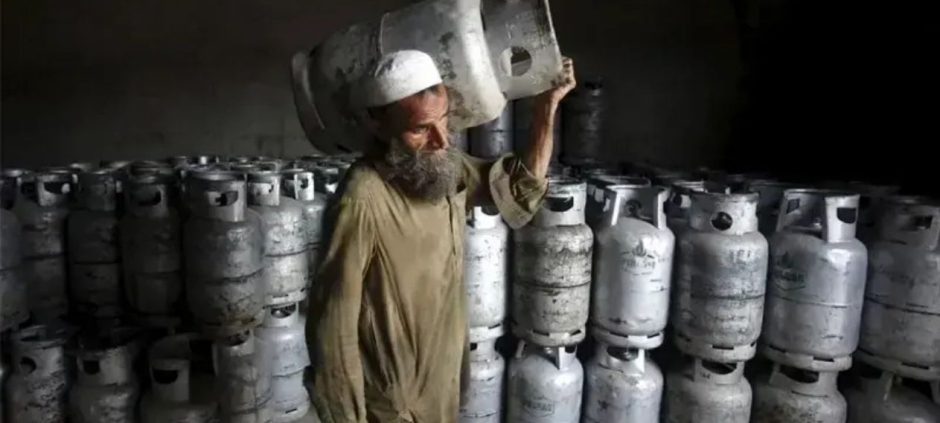
Liquefied Petroleum Gas (LPG) prices have surged sharply across major cities of Pakistan, creating concern among consumers already struggling with inflation. In open markets of Peshawar, LPG is being sold between Rs380 and Rs420 per kilogram, while prices in Lahore have climbed as high as Rs450 to Rs460 per kilogram. These rates are significantly higher than the government’s officially notified price of Rs304 per kilogram, raising questions over enforcement and market regulation.
Reports suggest that similar overpricing is being witnessed in several other urban centers across the country. Despite official price controls, authorities have so far failed to ensure implementation of regulated rates. Consumers and traders alike have expressed frustration, warning that unchecked LPG prices could further increase household expenses, especially for low-income families relying on LPG for cooking and heating purposes.
The sudden jump in LPG prices is closely linked to escalating tensions in the Middle East, which have triggered volatility in global energy markets. Brent crude oil prices surged by 6.27 percent to reach $114 per barrel, while Murban crude from the UAE climbed 3.54 percent to $107 per barrel. However, U.S. crude prices recorded a slight decline of 1.5 percent, settling around $105 per barrel during recent trading.
Energy experts believe that continued instability in the region could place additional pressure on fuel prices worldwide. Analysts are warning that prolonged increases in crude oil rates may intensify inflation, disrupt supply chains, and create fresh economic challenges for developing countries like Pakistan, where imported energy remains a major burden on foreign exchange reserves.
At the center of the growing crisis is the strategically vital Strait of Hormuz, which has once again become a focal point of geopolitical tensions. Iranian Foreign Minister Abbas Araghchi strongly criticized the latest US-backed maritime initiative, calling it “Project Deadlock” and insisting that military action cannot resolve the political confrontation unfolding in the region. He warned that further escalation could draw regional and global powers into a prolonged conflict.
Meanwhile, US President Donald Trump issued a stern warning to Iran, stating that any attack on American vessels would bring severe consequences. Trump claimed that Iran appeared more willing to negotiate but emphasized that the United States had strengthened its military presence in the region with upgraded weapons and additional deployments. Diplomatic efforts involving Pakistan are reportedly continuing behind the scenes in an attempt to reduce tensions and prevent further escalation.
Also read: LPG Price Surged By Rs40 Per Kg