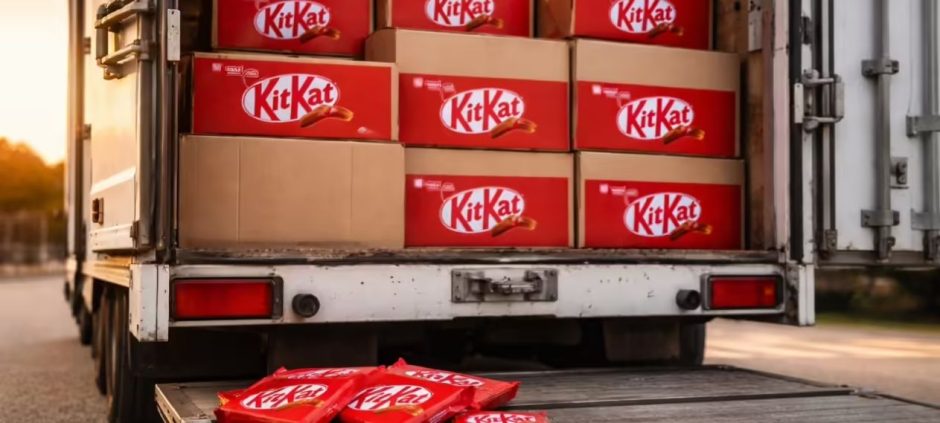
A large KitKat shipment has been stolen in Europe, raising concerns about potential shortages. The incident occurred just weeks before Easter, a key chocolate-selling season.
The Nestlé confirmed that a truck carrying 413,793 units of its new KitKat range, weighing around 12 tonnes, was taken during transit. The shipment was moving between production and distribution centers when it disappeared.
Theft During Transit
The missing KitKat shipment was traveling from central Italy toward Poland. The plan was to distribute the chocolates across several European countries along the route.
Nestlé did not specify the exact location of the theft. Both the vehicle and its contents remain unaccounted for. The company has said investigations are ongoing, in close collaboration with local authorities and supply chain partners.
Potential Impact on Stores
Nestlé warned that the stolen KitKat shipment may cause temporary shortages in stores. With Easter approaching, consumers might struggle to find their favorite KitKat bars. Retailers may also experience supply gaps during the busy holiday season.
A Nestlé spokesperson commented lightly on the theft, noting that the brand’s famous “have a break” slogan seemed to have been taken literally. However, the company confirmed that the missing shipment is a serious issue and is being actively investigated.
Tracking and Investigation
Each KitKat bar in the shipment has a unique batch code. These codes can help trace the stolen chocolates if they appear in unofficial markets. Nestlé advised retailers and partners to scan suspicious products and report any matches.
Authorities and Nestlé are working together to locate the truck and its contents. The company emphasized that the KitKat shipment could enter unofficial sales channels, and tracing the batch codes is key to recovering the stolen goods.
In other related news also read Nestle will Invest Rs. 3 Billion in Pakistan this Year
The incident highlights the challenges in supply chain security and the impact large-scale theft can have on product availability during critical sales periods.