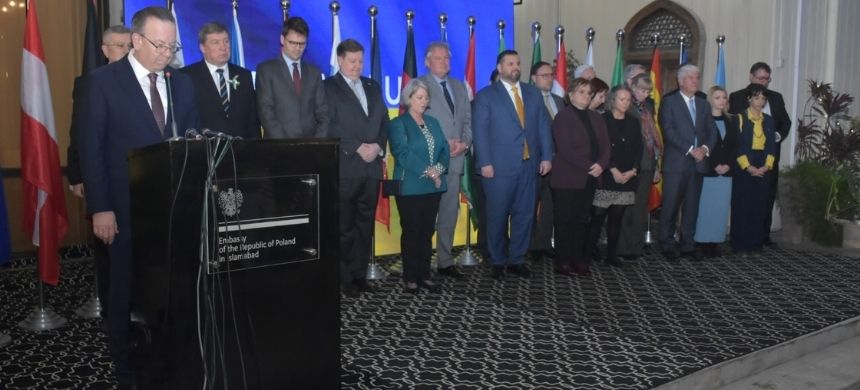
The Delegation of the European Union, Team Europe, and the Embassy of Ukraine jointly marked the fourth anniversary of Russia’s full-scale invasion of Ukraine with a solemn solidarity event held at the Embassy of the Republic of Poland. Diplomats, policymakers, civil society leaders, journalists, and international partners gathered to express unwavering support for Ukraine’s sovereignty, territorial integrity, and right to peace.
The ceremony featured a documentary screening and photographic exhibition highlighting the devastating humanitarian consequences of the war, including civilian suffering, displacement, and the destruction of homes and critical infrastructure.
In a joint statement, the EU Delegation, Team Europe, and the Embassy of Ukraine strongly condemned Russia’s continued aggression and deliberate targeting of civilian and energy infrastructure, particularly during harsh winter months, calling such actions clear violations of international humanitarian law and war crimes. They urged Moscow to immediately cease hostilities, withdraw its forces, and engage in meaningful peace negotiations.
Ukrainian Ambassador H.E. Mr. Markiian Chuchuk described the conflict as “four years of Ukraine’s struggle for freedom,” noting the immense human toll of the war. He said Russian casualties had exceeded one million killed and wounded, while Ukraine has suffered tens of thousands of deaths, the abduction of children, millions of refugees and displaced people, and massive destruction of civilian and economic infrastructure.
He stressed that Ukraine seeks peace and remains open to diplomacy, but meaningful negotiations require political will and compromise from both sides — something currently absent from Russia. He warned that any peace plan legitimizing occupation or territorial concessions would amount to appeasement and threaten global security. Thanking Pakistan for consistently supporting sovereignty and territorial integrity, he expressed hope Islamabad would play an active role at the UN Security Council in advancing a just peace.
Speaking on behalf of Team Europe, EU Ambassador H.E. Mr. Raimundas Karoblis said Russia’s invasion marked the most serious security crisis in Europe since the Cold War, challenging the very foundations of the UN Charter. He praised Ukraine’s resilience and reaffirmed the EU’s commitment to combine diplomacy, sanctions, humanitarian assistance, and military support to strengthen Ukraine’s position.
He noted that Russia has intensified attacks on civilians and energy facilities, leaving millions without electricity and heating, while also waging hybrid warfare through cyberattacks, disinformation, and interference in democratic systems. To limit Russia’s war financing, the EU has reduced energy imports from Russia by 90 percent and is considering further measures, including a complete LNG import ban and restrictions on refined petroleum products.
German Ambassador Mrs. Ina Lepel reiterated that the EU has allocated an additional €90 billion to support Ukraine and emphasized that Russia’s destruction of energy infrastructure is aimed at creating humanitarian disasters. She stated that Ukraine is ready for immediate and comprehensive ceasefire negotiations, but Russia continues to pursue maximalist demands. “We will increase pressure on Russia until it engages seriously in peace talks,” she said.
Polish Ambassador H.E. Mr. Maciej Pisarski described the war as a modern-day colonial aggression against a nation seeking freedom and dignity. He condemned recent strikes on residential areas and critical facilities and reaffirmed Poland’s full solidarity with Ukraine. He also expressed condolences over a recent terrorist attack in Islamabad, standing with Pakistan in its fight against terrorism.
A statement from the Embassy of Poland further warned that Russia’s actions threaten global security through energy blackmail, food supply disruptions, cyberattacks, and destabilizing rhetoric. It stressed that small and medium-sized countries suffer most when international law is violated and underscored the need for sustained military and non-military support to Ukraine.
The speakers collectively emphasized that supporting Ukraine is not charity but a strategic investment in global stability. They called on the international community, including Pakistan, to remain engaged, uphold multilateralism, and maintain pressure on Russia to end its aggression.
The event concluded with a unified message: lasting peace can only be achieved through accountability, respect for sovereignty, and coordinated international efforts to defend the rules-based order.