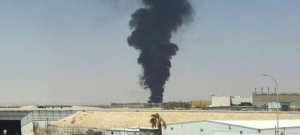
Oil prices rose more than 2% on Monday after the United States carried out a strike on Iran’s Larak Island in the Strait of Hormuz, raising fresh concerns over the future of the strategically important waterway.
The latest escalation came as the conflict between Washington and Tehran entered its sixth month. Iran subsequently retaliated by targeting US military positions in the region, adding to concerns about further disruptions to oil shipments and global energy markets.
Brent crude rises above $90
Brent crude futures climbed $2.21, or 2.51%, to reach $90.31 a barrel at 0436 GMT.
US West Texas Intermediate (WTI) crude also moved higher, rising $1.83, or 2.19%, to $85.23 a barrel.
The sharp rise came after US forces struck two Iranian launchers on Larak Island on Sunday. The attack was reportedly the first known direct US strike against Iran since late July.
The Larak Island strike has increased uncertainty around the Strait of Hormuz, a critical route for global energy shipments.
Iran retaliates after Larak Island strike
Following the US attack, Iranian media reported that Iran’s Revolutionary Guards launched attacks against two US air bases in Jordan.
The developments have raised concerns that renewed military exchanges could delay efforts to restore normal shipping through the Strait of Hormuz.
The waterway has remained a major flashpoint since the conflict began at the end of February. Before the war, around one-fifth of global oil supplies passed through the Strait.
US President Donald Trump also posted on social media that Iran’s major energy hub on Kharg Island was being “blown to smithereens.” However, there was no evidence at the time that the island was under attack, and the post included an AI-generated video without further details.
Hormuz reopening remains uncertain
Negotiations aimed at ending the conflict remain stalled as mediators continue efforts to reopen the Strait of Hormuz.
Analysts said every new escalation could push back expectations for the reopening of the waterway and keep oil prices elevated.
Suvro Sarkar, head of energy research at DBS, said the current situation appeared more likely to remain a contained confrontation rather than develop into a sustained escalation.
However, he noted that every flare-up continues to affect expectations surrounding the reopening of the Strait of Hormuz.
Sarkar said hopes for a return to US-Iran negotiations by the end of the third quarter were becoming less likely. He expected oil prices to remain within a range of around $85 to $95 per barrel unless greater clarity emerges over the situation in the strategic waterway.
Shipping activity falls sharply
Shipping data showed that visible commodity vessel traffic through the Strait of Hormuz dropped significantly over the weekend.
Only around five commodity vessels per day were recorded passing through the waterway, highlighting the caution among shipping companies concerned about possible attacks.
The United Kingdom Maritime Trade Operations also reported that a tanker was struck by a projectile while sailing inbound through the Strait on Saturday.
The latest incident has added to concerns among ship operators and energy traders about the risks associated with using the key maritime route.
New sanctions could add pressure
The latest military escalation is also taking place alongside increased US economic pressure on Iran.
US Treasury Secretary Scott Bessent told Reuters that Washington was likely to introduce new secondary sanctions against Iran on a weekly basis.
The additional sanctions could further affect Iran’s ability to sell oil and conduct international trade, potentially adding another layer of uncertainty to global energy markets.
Despite Monday’s rise, Brent and WTI were still on track for small monthly declines in August. Both benchmarks had fallen by more than 4% the previous week, marking their first weekly decline in three weeks.
Global energy markets remain on alert
The Strait of Hormuz remains central to the latest oil market concerns because of its importance to international energy supplies.
Any prolonged disruption to shipping through the waterway could put additional pressure on crude prices and increase risks for countries and businesses dependent on energy imports.
For now, analysts expect oil prices to remain sensitive to developments between the United States and Iran, particularly any further military activity around the Strait.
The situation also leaves markets closely watching diplomatic efforts to reopen the waterway and restart negotiations aimed at ending the conflict.
The latest increase in crude prices shows how quickly renewed tensions around the Strait of Hormuz can affect global oil markets, with traders remaining cautious as the conflict continues.
Also read: Oil Prices Rise Over Hormuz Reopening Uncertainty