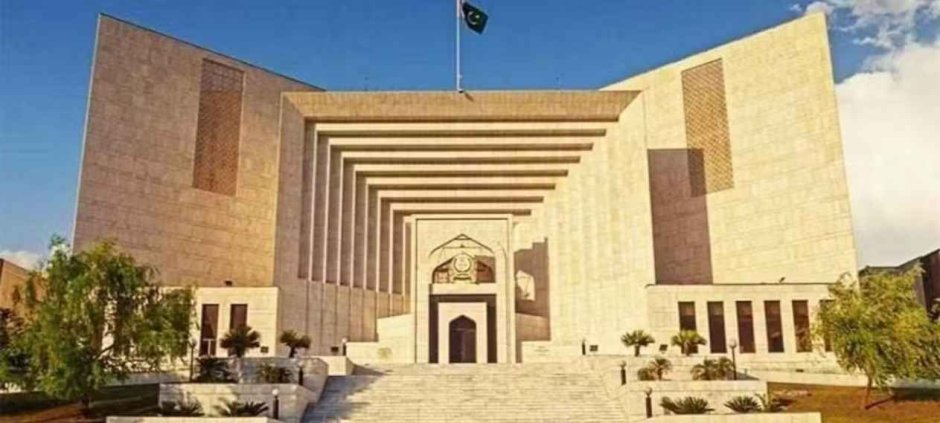
The Supreme Court has directed Nikah registrars to use the prescribed Nikahnama properly. It also ordered them to complete all relevant columns carefully.
A four-member bench headed by Justice Shahid Waheed issued the 26-page judgment on Tuesday. The ruling addressed orders previously issued by benches of the Peshawar High Court and Lahore High Court.
The Supreme Court said the matter involved wider legal questions. It was not limited to interpreting one Nikahnama clause or resolving private rights between spouses.
The judgment also discussed the legal importance of dower, commonly known as Haq Mahr. It stated that dower is a mandatory requirement of marriage under Islamic law.
The court said judges must have full authority to enforce payment when dower remains unpaid. It also issued detailed directions for future compliance with family laws.
The Supreme Court directed Nikah registrars to use the officially prescribed Nikahnama. Registrars must properly complete every relevant section of the document.
No column should be left blank without a lawful reason. Registrars must also avoid treating any section as unnecessary without proper legal grounds.
The court gave particular attention to Columns 13 through 16. These sections contain important information regarding the agreed dower.
Column 13 must clearly mention the total dower agreed by both parties. The dower may consist of money, movable property, or immovable property.
When property forms part of the dower, Column 16 must contain sufficient identifying details. These details may include its description, measurements, location, and agreed value.
Registrars must also explain relevant entries before obtaining signatures or thumb impressions. This requirement is especially important for significant terms in the Nikahnama.
Such terms include dower, special conditions, and delegated authority to pronounce talaq. It also applies when property has been provided as dower.
The court further directed registrars to ensure special conditions accurately reflect the parties’ agreement. Such conditions must not contain wording based on the registrar’s personal interpretation.
No entry should be completed based on assumptions or personal understanding. If any term is unclear, the registrar must ask the parties for clarification.
Once the Nikahnama is completed, the registrar must authenticate and preserve the record. Copies must also be provided to both spouses.
The required copy must be sent to the relevant Union Council according to the law. Authorities must ensure licensed Nikah registrars receive proper training.
The Supreme Court directed Union Council chairmen and secretaries to oversee this process. Periodic training and orientation sessions should also be arranged.
The purpose is to prevent registrars from filling Nikahnamas mechanically. The court wants agreed terms to be recorded accurately and clearly.
Authorities must also conduct periodic inspections of registrars’ maintained records. These inspections should check compliance with legal requirements and licence conditions.
If a registrar fails to perform statutory duties, authorities can take legal action. Similar action can follow violations of applicable licence conditions.
In other related news also read Supreme Court Unanimously Approves Updated Rules 2025
The directions aim to improve accuracy and compliance in Nikahnama documentation. They also place greater responsibility on registrars and supervising authorities.