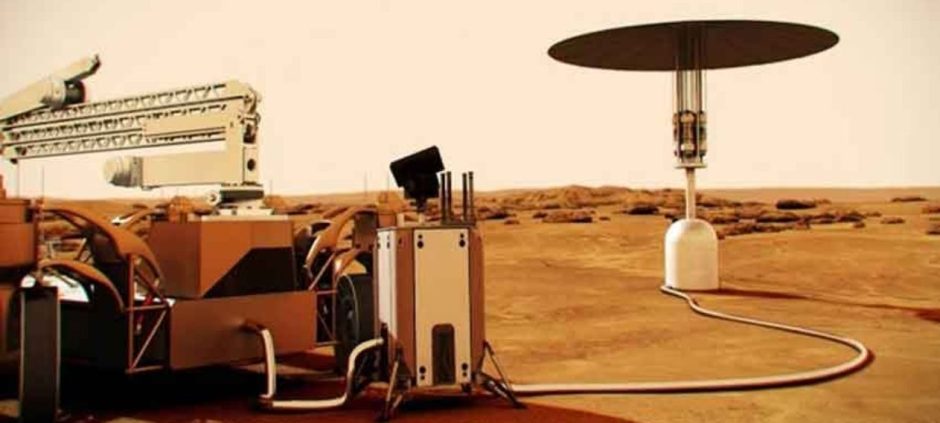
NASA and the US Department of Energy have announced a plan to place a nuclear reactor on the Moon by 2030. The project is designed to support long-term space missions and future human exploration beyond Earth.
According to NASA, the lunar reactor will provide a stable and continuous power supply. This power will be essential for the Artemis program, which aims to return astronauts to the Moon. The program also plans to establish a sustained human presence on the lunar surface.
NASA confirmed that it has signed a memorandum of understanding with the US Department of Energy. The agreement outlines joint efforts to develop nuclear power systems for space use. It also includes plans to deploy a nuclear reactor in orbit to support future missions.
The space agency said reliable energy is critical for long-duration missions. Solar power can be limited during long lunar nights. A nuclear reactor can operate without sunlight and provide steady electricity in harsh conditions.
The proposed reactor is expected to rely on advanced nuclear fusion technology. Fusion produces energy by combining atoms and generates less waste. NASA believes this technology could be safer and more efficient for space exploration.
The announcement comes amid renewed political focus on space and nuclear innovation. In December, US President Donald Trump issued an executive order. The order emphasized investment in nuclear reactors and strengthening American leadership in space.
US Secretary of Energy Chris Wright praised the initiative. He said the project could become a major milestone in both nuclear science and space exploration. He described it as a historic technological achievement.
NASA officials said the reactor could support astronaut habitats, research stations, and communication systems. It may also help power equipment needed for scientific experiments. These systems are vital for extended stays on the Moon.
The agency added that lessons from the lunar reactor could benefit future Mars missions. The Moon is expected to serve as a testing ground for new technologies. Successful implementation could reduce risks for deeper space travel.
While detailed designs have not yet been shared, NASA said development work is underway. Safety and reliability remain top priorities. Further updates are expected as the project progresses.
In other related news also read NASA Reconnects with Voyager 2 Probe
If completed on schedule, the reactor could change how space missions are powered. NASA believes nuclear energy may play a key role in humanity’s future beyond Earth.