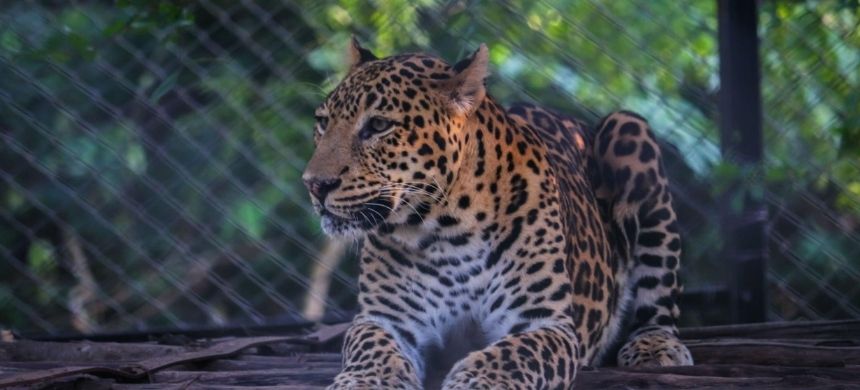
A growing number of leopard sightings in and around the federal capital has raised serious concerns about increasing human–wildlife interaction in and near the Margalla Hills National Park. Experts warn that shrinking natural habitats are forcing wild animals, especially leopards, to move closer to urban settlements.
In March, a Common Leopard was reportedly spotted on the campus of the National University of Sciences and Technology, followed by additional sightings in nearby residential areas. In response, the Islamabad Wildlife Management Board deployed trap cages and issued safety advisories for the public. Although efforts are ongoing, the animal has not yet been captured, and fortunately no injuries have been reported so far.
Conservationists believe these incidents are not isolated but part of a larger and growing trend. On the occasion of International Leopard Day, WWF-Pakistan highlighted that increased leopard movement near populated zones is directly linked to habitat loss, reduced natural prey, and rapid urban expansion around the Margalla Hills region.
Environmental specialists further warn that ongoing development near protected areas is fragmenting ecosystems and breaking natural wildlife corridors. According to WWF-Pakistan expert Muhammad Jamshed Iqbal Chaudhry, this situation is not simply animals adapting to change but rather a clear case of displacement caused by shrinking habitats and human pressure.
Such situations often lead to conflict, especially when leopards attack livestock, which can trigger retaliatory actions from local communities. To address this challenge, WWF-Pakistan has introduced a livestock insurance program in the Galiyat region to compensate farmers and reduce hostility toward wildlife.
In addition, conservation efforts now include stronger habitat protection measures, public awareness campaigns, and advanced monitoring systems. Technologies such as AI-powered camera traps and GPS tracking are being used to study leopard movement patterns, while wildlife staff are receiving specialized training to improve response and enforcement.
Experts warn that without coordinated and timely action, human–wildlife encounters are likely to increase further, particularly in expanding urban areas around Islamabad.
Also Read: Leopard Near NUST: Authorities Take Action