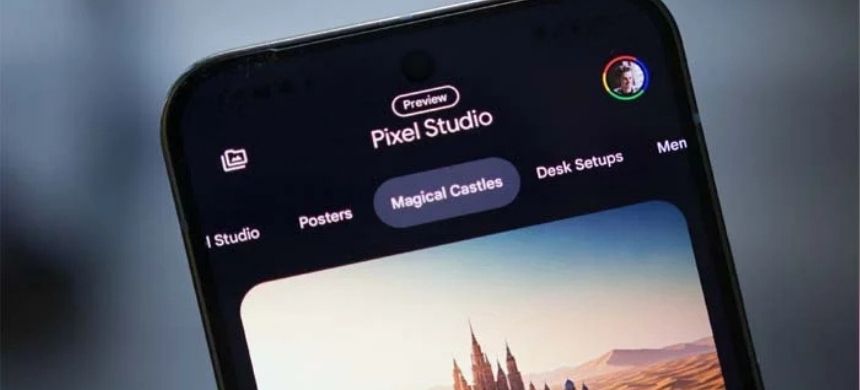
Google is gradually shutting down Pixel Studio, its AI-powered image creation app, as the company shifts its focus toward a more unified artificial intelligence platform.
The latest update to the application marks the end of its core image-generation features. Users can no longer create images, stickers, or digital artwork using text prompts. Instead, the app now displays a message directing users to Google’s newer AI tools and services for creating images and animations.
Pixel Studio was introduced alongside the Pixel 9 smartphone lineup and quickly became a creative tool for users interested in AI-generated content. The application allowed people to turn simple text descriptions into images, edit AI-created visuals, and store their work in a personal library.
Over time, Google expanded the app’s capabilities by adding features such as keyboard integration and image personalization tools. However, some of these functions were gradually reduced before the company decided to discontinue active content creation within the platform.
With the release of version 2.3, Pixel Studio’s role has changed significantly. Rather than serving as a standalone image-generation application, it now acts as a gateway to Google’s broader AI ecosystem. A prominent button within the app directs users to the Google Play Store, where they can download alternative AI tools developed by the company.
The update is currently being released in stages, meaning not all Pixel users will see the changes immediately. While the ability to generate new content has been removed, users will still be able to access images and creations that were previously saved within the app.
Industry observers view the move as part of Google’s larger strategy to streamline its growing portfolio of artificial intelligence products. Instead of maintaining several separate experimental applications, the company appears to be consolidating AI features into a single, more integrated platform.
The decision reflects a broader trend in the technology industry, where companies are focusing on unified AI experiences rather than standalone tools. As Google continues to expand its artificial intelligence offerings, Pixel Studio is becoming another example of how older experimental projects are being replaced by more comprehensive AI-powered solutions.
Also Read: Google Confirms Android Show Return Ahead of Google I/O 2026