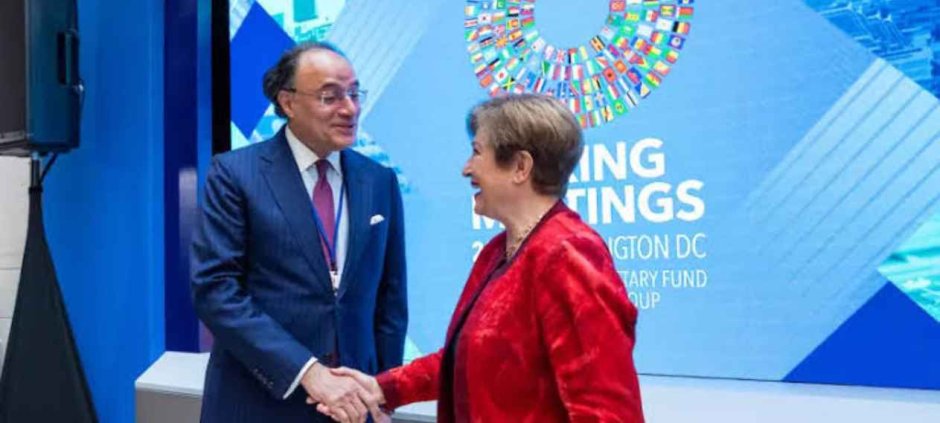
Pakistan’s Finance Minister Muhammad Aurangzeb met International Monetary Fund (IMF) Deputy Managing Director Nigel Clarke. The meeting focused on Pakistan’s economic progress, ongoing reforms, and future priorities.
The meeting took place on the sidelines of the World Bank Group and IMF Annual Meetings in Bangkok. Both sides discussed measures to support economic stability and achieve sustainable growth.
During the meeting, the Finance Minister appreciated Pakistan’s partnership with the IMF. He stressed the need for strong political commitment and consistent implementation of economic reforms.
Aurangzeb also highlighted Pakistan’s return to international capital markets. He noted strong investor participation as an important development for the country’s financial outlook.
Pakistan Highlights Progress on Economic Reforms
The Finance Minister briefed the IMF deputy managing director on several developments in Pakistan’s economy. These included an increase in foreign exchange reserves and improvements in fiscal performance.
Aurangzeb noted that Pakistan had achieved primary fiscal surpluses for three consecutive years. He also highlighted a decline in public debt as a percentage of gross domestic product (GDP).
These indicators formed part of the government’s discussion on economic stability and fiscal management. The meeting also addressed the importance of maintaining policy continuity.
Both sides discussed the need to support economic growth without weakening fiscal discipline. They also stressed the importance of preserving spending on essential public services.
Targeted Fuel Subsidies for Vulnerable Groups
The Finance Minister also briefed Clarke on targeted fuel subsidy measures introduced by the government. These measures aim to protect vulnerable segments of society from financial pressure.
Aurangzeb highlighted the importance of maintaining social cohesion while managing economic challenges. Targeted support was discussed alongside broader efforts to strengthen public finances.
The meeting also covered the need to ensure that economic reforms remain consistent. Both sides recognised the importance of balancing fiscal responsibilities with support for people who need assistance.
Focus on Foreign Exchange Reserves and Revenue
Maintaining adequate foreign exchange reserves was another key topic during the meeting. Reserves are important for meeting external payment obligations and supporting confidence in the economy.
The discussions also emphasised the need to increase government revenues. Stronger revenue collection can help support public spending and reduce pressure on government finances.
Both sides reviewed the importance of continuing reforms that strengthen Pakistan’s economic position. Policy consistency and effective implementation remained central themes throughout the discussion.
Investment in Human Capital and Infrastructure
The meeting also highlighted the importance of mobilising resources for long-term development. Participants discussed investment in human capital, infrastructure, and public services.
Spending on health and education was identified as an important consideration alongside fiscal discipline. Such investment can support workforce development and improve access to essential services.
Infrastructure development was also discussed as part of Pakistan’s broader economic priorities. Sustained investment in these areas can help support productivity and long-term growth.
In other related news also read Finance Minister Highlights Two Major Challenges Facing Pakistan
The discussions between the Finance Minister and the IMF official reflected Pakistan’s focus on economic reforms and stability. Future progress will depend on continued policy implementation, adequate reserves, stronger revenues, and investment in key development areas.