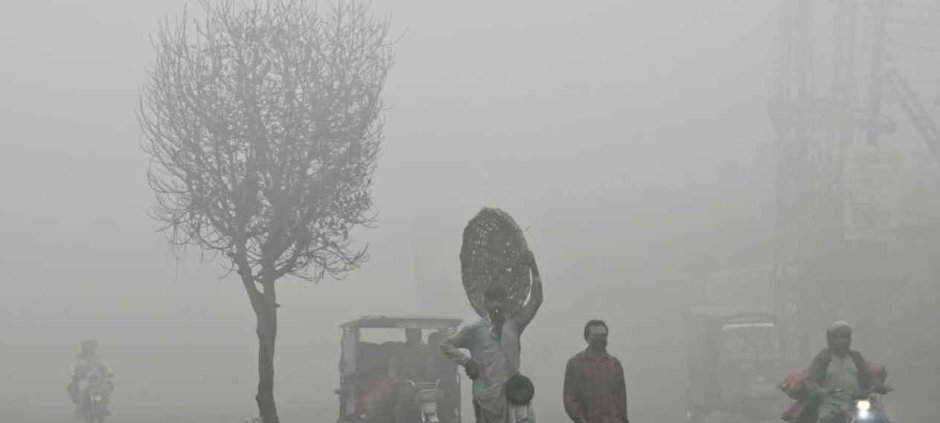
Air pollution from India is worsening smog conditions in Lahore, upper Punjab and several border districts of Pakistan. A report by Kashmir Media Service (KMS) has highlighted the impact of cross-border pollution on air quality.
According to the report, smoke from crop residue burning in Indian states is reaching Pakistani territory. Punjab and Haryana are among the major sources of this seasonal pollution.
The smoke travels across the border and contributes to unhealthy air quality in nearby Pakistani regions. The situation becomes more concerning during winter when weather conditions often trap pollutants close to the ground.
The report identifies agricultural stubble burning as a major source of seasonal air pollution. Smoke from these fires can travel across long distances and affect neighbouring areas.
Satellite Data Highlights Pollution Levels in India
Satellite observations have also shown widespread pollution over India. NASA’s MODIS and VIIRS sensors have detected persistent pollution layers across different parts of the country.
The European Space Agency’s Sentinel satellites have also recorded similar observations. These satellite systems help monitor environmental changes and identify pollution patterns.
According to the Indian Council of Agricultural Research, 3,316 crop residue burning incidents were recorded across seven Indian states. These incidents occurred between September 15 and November 1, 2026.
The reported fires have raised concerns about their contribution to regional air pollution. Smoke from agricultural activities can affect the Air Quality Index (AQI) in Pakistani Punjab.
Winter Weather Increases Smog Concerns
During winter, thick smoke and fog frequently cover the Indo-Gangetic Plains. This region includes Delhi, Punjab, Haryana and Uttar Pradesh.
The combination of agricultural smoke, industrial emissions and weather conditions contributes to poor air quality. Border areas of Pakistan are particularly exposed because of their geographical proximity.
Lahore and other districts in upper Punjab have experienced growing concerns over seasonal smog. Cross-border pollution adds another challenge to existing environmental problems.
Experts Call for Regional Cooperation
Environmental experts cited in the report have called for greater regional cooperation. They have criticised India for not pursuing a coordinated response to cross-border air pollution.
The experts have also highlighted industrial emissions as another major pollution source. Unlike seasonal crop burning, industrial activities contribute to air pollution throughout the year.
They have warned that pollution does not remain limited to national borders. Smoke and harmful particles can travel into neighbouring countries and affect public health.
The report has renewed attention on the need for regional environmental cooperation. Coordinated measures could help address pollution sources and improve air quality across affected areas.
In other related news also read India launches Operation Mahadev
Meanwhile, winter conditions continue to create challenges for air quality management in Pakistan. Reducing agricultural burning and controlling industrial emissions remain important parts of addressing the problem.