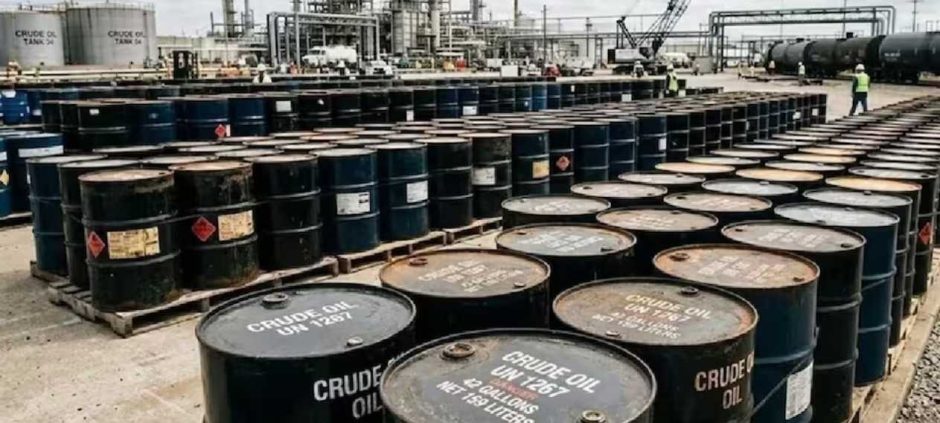
Global crude oil markets continued to witness sharp volatility this week as geopolitical tensions and supply concerns kept energy prices elevated. Both Brent crude and West Texas Intermediate (WTI) remained above the $100 per barrel mark despite slight corrections in recent trading sessions.
According to the latest market data, Brent crude was trading around $108 per barrel, while WTI crude hovered near $102 per barrel on May 1, 2026. Energy analysts say oil prices remain highly sensitive to developments in the Middle East and disruptions around the Strait of Hormuz, a key global oil shipping route.
Recent reports indicate that fears over restricted oil supply and regional instability pushed Brent crude above $119 earlier this week, marking one of the highest levels seen since 2022. However, prices later eased slightly after diplomatic discussions involving Iran and the United States showed signs of progress.
Market experts believe uncertainty surrounding oil exports, shipping disruptions, and global demand recovery continues to influence crude prices. Barclays recently raised its 2026 Brent crude forecast to $100 per barrel, warning that prolonged disruptions in the Strait of Hormuz could push prices even higher.
The U.S. Energy Information Administration also expects oil prices to stay elevated during the second quarter of 2026 before gradually easing later in the year as supply conditions improve. Analysts say the market remains extremely volatile, with traders closely monitoring geopolitical developments and production decisions by major oil-producing countries.
Higher crude oil prices are also affecting fuel costs globally, increasing pressure on inflation, transportation, and energy-importing economies such as Pakistan. Economists warn that sustained oil price increases could lead to higher petrol and diesel prices in several countries over the coming months.
Also read: Global Crude Oil Prices Remain Above $110 Per Barrel