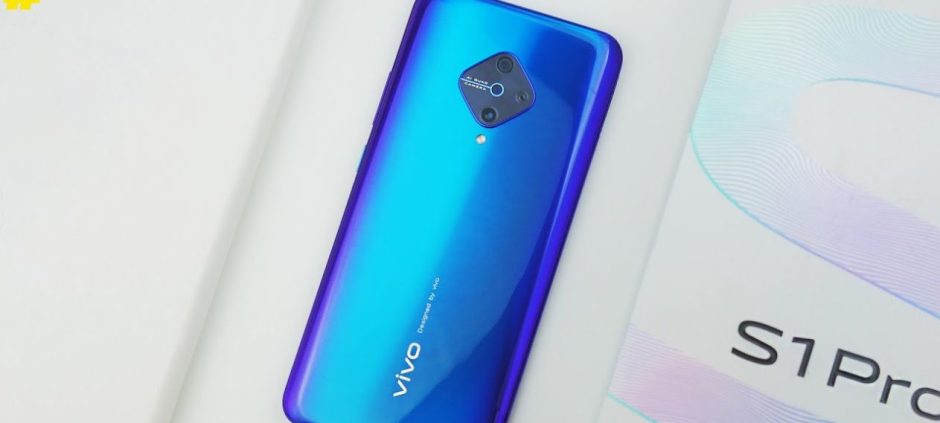
Choosing a new smartphone in Pakistan can be tricky. Many brands offer great phones at similar prices. The mid-range market is especially crowded. Phones in this category promise good features without a high price tag. The Vivo S1 was a popular choice when it launched. It brought some premium features to a more affordable price point. But years later, how does it stand against newer mid-range phones? Is the Vivo S1 still a good value for your money?
This article will compare the Vivo S1 with other mid-range phones available today. We will look at its design, performance, camera, and battery life. This will help you decide if it is the right phone for you or if you should consider other options. We want to give you a clear picture of its value in today’s market.
A Look Back at the Vivo S1
When the Vivo S1 first came out, it made a big splash. It had a stylish design that looked more expensive than it was. The phone featured a Super AMOLED display, which was rare for its price. This screen technology produces bright colors and deep blacks, making videos and pictures look great.
Another major selling point was its in-display fingerprint scanner. This was a feature usually found on high-end phones. Putting it in the Vivo S1 was a bold move by the company. It also had a triple camera setup on the back and a high-resolution selfie camera. These features made the Vivo S1 a very attractive option for young buyers in Pakistan who wanted style and good camera performance.
Design and Display Comparison
A phone’s design is the first thing you notice. The Vivo S1 has a sleek plastic body with attractive gradient finishes, like Diamond Black and Skyline Blue. It feels good to hold and is not too heavy. Its front is dominated by a 6.38-inch Super AMOLED screen with a small waterdrop notch for the selfie camera.
How does this compare to newer mid-range phones? Many new phones also use plastic bodies, but some offer more modern designs with punch-hole cameras instead of notches. This gives you more screen space. For example, phones from brands like Xiaomi and Realme often have displays with higher refresh rates, like 90Hz or 120Hz. The Vivo S1 has a standard 60Hz screen. A higher refresh rate makes scrolling and animations feel much smoother.
While the Vivo S1’s Super AMOLED screen is still excellent for watching content, the smoother experience on newer phones is a big advantage. If you spend a lot of time scrolling through social media, you might prefer a phone with a high refresh rate display.
Performance: Engine Under the Hood
Performance is what keeps your phone running smoothly. The Vivo S1 is powered by the MediaTek Helio P65 processor. It comes with 4GB of RAM and 128GB of storage. When it was released, this combination was good for everyday tasks. You could easily browse the web, use social media apps, and play some games.
However, technology moves fast. Newer mid-range phones now come with more powerful processors. Chips like the Qualcomm Snapdragon 680 or the MediaTek Helio G series offer better performance. They are more efficient, which means they use less battery. They also handle demanding games and multitasking better.
If you are a casual user, the Vivo S1’s performance might still be enough for you. But if you are a gamer or use many apps at once, you will notice a difference. Newer phones in the same price range will provide a faster, more responsive experience. The extra RAM in some newer models, like 6GB or 8GB, also helps a lot with multitasking.
Camera Battle: Capturing Your Moments
The camera is one of the most important features for many people. The Vivo S1 has a triple camera system on the back. It includes a 16MP main sensor, an 8MP ultrawide sensor, and a 2MP depth sensor. On the front, it has a 32MP selfie camera.
At the time of its launch, this was a strong camera setup. The main camera takes decent photos in good light. The colors are vibrant, and the details are sharp enough for social media. The ultrawide lens is useful for capturing large scenes or group photos. The 32MP selfie camera was a major highlight, producing very detailed selfies.
When we compare this to newer mid-range phones, we see a lot of progress. Many new phones now feature main cameras with 48MP, 64MP, or even 108MP sensors. While more megapixels do not always mean better photos, these newer sensors are often larger and more advanced. They perform better in low light and capture more detail.
Software processing has also improved a lot. Newer phones have better AI scene recognition and night modes. This helps you take great pictures in difficult lighting conditions without any effort. While the Vivo S1 camera is still usable, many current mid-range phones will give you more versatile and higher-quality photos, especially in low light.
Battery Life and Charging
Battery life is crucial. You want a phone that can last all day. The Vivo S1 comes with a 4500mAh battery. This is a good size, and with its efficient AMOLED screen and Helio P65 chip, it provides solid all-day battery life for most users. It also supports 18W fast charging, which Vivo calls Dual Engine Fast Charging. It can charge the phone relatively quickly.
This is an area where the Vivo S1 still holds up well. A 4500mAh battery is still a good capacity. However, the standard in the mid-range market has moved to 5000mAh batteries. This gives newer phones a slight edge in endurance.
Charging speeds have also seen a big jump. Many new phones in this price bracket offer 33W, 50W, or even faster charging. This means you can charge your phone from zero to full in much less time. If you often find yourself needing a quick battery top-up before heading out, a newer phone with faster charging will be more convenient.
If you’re exploring more value-packed Vivo options, don’t miss our coverage of how the Vivo T2 offers fun photography and real value in Pakistan.
The Final Verdict: Is the Vivo S1 Still a Good Buy?
So, is the Vivo S1 still the best value for your money? The answer depends on your priorities and budget. The Vivo S1 was a fantastic phone for its time. It brought premium features like a Super AMOLED display and an in-display fingerprint scanner to an affordable price.
Today, you can likely find the Vivo S1 at a very low price, especially on the used market. If your budget is very tight and you need a phone for basic tasks like calling, texting, and light social media use, it could still be a decent option. Its display is still great for media consumption.
However, if you are buying a new phone, there are better options available for a similar price to what the S1 used to cost. Newer mid-range phones offer faster processors, smoother high refresh rate displays, more capable cameras, and quicker charging. These improvements provide a significantly better user experience overall. The Vivo S1 struggles to compete with the performance and features of phones launched in the last couple of years.
Frequently Asked Questions
1. What is the price of the Vivo S1 in Pakistan now?
The price of a new Vivo S1 is hard to find, as it is an older model. You can find it in the used market for a much lower price, typically between PKR 18,000 and PKR 25,000, depending on its condition.
2. Can the Vivo S1 run popular games like PUBG Mobile?
Yes, the Vivo S1 can run PUBG Mobile, but you will have to play on low to medium graphics settings for a smooth experience. Newer phones offer better gaming performance.
3. Does the Vivo S1 have a good selfie camera?
Yes, the 32MP front camera on the Vivo S1 is one of its strong points. It captures detailed and sharp selfies, which is great for social media lovers.
4. Has the Vivo S1 received recent software updates?
As an older model, the Vivo S1 is unlikely to receive major Android OS updates anymore. It will likely continue to receive security patches for some time, but not new features.