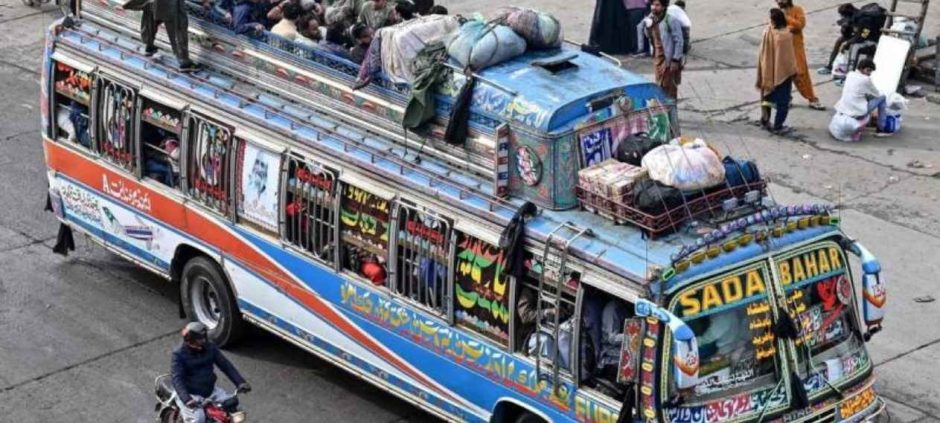
Travelers leaving Karachi are facing another financial setback as intercity bus operators have increased fares following repeated increases in petrol and diesel prices.
The latest fare hike has significantly raised the cost of traveling between major cities, adding further pressure on passengers already struggling with inflation and rising household expenses.
One of the most notable increases has been recorded on the Karachi-Lahore route, where the fare has reportedly climbed from Rs5,000 to Rs8,000.
The Rs3,000 increase has sparked frustration among passengers, who say the higher transportation costs are becoming increasingly difficult to manage.
Karachi-Lahore Fare Reaches Rs8,000
The Karachi-Lahore bus fare has increased by around 60%, rising from Rs5,000 to Rs8,000.
The route is widely used by passengers traveling between Sindh and Punjab for business, education, employment, family visits and other purposes.
For passengers traveling with families, the increase can translate into a substantial additional expense.
Travelers have questioned how ordinary households can manage such steep fare increases while already facing higher prices for food, utilities and other essential goods.
The increase has also renewed concerns about the broader impact of fuel prices on public transportation and the cost of domestic travel.
Transporters Blame Rising Diesel Prices
Transporters have defended the fare increase, saying repeated increases in diesel prices have significantly raised their operating costs.
According to transport operators, fuel represents one of the major expenses involved in running intercity bus services.
Higher diesel prices increase the cost of operating buses over long distances, while transport companies also have to manage expenses related to maintenance, staff, tolls and other operational requirements.
Transporters argue that maintaining previous fares has become increasingly difficult as fuel prices continue to rise.
They have therefore increased fares to offset the additional costs associated with running their services.
Transporters Warn of More Disruptions
Transport operators have also warned that the current fares could become unsustainable if diesel prices continue to remain high.
They have reportedly threatened to take their buses off the roads if the government does not reduce diesel prices.
Such a move could potentially affect thousands of passengers who depend on intercity buses as an affordable alternative to air travel.
Bus services provide an important connection between Karachi and cities across Punjab, Khyber Pakhtunkhwa and other parts of the country.
Any reduction in the number of buses operating on major routes could therefore create additional difficulties for travelers.
Passengers Express Frustration
The sharp increase has frustrated passengers, particularly those who regularly travel between Karachi and other cities.
Many travelers are already dealing with higher household expenses and say transportation costs are becoming another major financial burden.
For a passenger traveling alone, the increase from Rs5,000 to Rs8,000 means an additional Rs3,000 for a single journey.
For families or groups traveling together, the additional expense can become considerably larger.
Passengers have questioned whether such high fares are affordable for ordinary citizens, particularly those who have no practical alternative to long-distance bus travel.
Fuel Prices Continue to Affect Transport Sector
The latest development highlights how changes in petroleum prices can quickly affect transportation costs.
When diesel prices increase, transport operators face higher expenses for every journey. These additional costs can eventually be passed on to passengers through higher fares.
The impact is not limited to intercity buses. Higher transportation expenses can also influence the cost of goods and services because businesses depend on road transport to move products between cities.
As a result, sustained increases in fuel and transportation costs can add further pressure to household budgets.
Karachi Travelers Face Higher Travel Costs
For people traveling out of Karachi, the latest fare increase means that planning an intercity journey now requires a larger budget.
The Karachi-Lahore route provides a clear example of the scale of the increase, with the reported fare rising from Rs5,000 to Rs8,000.
Transporters maintain that the higher fares are necessary because of increasing diesel costs, while passengers argue that such increases are difficult to absorb amid the existing cost-of-living crisis.
The disagreement places pressure on the government to address fuel prices while ensuring that public transportation services remain financially viable.
Government Faces Pressure to Address Fuel Costs
Transporters’ warning about potentially withdrawing buses from the roads could increase pressure on authorities to review the situation.
The government faces the challenge of balancing fuel pricing, transport operators’ financial sustainability and the affordability of public transportation for citizens.
For passengers, any reduction in diesel prices could provide some relief if transport operators subsequently lower fares.
Until then, travelers from Karachi and other major cities may continue to face higher costs when using intercity bus services.
The latest increase demonstrates how fluctuations in petroleum prices can have a direct impact on everyday travel expenses, particularly for passengers who depend on road transportation for long-distance journeys.
With the Karachi-Lahore fare now reportedly reaching Rs8,000, travelers will be closely watching whether fuel prices decline and whether transport operators respond with any reduction in fares.
Also read: Energy Minister Defends Fuel Pricing Policy Amid Criticism