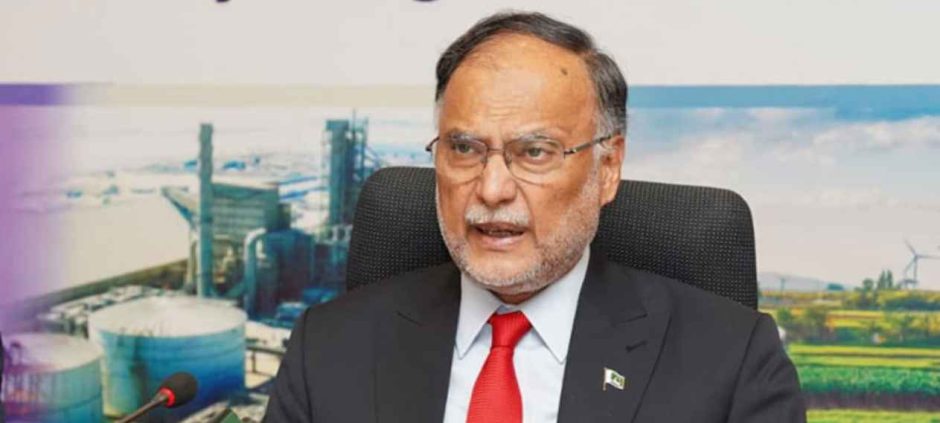
Planning Minister Ahsan Iqbal has directed authorities to begin preparations for Monsoon 2027 immediately. He warned that flood prevention cannot wait until the next rainy season.
Ahsan Iqbal said flood-control projects require eight to 10 months for completion. The process includes technical assessments, planning, approvals, funding and construction.
He issued the directions while chairing a meeting of the Prime Minister’s Emergency Response Committee. The meeting reviewed preparations and response measures for Monsoon 2026.
The minister instructed the National Disaster Management Authority (NDMA) and provincial authorities to start work without delay. Other relevant departments were also asked to participate in the planning process.
Ahsan Iqbal stressed the need to move from emergency response toward proactive disaster management. He said last-minute interventions are often more expensive and less effective.
Authorities will conduct a district-wise audit of flood-affected areas. The review will cover districts impacted by floods in 2022, 2025 and 2026.
Provincial authorities will work with irrigation departments and works departments. District administrations will also take part in the assessment.
The audit will examine bridges, culverts, drains and flood-disposal systems. Officials will identify infrastructure that may no longer withstand heavier rainfall.
The review will also identify encroachments and other blockages in floodplains. Officials will assess obstructions around flood-protection infrastructure.
Urgent and technically feasible projects will receive faster processing through a Green Channel. This approach aims to speed up approvals and funding for critical flood-control work.
The initial audit must be completed within one month. Provincial governments will then prepare time-bound action plans.
These plans will include preventive measures for the next monsoon. They will also address the rehabilitation of remaining flood damage.
Progress on the plans will be reviewed every quarter. This will help authorities monitor implementation and address delays.
The minister also highlighted plastic waste as a major factor behind urban flooding. He said waste and polythene bags often block drains and drainage outlets.
A nationwide awareness campaign has been proposed to address the issue. Authorities will also strengthen enforcement against polythene bags.
The government will develop a transition plan for plastic imports and manufacturing. The plan will also cover retail, waste management and biodegradable alternatives.
The committee was informed that Monsoon 2026 has entered its withdrawal phase. No major monsoon system is currently expected to affect Pakistan.
River flows remain normal, and no riverine flooding has been reported. However, the cumulative monsoon toll has reached 181 deaths and 515 injuries.
Around 1,740 houses and other structures have also been damaged. House collapses caused 95 deaths, accounting for more than half of the fatalities.
The NDMA is assessing vulnerable housing and reconstruction needs. It has also shared reconstruction models with provincial governments.
A low-cost and environmentally sustainable reconstruction programme is expected within two to three months. Around 640 tonnes of relief supplies have already been sent to affected areas.
The minister also directed the NDMA to prepare a Monsoon 2026 closure report. The report must be completed by the third week of September.
It will review response operations, decisions, lessons learned and institutional gaps. It will also assess progress on directives issued during the monsoon.
In other related news also read Ahsan Iqbal Clarifies Unexpected Live TV Moment
The government now aims to strengthen early planning and forecasting. The focus will remain on climate-resilient infrastructure and timely rehabilitation before future disasters.