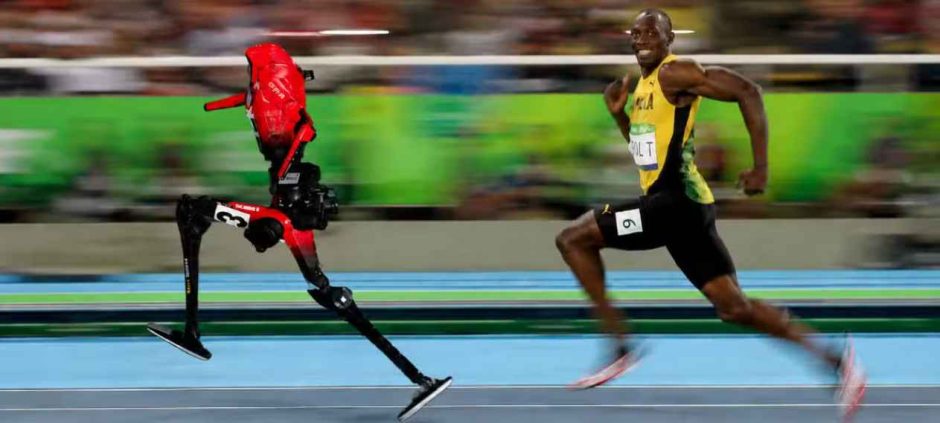
A humanoid robot has recorded a faster 100-metre sprint than Usain Bolt’s famous world record. The achievement took place in Beijing.
The robot, named Lightning, completed the race in 9.39 seconds. This was faster than Bolt’s 9.58-second world record.
Bolt set his record in 2009 during the World Championships in Berlin. His performance has remained the benchmark for human sprinting.
Lightning’s performance highlights the rapid development of humanoid robotics. Engineers are improving robot movement, balance and mechanical performance.
Artificial intelligence is also playing an important role in robotics development. Developers are working to make robots faster and more capable.
More Than 2,000 Robots Take Part
The World Humanoid Robot Games brought together more than 2,000 robots. Teams from 16 countries participated in the five-day event.
The competition was held in Beijing and featured several robotics challenges. Technology companies, research groups and robotics teams took part.
The event included running and football competitions. Robots also competed in table tennis and other activities.
These events tested different abilities among participating machines. Speed, coordination, balance and autonomous movement were among the key areas.
The sprinting event attracted attention because of Lightning’s performance. Its 9.39-second time showed the potential of modern robotic systems.
Robotics Technology Continues to Develop
Earlier humanoid robots faced major difficulties with basic movement. Modern machines can perform more complicated physical actions.
Some robots can now run, jump and participate in sports competitions. These abilities reflect progress in mechanical engineering and artificial intelligence.
However, the results do not mean robots have replaced human athletes. The machines operate under very different conditions from human competitors.
Experts also continue to identify important challenges. Stability, decision-making and practical performance remain areas for further development.
Some robots at the Beijing event struggled after reaching high speeds. This showed the difficulties involved in controlling fast-moving machines.
Maintaining balance is especially important for a humanoid robot. Faster movement can increase the risk of losing stability.
China Expands Its Robotics Ambitions
China has identified humanoid robotics as an important technology sector. The country is investing heavily in robotics hardware and artificial intelligence.
The Beijing competition provided a platform for demonstrating these developments. It also showed the growing international interest in humanoid machines.
Developers hope these robots can eventually support various industries. Potential applications include manufacturing, healthcare and logistics.
Robots could also be used for certain daily services in the future. However, widespread adoption will depend on reliability, safety and cost.
The performance of Lightning demonstrates how quickly robotic technology is progressing. Its sprint was faster than Bolt’s human record.
The achievement remains primarily a demonstration of engineering progress. Researchers still face significant challenges before robots can perform reliably in everyday environments.
In other related news also read UBTech Launches Lifelike Humanoid Robots for Home Companionship
The World Humanoid Robot Games nevertheless provide a glimpse into the future. Events like these allow developers to test machines under competitive conditions.