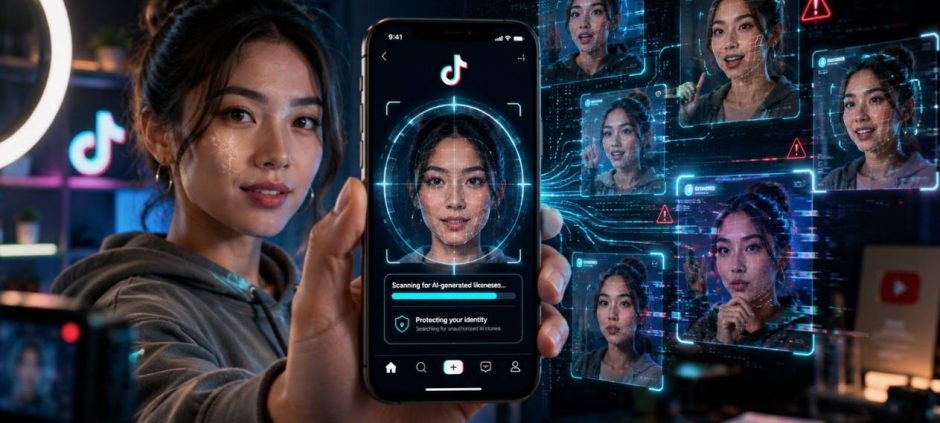
TikTok is testing a new feature that helps creators detect AI-generated videos using their face or likeness without permission. The tool is currently available to a small group of creators in the United States as part of an early testing phase.
The feature was first reported by social media consultant Matt Navarra. Later, TikTok US spokesperson Zachary Kizer confirmed that the company is testing the tool with a limited number of users. The company has not shared a timeline for a wider rollout.
The new feature is optional. Creators who want to use it must first complete an identity verification process. TikTok requires verification through Jumio, a third-party identity verification service. Users must submit a government-issued ID and take a live selfie to confirm their identity.
According to TikTok, it does not store users’ ID documents after verification. The company says facial data is only used to compare a creator’s likeness with AI-generated content that may appear on the platform.
Once the verification is complete, the system begins scanning AI-generated videos that may contain the creator’s face or digital likeness. If possible matches are found, creators can review the content and decide whether they believe it is using their identity without permission.
The feature also allows users to report videos or accounts they believe are impersonating them. This gives creators a direct way to take action against AI-generated deepfakes and unauthorized digital copies.
The test reflects the growing concern over the misuse of artificial intelligence to create realistic fake videos. As AI tools become more advanced, technology companies are introducing new safety measures to protect users and creators.
TikTok is not the first platform to launch this type of feature. YouTube recently expanded its own AI likeness detection system after earlier testing with selected creators. The YouTube tool also uses a selfie-based verification process to identify videos that resemble a user. Eligible users can review matched content and request its removal if necessary.
One key difference is that TikTok has chosen an opt-in model. Creators must actively choose to use the feature before any scanning begins. This approach gives users more control over how their facial data is used.
The company introduced the feature as online platforms continue facing pressure to improve consent and privacy protections. Concerns about AI-generated content have increased in recent years, especially after several platforms faced criticism over the use of personal images in AI systems.
In other related news also read Areeka Haq’s Growth From TikTok Waves To Digital Wins
For now, the new tool remains in limited testing in the United States. TikTok has not announced when the feature will become available to more creators or other regions. However, the latest test shows that AI likeness detection is becoming an important safety feature for major video-sharing platforms as they work to address the growing challenge of deepfakes.