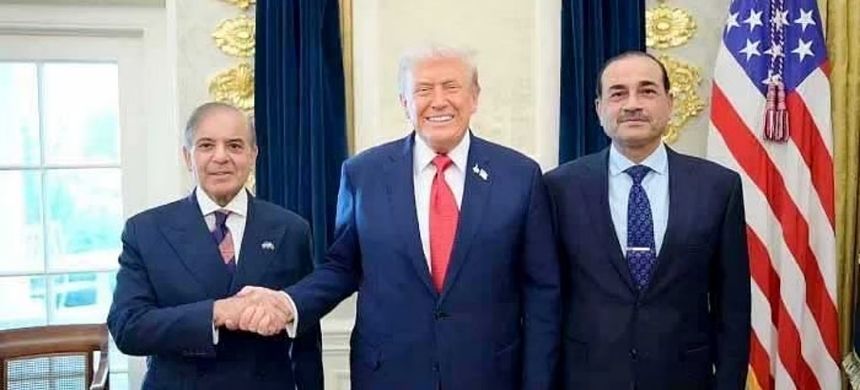
While sipping tea yesterday evening and casually watching Indian news channels, it felt more like a staged comedy than serious reporting. For years, many commentators in Delhi have repeatedly claimed that Pakistan is “isolated” on the global stage, insisting that no country engages with it. This narrative has been pushed so often that it has almost become a fixed script.
However, recent developments suggest a very different reality. Despite such claims, Pakistan appears to be playing a quiet but significant role in ongoing global diplomacy, particularly amid rising tensions between the United States and Iran. As the situation in the Gulf region grows increasingly tense, even a temporary pause in hostilities—described as “constructive engagement” by Donald Trump—has drawn attention to behind-the-scenes diplomatic efforts.
Reports from international outlets indicate that Islamabad is being considered as a possible venue for dialogue. There is speculation that senior figures, including Steve Witkoff and Jared Kushner, could potentially engage with Iranian representatives in discussions aimed at easing tensions. While Iran has publicly dismissed direct talks, diplomatic history suggests that informal backchannel communication often continues regardless of official statements.
Pakistan, alongside countries like Türkiye and Egypt, is believed to be facilitating communication between both sides. On the leadership front, Shehbaz Sharif has maintained contact with Masoud Pezeshkian, emphasizing unity and regional stability.
At the same time, military and diplomatic channels remain active. Asim Munir and Ishaq Dar are reportedly engaged in continuous discussions with global counterparts to help prevent escalation.
Given Pakistan’s ties with Saudi Arabia, its relationship with the United States, and its proximity to Iran, the country is navigating a delicate geopolitical balance. While lasting peace may take time, Pakistan’s current role highlights its relevance in regional stability efforts.
Read more: Trump Says Iran Seeks Talks, Terms Still Inadequate