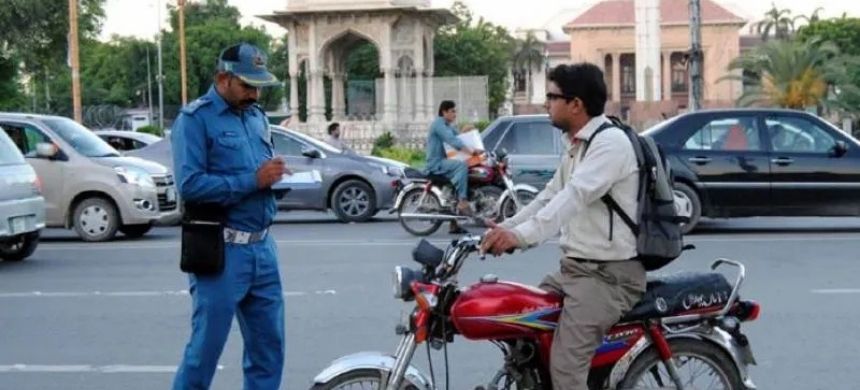
Commuters can breathe a sigh of relief as authorities have directed traffic police to temporarily stop issuing challans to motorcycles and rickshaws until Eid ul Fitr 2026. The decision comes amid a sharp rise in fuel prices, which has put significant financial pressure on both citizens and government departments.
Traffic officials have been instructed to ease enforcement for two-wheeled vehicles during this period to provide some relief to daily commuters. Police sources indicated that if fuel costs continue to climb, even high-ranking officers, including the Chief Traffic Officer, along with the entire traffic police force, may switch to motorcycles for their routine duties instead of using fuel-intensive patrol vehicles.
In addition, the administration has ordered that traffic police avoid keeping patrol cars idling on roads, with engines running, to conserve petrol. Officials warned that should prices escalate to what they referred to as the “third stage” of increase, the department may implement even stricter measures to manage fuel consumption efficiently.
Citizens have also been encouraged to limit unnecessary use of private vehicles and motorcycles wherever possible. The government emphasizes that such measures are essential to collectively reduce fuel demand during this critical time.
This temporary suspension of challans for two-wheelers highlights how deeply the global fuel crisis is affecting everyday life. From ordinary commuters to law enforcement personnel, the impact is becoming increasingly tangible, with even patrol routines under reconsideration. While the easing of challan issuance provides immediate relief to the public, authorities continue to stress that traffic rules remain important. Once fuel prices stabilize, regular challans may resume, reflecting a balance between road safety enforcement and addressing the ongoing fuel shortage