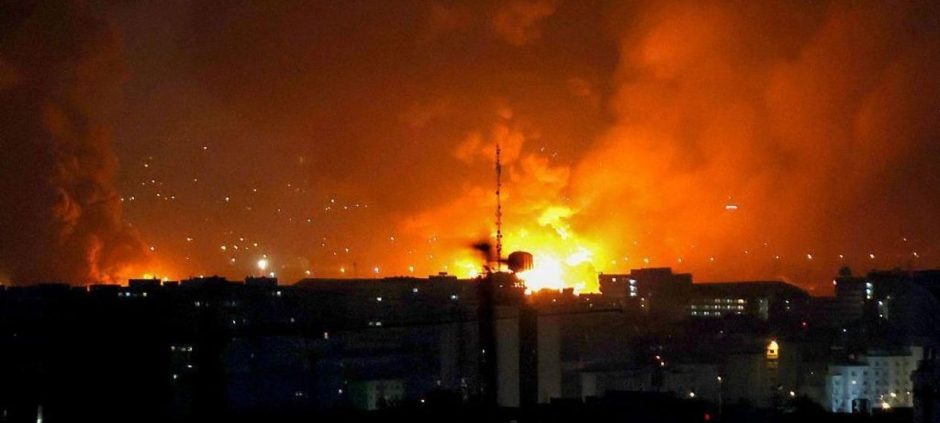
Massive explosions and towering flames lit up the night skies over Tehran and the nearby city of Karaj after Israel launched strikes on several Iranian fuel storage facilities. The attacks come amid the widening regional conflict that began last weekend when the United States initiated military action against Iran under the operation known as Operation Epic Fury.
The earlier phase of the conflict reportedly resulted in the death of Iran’s Supreme Leader Ali Khamenei, dramatically escalating tensions across the region. Since then, both sides have intensified military actions, raising fears that the confrontation could expand into a wider regional war involving multiple countries.
Videos circulating on social media showed enormous fireballs erupting into the sky, followed by thick clouds of black smoke rising above industrial zones. The clips appeared to capture the moment fuel storage sites were struck, causing massive fires that illuminated large sections of the skyline around Tehran and nearby areas.
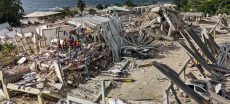
According to Iranian media reports, the strikes caused significant damage to surrounding neighborhoods. Homes, small businesses, roads, water pipelines, and even hospitals and schools near the blast zones were reportedly affected by the powerful explosions. Residents described scenes of panic as emergency services rushed to contain fires and assist civilians.
Iran’s Ministry of Oil confirmed that several oil storage depots in the provinces of Tehran Province and Alborz Province were hit during the Israeli strikes. Israeli officials later acknowledged the operation, claiming the targeted fuel storage and energy facilities were allegedly being used by Iran’s armed forces to support military operations.
Iranian state media also reported that one of the damaged fuel storage facilities lies close to Tehran’s main oil refinery in the southern district of Shahr Rey. The proximity of the blasts to key infrastructure raised concerns about potential disruptions to fuel supplies and environmental risks.
Residents across the capital said the explosions were powerful enough to shake buildings miles away. Earlier the same day, Israeli forces reportedly carried out another strike targeting Mehrabad Airport, which is the country’s busiest domestic airport.
Israel claimed that the airport strike targeted aircraft allegedly being used to transport money and weapons to allied militant groups across the region. The combined attacks on the airport and fuel depots sent shockwaves through the city, filling the air with smoke and intensifying fears among civilians.
One resident, identified as Amir, said the situation had become so frightening that he decided to move his wife and two children out of Tehran to a rural area. He explained that the family left shortly after hearing explosions echoing from nearby mountainous areas surrounding the capital.
Iranian officials also confirmed that an oil depot in Karaj, located just west of Tehran, was among the facilities hit in the Israeli strikes. Emergency crews and firefighters were quickly deployed to contain the massive fires and prevent further damage to nearby infrastructure.
Despite the scale of the attacks, Iran’s Oil Ministry said that national fuel supplies would remain stable. Officials stated that precautionary measures had already been taken in anticipation that energy infrastructure could become a target during the escalating conflict.
Meanwhile, the powerful Islamic Revolutionary Guard Corps warned that the country is prepared for a prolonged war. According to spokesperson Ali Mohammad Naini, Iran’s armed forces believe they can sustain an intense conflict against the United States and Israel for at least six months at the current pace of operations.
The latest strikes mark a dangerous escalation in the already volatile conflict. Analysts warn that continued attacks on strategic infrastructure could push the crisis into a broader regional confrontation involving multiple Middle Eastern nations.