The United States and Iran have returned to a more active war footing following the most significant exchange of attacks in weeks, raising fresh concerns about the future of the conflict and the possibility of further escalation across the region.
The latest confrontation came after a period of relative calm in which the two sides had largely refrained from direct attacks. The renewed hostilities have now been accompanied by strong warnings from both Washington and Tehran, with the United States threatening further strikes and Iran vowing more extensive responses.
US Carries Out New Wave of Strikes
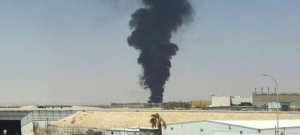
The US military’s Central Command said it had completed a wave of strikes against targets linked to Iran’s Islamic Revolutionary Guard Corps (IRGC) on Tuesday.
According to the command, the strikes targeted a range of military and strategic facilities, including air defence sites, radar systems, maritime assets, mine-laying capabilities and communications facilities.
The renewed American military action represents the most significant exchange of fire between the two sides since July and comes after weeks in which the conflict had appeared to enter a temporary lull.
Iranian media also reported attacks on multiple locations across the country. Several of the reported targets were located near the Strait of Hormuz, one of the world’s most important maritime routes for oil shipments.
Iran has previously threatened vessels attempting to pass through the narrow waterway without its authorization, increasing concerns that renewed fighting could affect regional shipping and global energy markets.
Iran Reports Attacks on US Positions
Iran said it responded by targeting US assets in Jordan and Iraq, according to official statements.
Iranian media also reported attacks involving Bahrain. Jordan’s armed forces said its air defence systems dealt with 13 ballistic missiles that entered the country’s airspace.
Of those missiles, Jordan said 10 were intercepted while three fell in remote areas.
Bahrain also reported that Iranian drones had been intercepted and destroyed.
The Islamic Revolutionary Guard Corps separately said its ground forces conducted combined missile and drone attacks against US bases in Erbil in northern Iraq.
The IRGC claimed that several US personnel were killed in the attacks. However, the claims had not been independently confirmed at the time of the report.
Two US officials told Reuters that initial assessments indicated there had been no American casualties in the attacks.
Conflicting Claims Over Military Casualties
The latest exchange has produced conflicting claims from the two sides regarding the scale and impact of the attacks.
Iranian officials and state-linked media reported significant strikes against US positions, while American officials disputed claims of casualties among US personnel.
The conflicting accounts underline the difficulty of independently verifying battlefield developments during the ongoing conflict.
Neither Iraq nor the United States had confirmed the Iranian claim regarding casualties at the US positions in Erbil.
Civilian Deaths Reported at Wedding
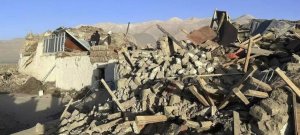
One of the most serious reported incidents involved civilian casualties at a wedding near Sirik, a coastal area close to the Strait of Hormuz.
The Iranian Red Crescent reported that five people were killed and around 50 others were wounded in the incident.
Iranian media provided differing figures for the number of injured. Mehr news agency reported that a four-year-old child was among those killed, while IRNA, citing a provincial official, reported that 68 people had been wounded.
US officials had not publicly commented on the reported wedding incident at the time of the report.
Iran’s Foreign Ministry condemned the incident and linked it to what it described as a broader pattern of civilian suffering during the war.
Previous Minab School Blast Also Raised Questions
Iran also referred to an earlier explosion at a girls’ school in Minab, which Iranian officials said killed around 160 people on the first day of the conflict.
The Pentagon had not issued an official finding on the cause of the Minab incident at the time of the report.
However, two sources familiar with the matter told Reuters that the strike may have resulted from the US military’s use of outdated targeting information.
The allegation has not been established as an official US finding.
Iran’s Foreign Ministry said the country would respond firmly to what it described as “savage crimes” and criticized governments and international organizations that it said had remained silent over civilian casualties.
Trump Warns Iran of Further Pressure
US President Donald Trump adopted a strongly confrontational tone following the latest exchange.
Trump said he believed the United States was in a stronger position and pointed to what he described as extensive control over the Strait of Hormuz and severe pressure on Iran’s economy.
He also called on the Iranian people to rise against their government.
Iran responded by warning the United States and its allies that continued American military action would result in broader and more devastating retaliation.
Iran’s joint military command said countries cooperating with the US military would face consequences, further raising concerns that the conflict could expand beyond direct US-Iran confrontation.
War Lull Appears to Be Over
The latest attacks mark the first serious combat exchange between the United States and Iran since July.
The previous lull had raised hopes that the two sides might eventually return to negotiations, although neither side appeared ready to make a significant move toward a diplomatic settlement.
The pause also came as both countries faced growing pressures from the prolonged conflict.
Iran’s economy has already been weakened by the war, while its conventional military capabilities have suffered significant damage.
The United States, meanwhile, is dealing with higher fuel prices and concerns about the use of its stockpile of precision long-range missiles.
The renewed fighting could therefore place additional economic, military and political pressure on both sides.
Strait of Hormuz Remains a Major Flashpoint
The Strait of Hormuz remains one of the most sensitive areas in the conflict because of its importance to global energy supplies.
Any sustained disruption to shipping through the waterway could have consequences well beyond the immediate region, particularly for oil markets and international trade.
With Iran threatening vessels and US forces conducting military operations in the surrounding region, the waterway is likely to remain a major point of tension.
The latest exchange has demonstrated that the period of relative calm may have ended, with both Washington and Tehran once again issuing threats of stronger military action.
Whether the renewed confrontation develops into a broader regional escalation or eventually pushes both sides back toward negotiations remains uncertain.
Also read: Iran Security Chief Mocks US Over War Impact