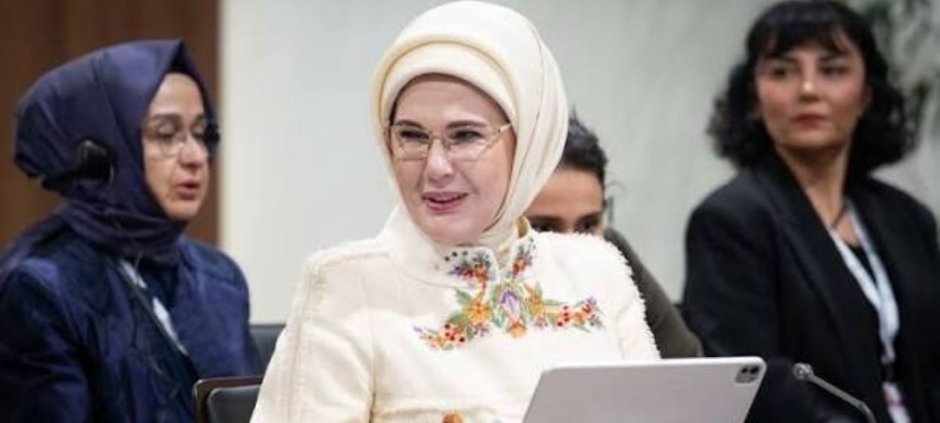
Zainab Suleman, daughter-in-law of Prime Minister Shehbaz Sharif, represented Pakistan at an international environmental gathering held alongside the COP31 Climate Summit in Antalya, Türkiye.
She attended the Global Zero Waste Alliance High-Level Meeting on November 11, where she joined Türkiye’s First Lady Emine Erdoğan and representatives from several countries. The meeting focused on sustainable waste management, environmental protection and international cooperation to reduce waste.
The gathering brought together spouses of world leaders and senior representatives to discuss practical ways to conserve natural resources, improve recycling and promote environmentally responsible practices.
Zainab Suleman Highlights Pakistan’s Environmental Priorities
During her address, Zainab Suleman highlighted Pakistan’s support for international cooperation on environmental issues. She stressed the importance of sharing successful experiences between countries and involving local communities in waste reduction programmes.
She also discussed the connection between environmental protection, public health, economic opportunities and human dignity. According to her remarks, environmental initiatives should deliver practical benefits rather than remain limited to discussions and commitments.
Suleman encouraged households, schools and communities to adopt responsible consumption habits. These include purchasing food carefully, preventing food waste, improving food storage and separating household waste for recycling and reuse.
She also highlighted the need to improve working conditions for people involved in waste collection and management.
Call for Measurable Progress by COP32
Suleman encouraged participating countries to demonstrate measurable progress by the next climate summit, COP32.
She highlighted food waste prevention, resource conservation and community-led environmental programmes as important areas requiring practical action.
She also expressed support for the voluntary nature of the Global Zero Waste Alliance. The platform allows countries to exchange knowledge and develop environmental solutions according to their individual circumstances.
Emine Erdoğan Hosts Global Zero Waste Meeting
The meeting was hosted by Türkiye’s First Lady Emine Erdoğan, who chairs the United Nations Secretary-General’s Advisory Board of Eminent Persons on Zero Waste.
During the gathering, Erdoğan introduced the Global Zero Waste Alliance as a platform for building international partnerships and turning shared environmental responsibilities into practical initiatives.
She encouraged representatives to share their countries’ experiences and work together on projects that could deliver measurable results.
The alliance has identified five priority areas for cooperation. These include zero waste and the circular economy, plastic and packaging waste, zero-waste regions, food and organic waste, and environmental education and youth participation.
Türkiye Shares Recycling Progress
Türkiye also highlighted its progress in waste recovery and recycling during the meeting.
Emine Erdoğan referred to an increase in the country’s recycling recovery rate from around 13 percent to more than 37 percent.
Representatives from Brazil, Uzbekistan, Bangladesh, the Maldives, Mozambique and several other countries also attended the high-level gathering.
Discussions focused on cooperation between governments, international organisations, businesses and local communities to improve waste management systems.
Pakistan Calls for Practical Environmental Action
For Pakistan, Suleman’s participation provided an opportunity to present the country’s perspective on environmental responsibility at an international gathering.
Her remarks focused on community participation, responsible consumption and the need to turn environmental commitments into measurable results.
The call for progress by COP32 also highlighted the importance of continued cooperation between participating countries.
The Global Zero Waste Alliance aims to encourage countries to prevent unnecessary waste, use resources more sustainably and develop long-term environmental solutions for future generations.