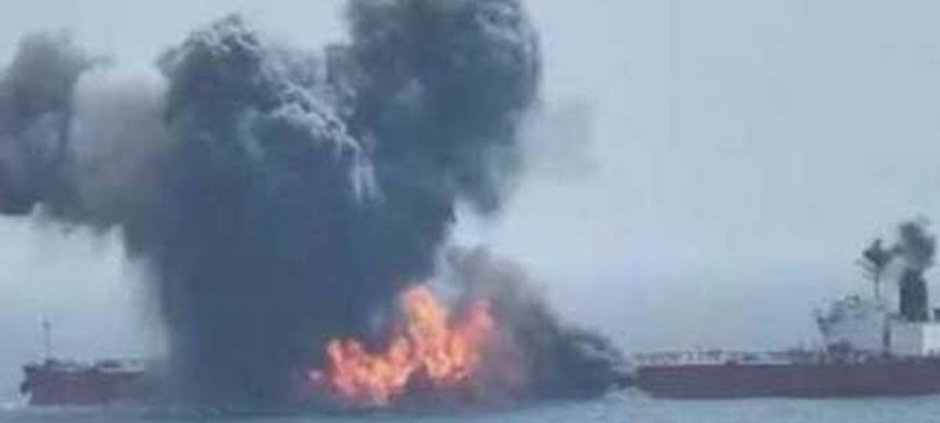
Two commercial oil tankers have reportedly exploded and caught fire in the southern part of the Strait of Hormuz, prompting Iranian authorities to issue a warning to international shipping companies against using unauthorised routes through the strategic waterway.
According to Iranian state media, the Islamic Revolutionary Guard Corps (IRGC) Navy said the vessels, including a supertanker, suffered major explosions after striking naval mines while attempting to pass through an unauthorised southern channel.
The statement claimed that the ships were attempting to transit secretly with their radar and positioning systems switched off. The resulting fires reportedly illuminated parts of the southern coastline of the Strait of Hormuz.
The claims have not been independently verified in the information provided.
Iran Warns International Shipping Companies
Following the explosions, the IRGC Navy reiterated its maritime restrictions and warned shipowners and international shipping operators against using routes outside designated shipping corridors.
Iranian authorities said commercial vessels must coordinate with the IRGC Navy’s Strait of Hormuz traffic control centre before travelling through the waterway.
The naval force warned that ships attempting to navigate unauthorised routes or disable their navigation transponders could face serious security risks.
The statement also warned vessels against coordinating with US military patrols to use restricted southern routes.
The warning highlights Iran’s efforts to maintain control over shipping movements through the Strait of Hormuz, one of the world’s most important routes for international energy supplies.
Maritime Tensions Increase in the Persian Gulf
The latest reported explosions come amid rising military and maritime tensions in the Persian Gulf.
Iranian state media said several similar incidents had occurred in southern shipping channels, involving commercial vessels reportedly damaged by sea mines and onboard fires.
The situation has increased concerns among international shipping operators about the safety of commercial vessels travelling through the region.
The Strait of Hormuz connects the Persian Gulf with the Gulf of Oman and serves as a major passage for global oil and energy shipments. Any disruption to commercial traffic through the waterway could create challenges for international energy markets and shipping companies.
G7 Rejects Iran’s Transit Restrictions
The maritime situation has also drawn reactions from international governments. G7 foreign ministers have rejected Iran’s unilateral restrictions on shipping movements and called for the restoration of safe and unrestricted commercial navigation through the waterway.
Meanwhile, diplomatic contacts mediated by Qatar are reportedly continuing as regional representatives attempt to prevent further escalation between Washington and Tehran.
The developments come amid wider tensions involving the United States and Iran, including restrictions on maritime activity and military operations in the region.
Authorities Monitor Shipping Routes
According to the reported information, regional maritime authorities and international naval forces are monitoring shipping routes and rescue operations near the southern approaches to the Strait of Hormuz.
The latest incident has added to concerns about the safety of commercial vessels operating in the Persian Gulf.
Shipping companies have been warned to follow designated routes and coordinate with the relevant authorities before entering restricted areas.
With military tensions continuing and diplomatic efforts still underway, the situation around the Strait of Hormuz remains important for global shipping and energy supplies.