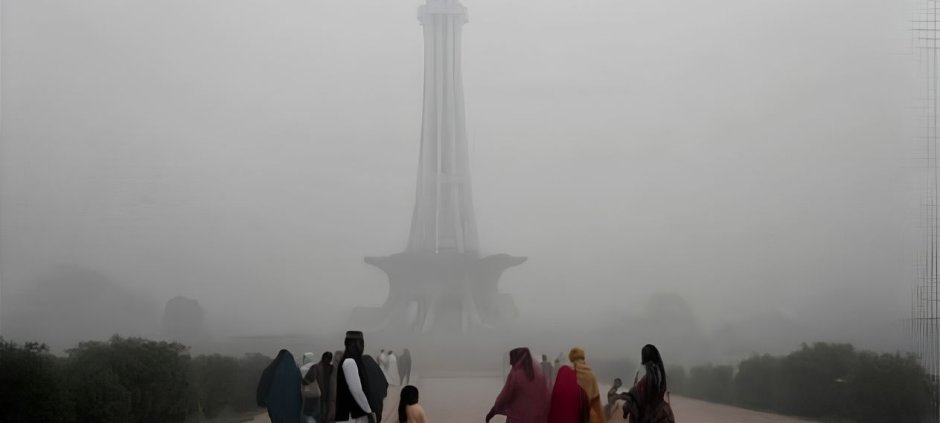
A thick blanket of smog has continued to affect major cities across Punjab, with Lahore reporting extremely high air pollution levels and several neighbourhoods recording Air Quality Index (AQI) readings above 800, according to figures cited in a report published on November 1, 2026.
The worsening air quality has raised serious health concerns for residents, particularly children, older people and individuals with respiratory or cardiovascular conditions. Faisalabad, Multan and Sialkot are also experiencing elevated pollution levels, while Peshawar and Islamabad have recorded unhealthy air quality in the reported city-wise assessment.
According to the reported monitoring figures, Lahore’s citywide AQI crossed 530, placing it at the top of the global pollution rankings at the time of the report. Several localities experienced even higher readings, highlighting the widespread nature of the smog across the provincial capital.
However, air-quality readings can differ considerably between monitoring stations, platforms and reporting times. Other reports based on November 1 monitoring data recorded Lahore’s citywide AQI at 448 in Punjab-linked readings and 420 in an IQAir snapshot. These figures underline the importance of checking the monitoring source and time when comparing AQI readings. <Cite refs={[“turn807557view2″,”turn444575search1″,”turn758376search10”]}/>
Lahore Records Extremely High AQI Readings
Lahore remains among the most affected cities as air pollution intensifies across Punjab.
The November 1 report cited an overall AQI above 530, while several neighbourhood monitoring stations recorded readings exceeding 800.
The reported locality-wise figures included:
| Lahore Locality | Reported AQI |
|---|---|
| Iqbal Town | 836 |
| Samanabad | 828 |
| Gulberg | 822 |
| Barki Road | 798 |
| Model Town | 748 |
| Cantt | 652 |
| Defence | 622 |
| Pine Avenue and surrounding areas | 621 |
| Islampura | 611 |
| Shadman | 561 |
| Johar Town | 541 |
These figures were reported as monitoring snapshots and should not be interpreted as simultaneous readings across the entire city.
Separate monitoring reports also confirmed hazardous conditions in several parts of Lahore. On November 1, Pakistan Meteorological Department-linked figures cited by APP placed the city’s AQI at 448, with Iqbal Town reaching 617. <Cite refs={[“turn444575search1″,”turn807557view2”]}/>
The differences between reported values demonstrate how pollution levels can vary from one locality to another and change throughout the day.
Faisalabad Also Struggles With Severe Smog
Faisalabad is facing another serious air pollution episode, with the reported citywide AQI reaching 441.
Some locations have recorded particularly high pollution levels. Kotwali Road reportedly registered an AQI of 681, while an area near Iqbal Stadium recorded 542.
The deteriorating conditions have raised concerns about respiratory problems, throat irritation and eye-related complaints among residents.
People who spend extended periods outdoors, including commuters, traffic personnel, delivery workers and labourers, may face greater exposure to polluted air.
Children, older people and individuals with existing health conditions are particularly vulnerable during prolonged periods of poor air quality.
Smog Conditions Worsen in Multan and Sialkot
Multan is also experiencing elevated pollution levels, with the reported AQI reaching 260.
Residents have raised concerns about the administration’s response to the worsening environmental situation, particularly the operation of brick kilns and other potential sources of pollution.
Questions have also been raised about whether sufficient inspections and enforcement measures are being carried out to control emissions.
Sialkot’s AQI has reportedly crossed 200, placing the city in an unhealthy pollution category under commonly used AQI classifications.
The deterioration across these cities shows that the smog problem is not limited to Lahore. Multiple urban centres in Punjab are experiencing air pollution that can affect daily activities and public health.
Air Pollution Levels Across Major Pakistani Cities
The city-wise figures provided in the November 1 report indicate that several major urban centres are dealing with elevated pollution levels.
| City | Reported AQI |
|---|---|
| Lahore | 530 |
| Faisalabad | 441 |
| Multan | 260 |
| Peshawar | 255 |
| Sialkot | 218 |
| Islamabad | 173 |
These are the figures cited in the original report rather than a live reading from a single monitoring network. AQI values may change during the day and can differ depending on the monitoring station, calculation method and pollutants measured.
The reported figures nevertheless highlight the scale of the air-quality challenge facing Pakistan’s major cities during the smog season.
Why Extremely High AQI Levels Are a Health Concern
The Air Quality Index measures outdoor air pollution using readings from different pollutants. Fine particulate matter, particularly PM2.5, is a major concern because these tiny particles can penetrate deep into the lungs.
Very high pollution levels can aggravate respiratory symptoms and increase health risks, especially for people who already have asthma, chronic lung conditions or heart disease.
Under the US Environmental Protection Agency’s AQI framework, readings above 300 fall within the hazardous category. The precise classification of individual readings should still be considered in the context of the monitoring system being used. <Cite refs={[“turn807557view1″,”turn940733search0”]}/>
The World Health Organization identifies children, older people and individuals with existing cardiorespiratory conditions among those who require particular attention during serious air pollution episodes.
Prolonged exposure can also affect people who work outdoors or regularly travel through heavily polluted areas.
Precautionary Measures During Severe Smog
Medical and environmental guidance recommends reducing exposure when pollution levels become extremely high.
Residents can take several precautions during periods of severe smog:
- Limit outdoor activities: Avoid unnecessary outdoor exercise and strenuous physical activity when pollution is high.
- Keep indoor air cleaner: Close windows and doors during particularly polluted periods when indoor conditions allow, and use suitable air filtration where available.
- Use appropriate protection outdoors: A properly fitted N95 respirator can reduce exposure to fine particles when outdoor exposure cannot be avoided. Ordinary cloth masks do not provide equivalent protection.
- Protect vulnerable people: Children, older adults and people with heart or lung conditions should take extra care and follow medical advice.
- Monitor local readings: Check reliable air-quality monitoring services because conditions can change significantly between neighbourhoods and throughout the day.
The US Environmental Protection Agency recommends reducing outdoor exposure and using properly fitted N95 respirators when people must spend extended periods in smoky air. The WHO also emphasises that personal precautions should complement wider measures to reduce pollution at its sources. <Cite refs={[“turn940733search2″,”turn940733search0″,”turn940733search5”]}/>
Punjab Faces Growing Pressure to Control Air Pollution
The latest smog episode has renewed attention on the need for stronger air-quality management across Punjab.
Vehicle emissions, industrial pollution, brick-kiln operations, waste burning and agricultural residue burning are among the sources commonly associated with regional air pollution. Weather conditions, including weak winds and atmospheric inversions, can also trap pollutants close to the ground.
Addressing the problem requires coordinated action involving environmental authorities, industries, transport operators, agricultural communities and local administrations.
Monitoring pollution levels is important, but enforcement against major emission sources and sustained efforts to improve air quality are equally necessary.
As smog continues to affect Punjab’s major cities, residents are being urged to limit unnecessary exposure and take precautions, particularly during periods when monitoring stations report hazardous conditions.
The latest readings from Lahore and other urban centres underline the need for continued monitoring and effective pollution-control measures to protect public health.
Also read: Lahore Tops Global Pollution Rankings as Smog Worsens