Punjab is introducing a digital On-Screen Marking (OSM) system for board examinations, allowing students’ answer sheets to be scanned and checked electronically, while examiners will be verified through facial recognition technology.
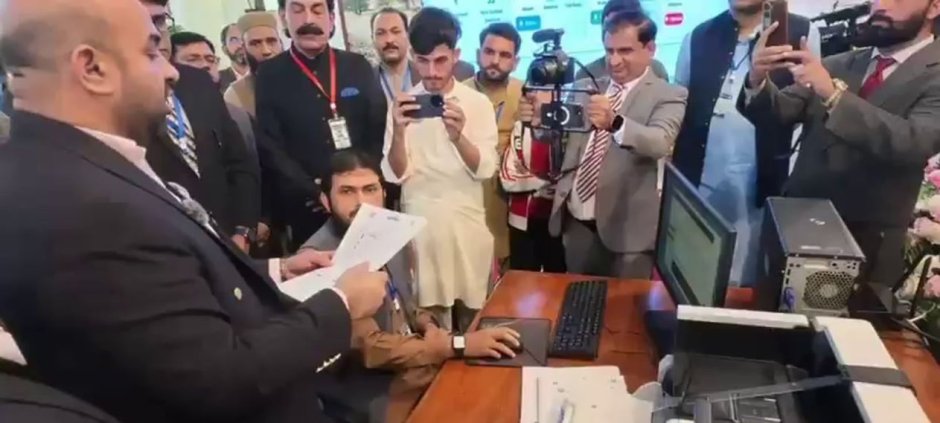
Provincial Education Minister Rana Sikandar Hayat announced the initiative and shared a video showing a live demonstration of the system, describing it as part of efforts to modernize Punjab’s examination process.
Under the new system, students will continue writing their answers on paper, but their examination copies will be scanned and uploaded to a digital platform for online marking.
How Punjab’s On-Screen Marking System Works
The new On-Screen Marking system converts students’ handwritten answer sheets into digital copies using high-speed scanners.
During the demonstration conducted through the Board of Intermediate and Secondary Education (BISE) Bahawalpur system, answer sheets were fed into a scanner, and their scanned pages appeared on a real-time dashboard.
Examiners will then be able to review and mark students’ answers directly on their screens rather than checking physical copies manually.
The digital dashboard is also designed to track marking progress in real time, allowing officials to monitor the examination checking process more efficiently.
Facial Recognition to Verify Examiners
One of the key features of the new system is facial recognition technology, which will be used to verify examiners before they begin checking answer sheets.
According to the demonstration, examiners will have to confirm their identity through a camera-based verification process to ensure that only registered individuals can access the marking system.
The system reportedly allows an examiner to proceed only when a single matching face is detected.
If two faces appear in front of the camera simultaneously, the system automatically locks access, preventing the marking process from continuing.
The facial recognition feature is intended to strengthen security and ensure that answer sheets are checked by authorized examiners.
AI-Assisted Marking and Real-Time Monitoring
The digital marking platform also includes an AI-assisted checking feature alongside the examiner’s assessment.
The dashboard provides real-time monitoring of marking progress, allowing examination officials to track how many papers have been checked and observe the overall workflow.
The introduction of digital tools is expected to help educational boards improve monitoring, reduce potential marking errors and make the checking process more consistent.
However, the system’s AI-assisted feature will operate alongside examiner marking, as described in the demonstration.
Punjab Boards Expand Digital Examination Reforms
The introduction of On-Screen Marking is part of wider examination reforms being introduced by Punjab’s educational boards.
Earlier this month, chairpersons of Punjab’s nine educational boards decided to conduct examinations for four science subjects using e-sheets next year. They also finalized the subjects in which on-screen marking would be introduced for matriculation and intermediate examinations.
Under the e-sheet arrangement, students will still write answers on paper, which will subsequently be scanned and processed for digital marking.
The shift is intended to gradually modernize examination procedures across the province by introducing technology into different stages of the assessment process.
What the New System Means for Students
Students will continue to take their examinations in the traditional written format, meaning the change primarily affects how answer sheets are processed and evaluated after exams.
The digital system is expected to improve transparency, strengthen examiner verification, monitor marking progress and potentially reduce errors during the assessment process.
Punjab’s move toward digital paper checking and e-sheets signals a broader effort to transform board examination procedures through technology, with further implementation expected as educational boards expand their reforms.