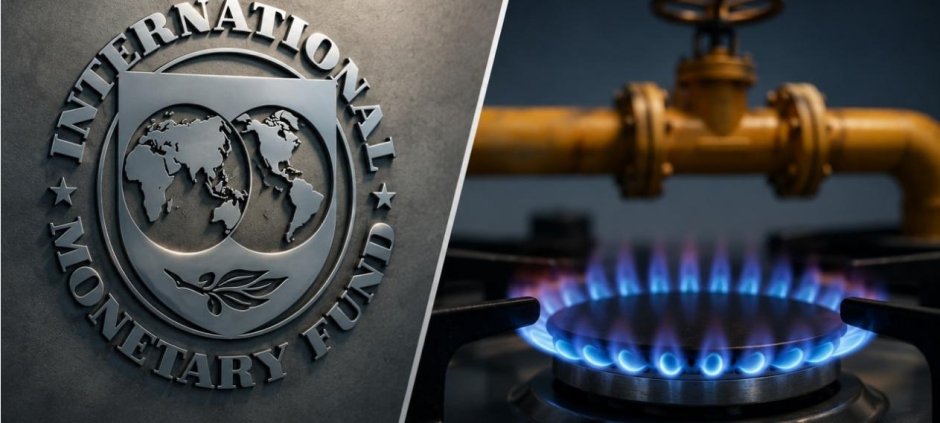
The Petroleum Division is preparing to seek approval from the International Monetary Fund (IMF) for a new single gas tariff system that could come into effect from July 1, 2027, replacing Pakistan’s existing consumption-based cross-subsidy structure.
Under the proposed system, the government plans to allocate around Rs. 162 billion for targeted financial assistance to low-income households. The proposal would end the current 12-slab tariff structure and move domestic consumers toward a uniform average gas tariff of approximately Rs. 1,708 per MMBtu.
The proposal is expected to be discussed with the visiting IMF mission during its ongoing review of Pakistan’s economic programme.
Government plans new gas subsidy mechanism
Pakistan currently uses a cross-subsidy model in which different categories of consumers pay different gas rates. Protected domestic consumers receive comparatively lower tariffs, while commercial and industrial users pay substantially higher rates.
The government now intends to separate the price of gas from the social protection mechanism.
Under the proposed arrangement, households would pay a more uniform gas tariff, while eligible low-income families would receive financial assistance based on their income rather than simply their level of gas consumption.
The assistance could potentially be distributed through the Benazir Income Support Programme (BISP) or another targeted mechanism.
Rs. 162 billion cross-subsidy to be replaced
The existing cross-subsidy is estimated at around Rs. 162 billion for FY2026-27.
Pakistan had previously committed to the IMF to eliminate this consumption-based subsidy and replace it with an income-based support system.
The proposed change would therefore represent a major restructuring of the way domestic gas subsidies are provided.
Instead of receiving cheaper gas automatically by remaining within a protected consumption slab, households would have to qualify for financial assistance according to their income and eligibility.
The government expects this approach to make subsidies more targeted and transparent.
Current protected gas rates
Under the existing tariff structure, protected households pay significantly lower rates depending on their gas consumption.
Current rates include approximately Rs. 200 per MMBtu for consumption up to 0.25 hm³, rising to Rs. 250 for consumption up to 0.5 hm³, Rs. 300 up to 0.6 hm³ and Rs. 350 up to 0.9 hm³.
These rates are considerably below the proposed average tariff of Rs. 1,708 per MMBtu.
As a result, households currently benefiting from protected rates could face substantially higher gas bills if the new system is introduced, with the actual impact depending on their eligibility for targeted financial assistance.
Industrial and commercial consumers could see lower rates
The proposed uniform tariff would also change the cost structure for commercial and industrial consumers.
Under the existing system, commercial consumers pay around Rs. 3,900 per MMBtu, while CNG stations pay approximately Rs. 3,750.
Cement manufacturers face rates of around Rs. 4,400 per MMBtu, captive power consumers around Rs. 3,500 and general industry approximately Rs. 2,300.
Compared with these rates, the proposed average tariff of Rs. 1,708 per MMBtu would represent a reduction for several categories of higher-paying consumers.
The proposed structure would therefore redistribute the existing subsidy mechanism rather than simply reducing gas prices across the board.
Implementation date shifted to July 2027
The single tariff proposal was previously linked to an implementation date of January 1, 2027.
Officials now expect the new system to begin from July 1, 2027, giving the government additional time to develop the proposed income-based assistance mechanism.
Before implementation, the proposal would require approval from relevant government forums as well as agreement with the IMF under Pakistan’s ongoing programme.
The Petroleum Division has already moved a summary seeking support for the proposed subsidy mechanism.
Income-based assistance remains key challenge
A major part of the proposed reform will be the development of an effective system for identifying households that qualify for financial assistance.
The government will need to establish clear eligibility criteria and ensure that support reaches low-income families before consumption-based protection is withdrawn.
The proposed system could potentially make government support more closely linked to household income, but its effectiveness would depend on accurate identification of eligible beneficiaries and timely delivery of financial assistance.
The transition could also require significant adjustments for households and businesses as the existing 12-slab structure is phased out.
IMF review to determine next steps
The proposed single gas tariff is expected to form part of discussions between Pakistan and the IMF during the Fund’s ongoing review.
The government’s objective is to eliminate distortions associated with the current cross-subsidy system while maintaining financial support for households that need it.
If approved and implemented, the reform would mark a major change in Pakistan’s domestic gas pricing structure, shifting the focus from consumption-based protection toward an income-based subsidy mechanism.
The government’s ability to establish the targeted support system before the new tariff takes effect will be an important part of the transition.
Also read: Pakistan, IMF Start Second Review Talks Under EFF