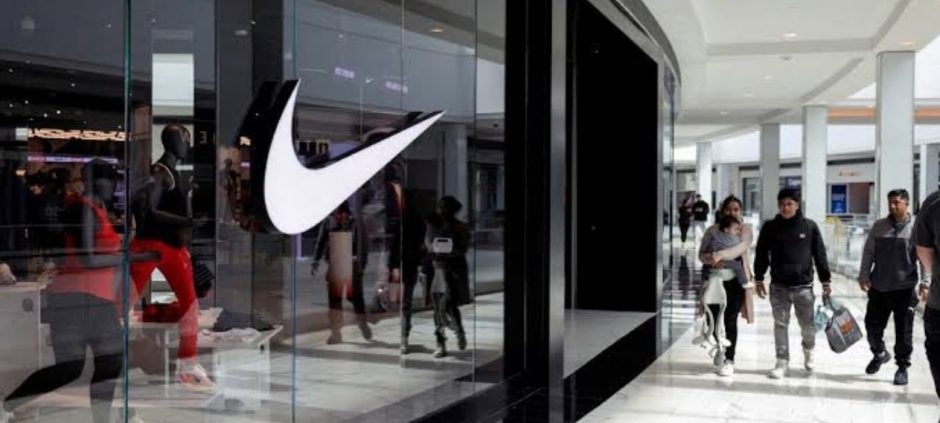
Nike is making a major overhaul to its business strategy in China as it seeks to regain market share from rapidly growing domestic rivals. The American sportswear giant has announced plans to tighten control over how its products are sold online, aiming to deliver a more premium shopping experience while reducing heavy discounting that has hurt its brand image in one of its most important markets.
The move comes as Nike continues to struggle in Greater China, where sales have declined for several consecutive quarters amid slowing consumer spending, intense competition from local brands, and changing shopping habits.
Under the new strategy, which will begin in January, many of Nike’s wholesale partners in China will stop selling the company’s products through their own online stores. Instead, customers purchasing Nike products online will be directed to official Nike-operated digital storefronts on major Chinese e-commerce platforms, including Tmall, JD.com, and Douyin, as well as Nike’s own website and mobile application.
Speaking to Reuters, Cathy Sparks, Nike’s Vice President and General Manager for Greater China, said the company wants to create a more consistent and trustworthy shopping experience for consumers.
“Our marketplace has become so fragmented and cluttered,” Sparks said. “What consumers want is an experience that’s premium, true to the brand, trustworthy, and certainly connected between digital and physical.”
While online sales will be centralized through official Nike channels, retail partners will continue selling Nike products through their physical stores. The company believes this approach will strengthen customer confidence, reduce price inconsistencies, and improve the overall shopping experience.
Nike’s decision marks a significant departure from the strategy adopted by many international sportswear brands in China over recent years. Rather than expanding distribution across multiple online retailers to maximize reach, Nike is choosing to reduce online sales channels in an effort to rebuild brand value.
China remains Nike’s third-largest market globally, making its performance there critical to the company’s long-term growth plans. However, the business has faced mounting pressure as domestic brands such as Anta and Li Ning continue to gain popularity among Chinese consumers. At the same time, international brands including On and Hoka have also strengthened their presence in the premium sportswear segment.
According to Nike’s latest financial results, sales in Greater China declined by 17 percent on a constant-currency basis during the fourth quarter, following a 10 percent decline in the previous quarter. The continued slowdown has raised concerns among investors about the pace of the company’s recovery under Chief Executive Officer Elliott Hill.
Since taking charge nearly two years ago, Hill has focused on revitalizing Nike’s core sports business, strengthening relationships with wholesale partners, and introducing innovative products designed to drive future growth. However, the company’s challenges in China remain one of the biggest obstacles to its turnaround strategy.
The new distribution model will directly affect many of Nike’s retail partners. The majority of the company’s 16 major store partners, which collectively operate thousands of Nike outlets across China, will stop selling Nike products through their own online platforms.
The announcement immediately impacted financial markets. Shares of Chinese sportswear retailers Topsports and Pou Sheng fell sharply after the news became public. Topsports’ stock plunged by a record 23 percent, erasing approximately HK$3 billion in market value, while Pou Sheng shares dropped around 10 percent during early trading.
Both companies acknowledged that the new policy would negatively affect their businesses. Topsports said online sales of Nike products currently account for around 22 percent of its total revenue, while Pou Sheng stated that Nike’s online sales contribute approximately 15 percent of its earnings. Despite the expected short-term impact, both retailers reaffirmed their commitment to maintaining a close partnership with Nike.
Not everyone believes the strategy will solve Nike’s problems. BNP Paribas senior analyst Laurent Vasilescu described the move as a potential “strategic misstep,” arguing that Nike’s biggest challenge is not its distribution network but its product lineup.
According to Vasilescu, restricting online sales could cost Nike between $500 million and $1 billion in revenue while creating additional opportunities for competitors to capture market share.
Nike, however, believes stronger local product development will play an equally important role in its recovery. Cathy Sparks revealed that the company has appointed a dedicated Vice President of Local Product Creation for Greater China to develop products specifically tailored to Chinese consumers’ preferences.
The company hopes that combining locally designed products with a more controlled retail experience will help restore its premium brand positioning and reconnect with shoppers in one of the world’s largest sportswear markets.
Also read: Nike and Adidas Urge Trump to Remove Shoe Tariffs