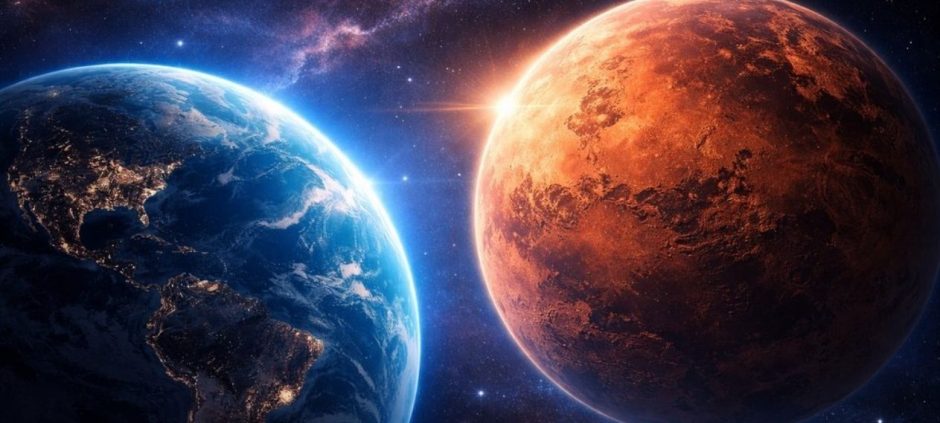
The Moon is feeding particles from Earth’s atmosphere. This new discovery has surprised scientists around the world. Solar wind carries gases like oxygen, nitrogen, and carbon dioxide to the Moon. These particles embed themselves deep in lunar soil.
This discovery explains a mystery that has lasted for more than fifty years. Apollo missions collected Moon samples containing traces of water and other gases. Until now, scientists could not explain how these elements arrived there.
How the Moon is Feeding
Scientists at the University of Rochester studied how particles from Earth reach the Moon. They found that Earth’s magnetic field helps
Transfer these gases. A “magnetotail” forms in space, creating a cosmic channel. During a full moon, the Moon passes through Earth’s shadow, allowing more particles to reach it.
Eric Blackman, a coauthor of the study, explained that oxygen and nitrogen have been supplied to the Moon for billions of years. The Moon is slowly feeding on Earth’s atmosphere. This process is natural and continuous.
Importance for Space Exploration
The discovery has major implications for future lunar missions. Scientists say lunar colonies could use these trapped elements. Oxygen could support life support systems. Nitrogen and ammonia could be used as fuels.
Harvesting resources from the Moon reduces the need to transport heavy supplies from Earth. This makes lunar colonies more feasible and sustainable. Researchers are studying how to use nitrogen for ammonia-based fuels.
Evidence from Apollo Missions
Lead author Shubhonkar Paramanick and his team compared computer simulations with Apollo 14 and 17 samples. They found that Earth’s magnetic field today is more efficient at transferring particles than it was in the past.
This study also supports previous observations by Kentaro Terada of Osaka University. He had theorized that oxygen from Earth could reach the Moon. The findings show that the Moon acts as a “time capsule.” It preserves a chemical record of Earth’s ancient atmosphere.
New Lunar Samples and Future Research
China’s Chang’e-6 mission recently collected new soil samples from the Moon. Scientists plan to test these samples to confirm the study’s findings. These samples could provide more details about how Earth’s atmosphere shaped the lunar surface.
The research also suggests that studying lunar soil can reveal the evolution of life on Earth. Ancient gases trapped in Moon soil may offer clues about the origin of life and atmospheric changes over billions of years.
How the Moon is Growing
Because the Moon is feeding on Earth particles, it is slowly accumulating matter. This growth is tiny but continuous. Over billions of years, this process has contributed to the Moon’s chemical makeup.
Scientists now understand that the Moon is not just a dead rock. It interacts with Earth in subtle ways. These findings could change how we think about the Earth-Moon system and its history.
Significance for Science and Technology
The study has sparked excitement in the scientific community. It helps explain old mysteries from Apollo missions. It also provides insights for future lunar exploration. Scientists can now plan better ways to use lunar resources.
Explore our latest news on Alien Communication Breakthrough? Scientists Look to Honeybees to see how researchers are using bees as a model for extraterrestrial signals. This news reveals surprising insights from the experiments and their possible implications for space science.
From a technological perspective, knowing how gases reach the Moon can inform the design of lunar habitats. Oxygen and nitrogen are essential for life and fuel. Understanding their natural delivery system could reduce costs and increase efficiency.